Avoiding Cross-Contamination in Houston Daycares: A Strategic 2026 Management Guide
Did you know that 35% of Texas HHS citations in 2024 stemmed directly from sanitation failures and improper hygiene protocols? For a Houston childcare director, these aren’t just numbers. They represent the thin line between a thriving facility and a compliance nightmare. You likely feel the weight of responsibility every time a seasonal virus sweeps through your classrooms, leading to high staff absenteeism and anxious parents. Maintaining a clinical level of hygiene is a core business strategy for avoiding cross-contamination in houston daycares and securing your operational future.
We’re here to bridge the gap between mediocre cleaning services and the high-compliance standards your facility requires. You’ll discover how to implement rigorous janitorial protocols that eliminate infection risks while ensuring your next health inspection is entirely deficiency-free. This guide outlines a 2026 management approach that consolidates your maintenance needs into a single, professional point of contact. This shift allows you to focus on child development rather than managing inconsistent vendors or sanitation audits.
Key Takeaways
- Differentiate between cleaning, sanitizing, and disinfecting to effectively neutralize ‘fomites’ and move beyond surface-level aesthetics toward clinical safety.
- Master specialized protocols for avoiding cross-contamination in houston daycares, replacing outdated “mop and bucket” methods with high-compliance systems like the “One-Room, One-Mop” rule.
- Apply a structured 2026 sanitation frequency guide designed to neutralize high-risk transmission zones and exceed Texas HHS regulatory requirements.
- Learn how strategic vendor consolidation provides a single standard of excellence and professional accountability to protect your facility’s operational reputation.
The High Stakes of Cross-Contamination in Houston Childcare Facilities
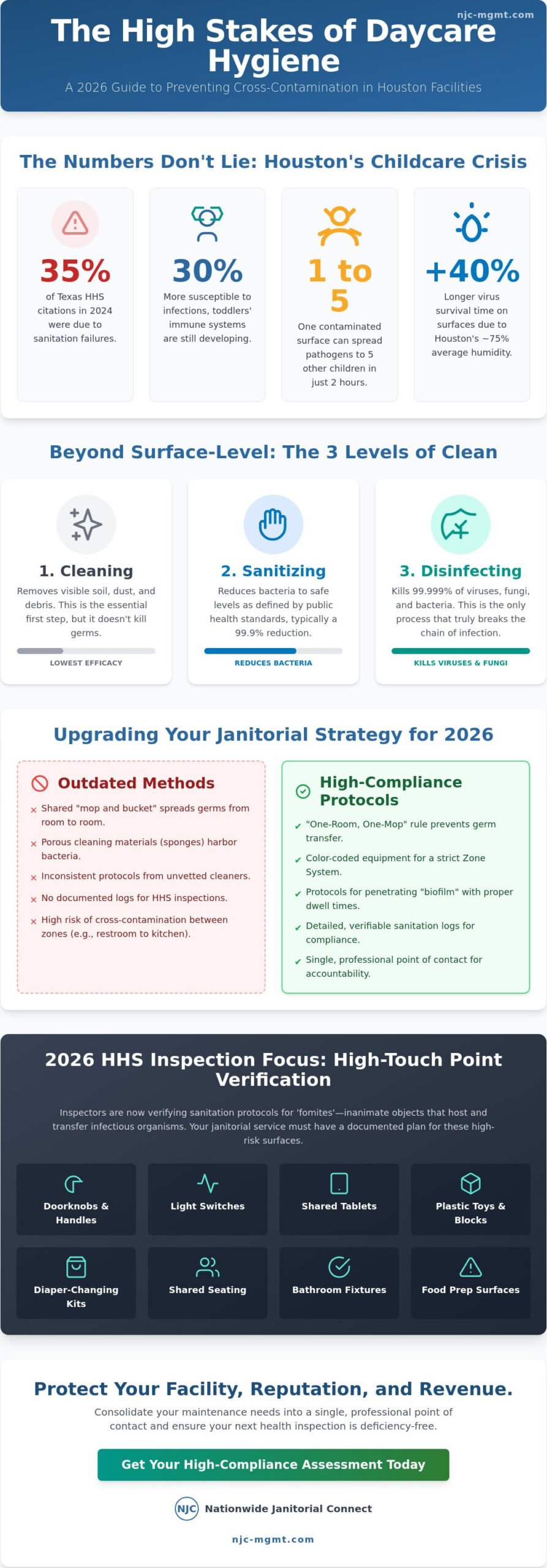
Cross-contamination represents the invisible transfer of harmful bacteria, viruses, or fungi between individuals, surfaces, and equipment. In the high-density environment of a Houston daycare, this process happens rapidly. Toddlers and infants possess developing immune systems, making them 30 percent more susceptible to common respiratory and gastrointestinal infections compared to adults. When one child touches a contaminated surface, the pathogen can spread to five other children within two hours. Understanding The Science of Germ Transmission is the first step in building a robust defense against facility-wide outbreaks.
Houston’s unique climate adds a layer of complexity to facility management. With average annual humidity levels hovering around 75 percent, microbial survival times on non-porous surfaces like plastic toys and laminate tables increase significantly. Research indicates that certain flu viruses can remain infectious on hard surfaces 40 percent longer in humid conditions than in arid environments. This environmental factor makes avoiding cross-contamination in houston daycares a year-round strategic priority rather than a seasonal concern. Maintaining a sterile environment is a critical component of parent retention. In a market where 12 percent of Houston parents cite “cleanliness concerns” as their primary reason for switching providers, hygiene is a measurable business asset.
Houston Health Regulations and 2026 Compliance Standards
Texas Health and Human Services (HHS) maintains strict guidelines under Chapter 746 of the Minimum Standards for Child-Care Centers. By 2026, inspectors have increased their focus on high-touch point verification and documented sanitation logs. Common red flags during inspections include the use of porous cleaning materials in food preparation areas and the lack of dedicated diaper-changing sanitation kits. To meet these high-compliance benchmarks, facilities must implement a Zone System. The Zone System is a cleaning methodology that utilizes color-coded equipment and distinct chemical sets for specific areas to ensure that pathogens from high-risk zones, like restrooms, never enter low-risk zones like kitchens or playrooms.
The True Cost of Inadequate Daycare Janitorial Services
The financial drain of poor sanitation extends far beyond the cost of cleaning supplies. Sick days directly impact daycare revenue; industry data from 2024 shows that a localized outbreak can result in a 15 percent decrease in monthly attendance fees. Furthermore, staffing shortages occur when teachers fall ill, forcing centers to hire expensive temporary contractors or reduce child-to-staff ratios. Avoiding cross-contamination in houston daycares protects your digital reputation as well. A single negative review mentioning “dirty facilities” can lead to a 22 percent drop in new enrollment inquiries over a six-month period. Relying on unvetted, independent cleaners who lack liability insurance or specialized training introduces hidden risks. These providers often lack the protocols necessary to handle biohazards, leaving the facility vulnerable to both health crises and legal liabilities.
The Science of Germ Transmission: Why Standard Cleaning Fails
Daycare environments are high-velocity microbial hubs where pathogens move with clinical efficiency. To master the art of avoiding cross-contamination in houston daycares, administrators must first understand fomites. These are inanimate objects, like plastic building blocks, shared tablets, or light switches, that host and transfer infectious organisms. In a 2024 study of childcare facilities, researchers found that respiratory viruses can survive on these surfaces for up to 48 hours, waiting for the next child to make contact.
Standard janitorial approaches often fail because they confuse three distinct processes. Cleaning only removes visible soil and organic matter. Sanitizing reduces bacteria to levels deemed safe by public health standards, typically a 99.9% reduction. Disinfecting, however, is the only process designed to kill 99.999% of specific viruses and fungi. Professional management of these protocols ensures that staff don’t just move dirt around, but actually break the chain of infection.
The most persistent threat is the biofilm. This is a microscopic, slimy layer created by bacteria that acts as a physical shield. Standard wiping often glides right over these “fortresses,” leaving the colonies underneath untouched. To penetrate these layers, cleaning crews must respect “Dwell Time.” This is the specific duration a disinfectant must remain wet on a surface to work. Most EPA-registered chemicals require 3 to 10 minutes of contact. If a staff member sprays and immediately wipes, they’ve effectively achieved nothing more than a superficial clean.
High-Touch Surface Mapping in Daycare Environments
Effective prevention starts with identifying “Hot Zones.” Door handles, cubby edges, and sensory tables are primary vectors. Diaper pails require specialized attention, as the act of opening them can cause aerosolization, where pathogens are launched into the air. This risk also extends to improper maintenance; using low-grade vacuums without HEPA filtration simply redistributes fine particulates back into the breathing zone. Because infants spend 90% of their active time on the ground, floor care isn’t just about aesthetics; it’s a critical health intervention that requires daily medical-grade disinfection.
Microbial Resistance and EPA-Registered Disinfectants
The 2026 landscape requires a shift toward EPA List N disinfectants, which are verified to kill emerging and resilient pathogens. While “Green Cleaning” is a popular marketing term, it must be balanced with hospital-grade efficacy to protect vulnerable immune systems. Safety is paramount during application. Mixing bleach-based solutions with ammonia-containing glass cleaners creates toxic chloramine vapors that cause immediate respiratory distress in small, poorly ventilated childcare spaces. Strategic management prioritizes chemical compatibility to ensure the environment remains both sterile and breathable.
Strategic Vendor Protocols vs. Traditional Janitorial Methods
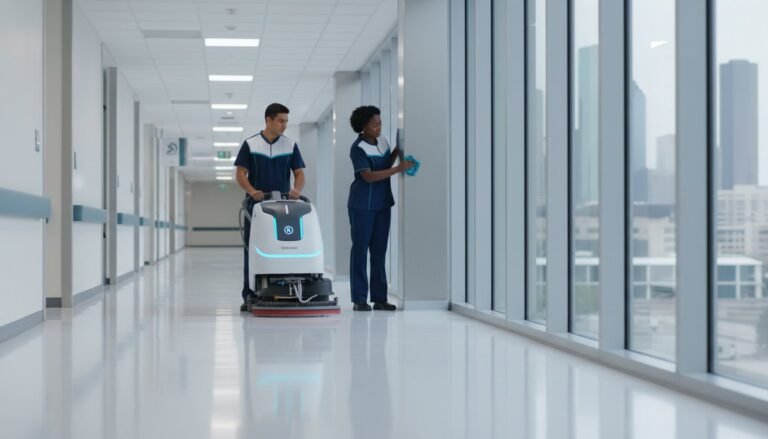
Traditional janitorial methods often rely on a “one size fits all” approach that fails the hygiene standards required in 2026. The standard mop and bucket system is the primary driver of bacterial spread. Dipping a dirty mop into a shared water source ensures that pathogens from one classroom are simply redistributed to the next. It doesn’t solve the problem; it moves it. High-performance facility management eliminates this risk through the “One-Room, One-Mop” rule. Professional vendors use fresh, sterilized microfiber pads for every distinct zone. This protocol is a cornerstone of avoiding cross-contamination in houston daycares. Independent cleaners often lack the supply chain or rigorous oversight to maintain this level of discipline. Managed solutions provide a layer of accountability by tracking supply usage and documenting compliance for every shift.
Color-Coded Cleaning: The Gold Standard for Daycares
Visual cues are the most effective way to prevent human error in high-pressure environments. We implement a strict color-coded system: red for restrooms, yellow for kitchens, and blue for play areas. This system ensures a cloth used on a toilet fixture never touches a snack table. It creates an intuitive workflow for staff. Maintaining this consistency requires a structured 48-hour onboarding process for all personnel. This level of detail is essential for avoiding cross-contamination in houston daycares where high student turnover increases viral load. When every tool has a designated zone, the risk of tool-based spread drops to near zero.
The Role of HEPA Filtration and Air Quality Management
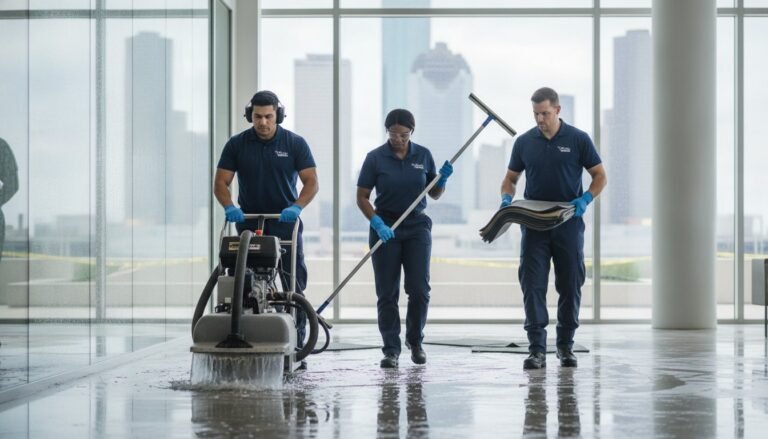
Houston’s humidity levels frequently exceed 70%, creating a breeding ground for mold and trapping high pollen counts indoors. Traditional vacuums often vent fine particles back into the breathing zone. We utilize HEPA filtration systems that capture 99.97% of particles as small as 0.3 microns. Effective air management is tied directly to floor care. You can find more about this in our guide to commercial floor cleaning in Houston. Cleaning vents and windows every 30 days removes the “dust reservoir” where bacteria thrive. This integrated approach ensures that floor contaminants don’t become airborne threats to children with developing respiratory systems.
- Accountability: Managed vendors use digital logs to track sanitization cycles.
- Precision: Microfiber technology removes 99% of bacteria compared to the 30% removal rate of cotton mops.
- Consistency: Strategic partnerships ensure that protocols don’t lapse during staff vacations or turnover.
The Houston Daycare Sanitation Checklist for 2026
Effective facility management requires a tiered frequency strategy. Daily tasks target high-traffic touchpoints like doorknobs and light switches. Weekly schedules focus on comprehensive floor care and toy rotation. Monthly deep cleans address hidden reservoirs like HVAC filters and ceiling fans. Avoiding cross-contamination in houston daycares depends on these strict intervals to break the chain of infection before it spreads through a classroom.
Kitchen and food prep areas in 2026 must exceed standard restaurant codes. Texas Food Establishment Rules (TFER) provide the baseline, but daycare environments require higher vigilance. Separate color-coded cutting boards and dedicated prep stations for allergen-sensitive meals are essential. Staff must use digital thermometers to verify sanitizing dishwasher cycles reach 160 degrees Fahrenheit daily.
Houston’s climate presents unique risks for outdoor play. High humidity levels, often exceeding 75 percent, accelerate microbial growth on plastic slides and swings. Rainwater creates stagnant pools that attract pests and harbor bacteria. Equipment must be dried and sanitized after every storm; UV exposure also degrades plastics, making regular structural integrity inspections vital for safety.
Managing the Diapering and Restroom Transition
Staff must disinfect changing pads after every single use using EPA List N disinfectants. Use the spray-wipe-spray method to ensure proper dwell times. Touchless soap and towel dispensers are no longer optional; they’re the standard for modern facilities. Maintaining these high-traffic zones during peak hours is difficult for teaching staff. Utilizing Day Porter Services ensures restrooms remain sanitized throughout the operating day without pulling educators away from their students.
Playroom and Shared Space Decontamination
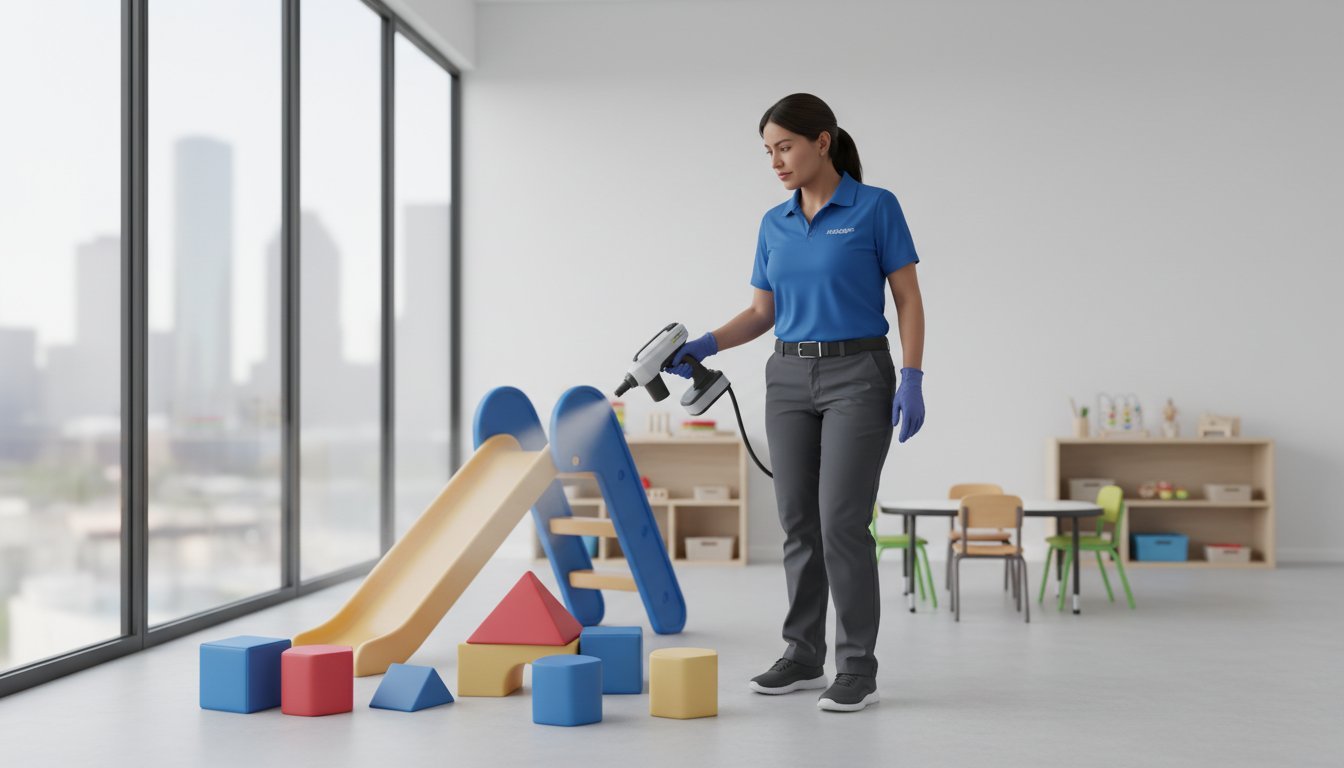
Mouthed toys go directly into a ‘Yuck Bucket’ containing a mild bleach solution or botanical disinfectant. Soft surfaces like rugs and dress-up clothes require professional steam cleaning every 14 days to eliminate trapped allergens and dust mites. It’s a critical step in avoiding cross-contamination in houston daycares where indoor air quality is often compromised by outdoor pollutants. Disinfect tablets and check-in kiosks every four hours to prevent viral transfer between staff and parents.
- Daily: Sanitize all high-touch surfaces and empty diaper bins every 4 hours.
- Weekly: Launder all soft toys and perform a full inventory of cleaning supplies.
- Monthly: Professional steam cleaning of all carpets and area rugs.
Secure your facility’s reputation by partnering with experts who understand 2026 sanitation standards. Contact NJC Management for a strategic facility assessment.
Consolidating High-Compliance Cleaning with NJC Management
Managing a daycare in Houston requires more than just a cleaning crew. It demands strategic oversight. Nationwide Janitorial Connect serves as your single point of contact, eliminating the friction of juggling multiple vendors. You receive one invoice and one consistent standard of excellence across every room. There are zero excuses for lapses in protocol. Vendor consolidation isn’t just about paperwork; it’s about absolute accountability. When one partner handles the entire facility, you eliminate the finger-pointing that often happens between different service providers. By centralizing your operations, you shift from the daily burden of managing individual cleaners to executing a comprehensive facility strategy that prioritizes child safety.
Our vetting process for Houston-based janitorial partners is exhaustive. Only the top 15% of local providers meet our 2026 compliance benchmarks. We verify insurance, conduct background checks, and mandate specialized training for pediatric environments. Our Houston partners are specifically trained to handle the humidity-related challenges of the Gulf Coast, which can impact how disinfectants dwell on surfaces. This rigorous selection is vital for avoiding cross-contamination in houston daycares. We don’t just find cleaners; we secure partners who respect the vulnerability of your students and the reputation of your brand.
Quality Assurance: The NJC Difference
We don’t leave cleanliness to chance. Our team conducts regular Quality Assurance Inspections to verify that every protocol is followed. We use data-driven reporting to track sanitation trends in your facility. Our 2026 reporting tools offer a transparency that traditional cleaning companies can’t match. You’ll see exactly when high-touch surfaces were last disinfected, providing a digital audit trail for health inspectors. If a specific area shows a recurring hygiene dip, our system flags it immediately. This proactive approach solves facility issues before they escalate into health hazards. Real-time communication ensures you’re always informed, not overwhelmed.
Customizing Your Houston Facility Maintenance Plan
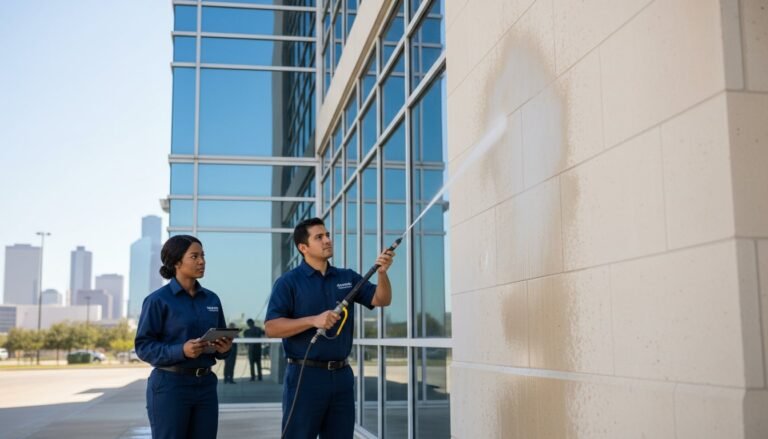
Every daycare has unique requirements. We scale our services to fit your footprint exactly. Whether you operate a single-site boutique daycare in The Heights or a multi-location Houston franchise, our plans adapt to your growth. Transitioning to a managed strategy means your directors focus on education while we handle the logistics of sanitation. We provide the bridge between corporate expectations and on-the-ground execution. We integrate floor care, window cleaning, and pressure washing into one managed schedule. This coordination is the most effective method for avoiding cross-contamination in houston daycares while maintaining a professional image. It’s about creating a healthy environment where parents feel confident leaving their children every morning.
Request a customized janitorial management quote for your Houston daycare today.
Future-Proofing Your Facility’s Health Standards
Maintaining a sterile childcare environment requires more than surface-level wiping. It’s about a systematic approach to health. Effective strategies for avoiding cross-contamination in houston daycares rely on high-compliance protocols that exceed general 2025 janitorial standards. Transitioning from traditional cleaning to strategic vendor management ensures every touchpoint meets rigorous safety benchmarks. This shift protects your reputation and, more importantly, the children in your care.
NJC Management provides single-source oversight for 20+ facility solutions, specifically designed for high-compliance environments. We’re headquartered in Houston, providing deep local market knowledge that ensures your facility remains compliant with evolving 2026 health regulations. Our team acts as a strategic partner, consolidating complex workflows into a single, efficient point of contact. We’re ready to help you set a new standard for safety and operational excellence.
Secure Your Facility with Managed Janitorial Excellence
Your commitment to a healthier facility starts with a partner who understands the local landscape and the science of sanitation. Let’s build a safer future for Houston’s families together.
Frequently Asked Questions
What is the difference between sanitizing and disinfecting in a daycare?
Sanitizing reduces bacteria to safe levels on food surfaces while disinfecting kills 99.999% of all pathogens. You’ll use sanitizers for tables and high chairs to meet 2026 health codes effectively. Disinfectants are reserved for diaper changing areas and bathrooms where higher germ loads exist. It’s a critical distinction for maintaining a sterile environment and protecting children’s health.
How often should a Houston daycare be professionally deep-cleaned?
Professional deep-cleaning should occur at least once every 90 days to ensure you’re effectively avoiding cross-contamination in houston daycares. This quarterly schedule prevents the accumulation of pathogens in carpets and HVAC vents. Facilities following this 4-cycle annual plan report a 25% decrease in seasonal illness outbreaks among enrolled children. It’s a strategic investment in your center’s long-term reputation.
Are the cleaning chemicals used in daycares safe for children with asthma?
Cleaning chemicals are safe for children with asthma if they’re EPA Safer Choice certified and contain zero volatile organic compounds. Statistics show that 1 in 11 children in Texas suffer from asthma, making chemical selection vital. We prioritize fragrance-free solutions that don’t trigger respiratory distress during the school day. It’s about balancing efficacy with high air quality standards.
What are the most common cross-contamination points in a childcare center?
Door handles, faucet taps, and shared plastic toys represent the most frequent points for avoiding cross-contamination in houston daycares. Research indicates that a single contaminated toy can spread germs to 50% of a classroom within 4 hours. Strategic management requires targeted disinfection of these high-touch zones twice daily to break the chain of infection and keep your staff healthy.
Can a professional janitorial service help with Texas HHS compliance?
A professional janitorial service ensures your facility meets Texas HHS Minimum Standards by providing documented proof of sanitation cycles. These regulations were tightened in 2024 to require more rigorous record-keeping for all disinfecting agents. Using an expert service reduces the risk of compliance failures by 40% during unannounced state inspections. It’s the most efficient way to manage regulatory risk.
How does NJC Management vet its Houston cleaning vendors for daycare safety?
NJC Management utilizes a rigorous 5-point vetting system to ensure every Houston cleaning vendor meets our elite safety standards. We verify active insurance, OSHA certifications, and a minimum of 5 years of experience in educational environments. This disciplined approach guarantees that only top-tier professionals handle your facility’s hygiene needs. We don’t compromise on the safety of your student population.
What is the ‘dwell time’ for disinfectants, and why does it matter?
Dwell time is the exact number of minutes a disinfectant must stay wet on a surface to kill 99.9% of germs. Most industrial cleaners require a 10-minute dwell time to reach full efficacy against tough viruses. If you wipe the surface dry before this window closes, you haven’t actually disinfected the area. Proper training ensures your staff doesn’t rush this vital step in the process.