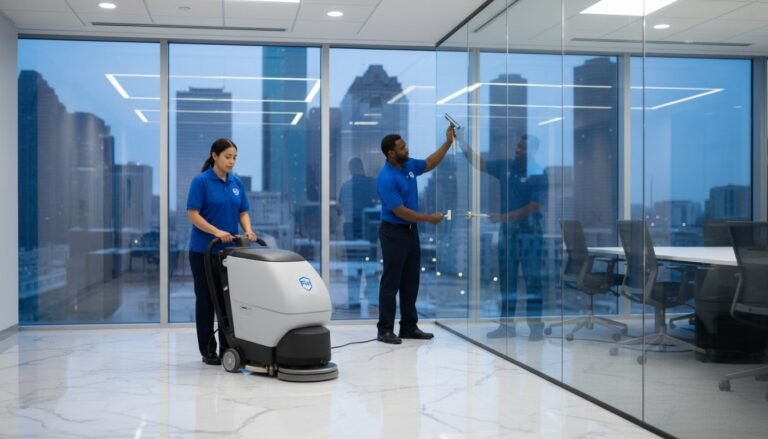
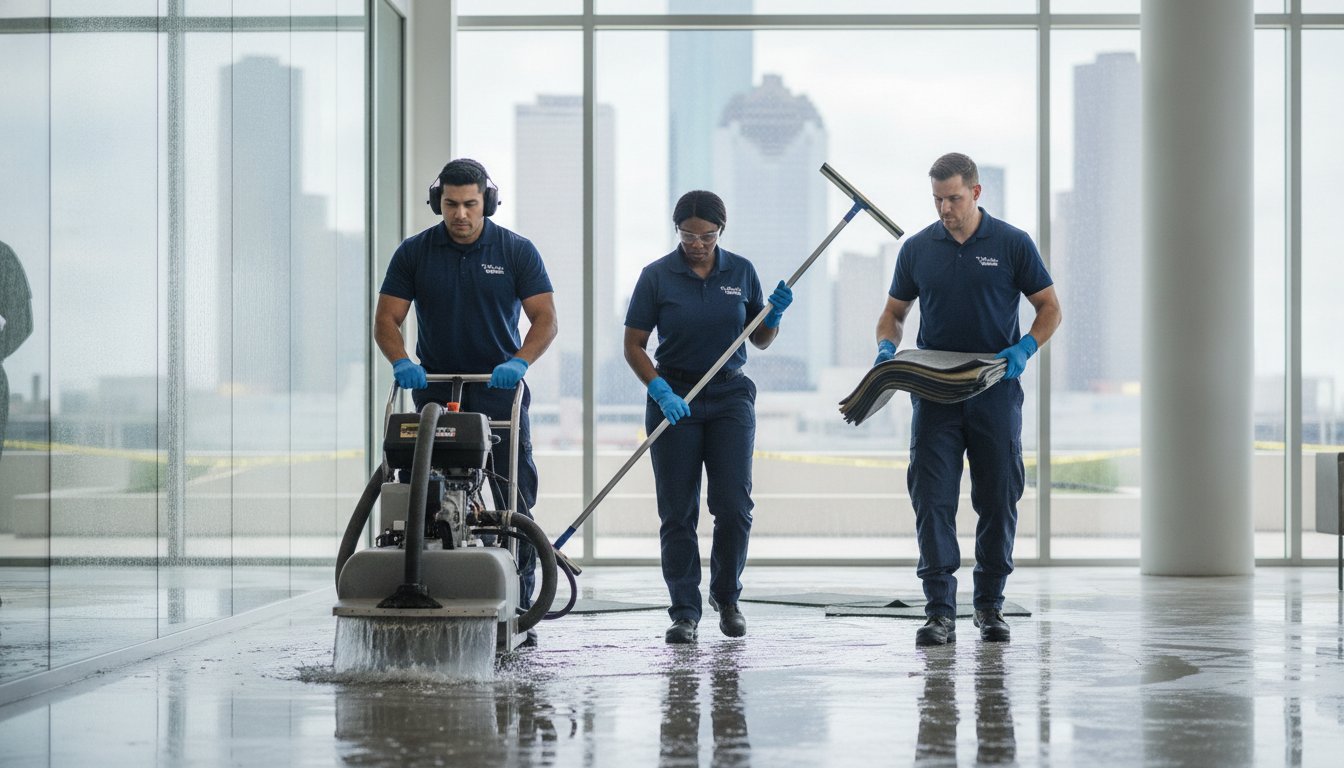
Post-Flood Commercial Deep Cleaning Services in Houston: A Strategic Management Guide (2026)
Your facility’s recovery after a flood isn’t just a cleaning task; it’s a high-stakes logistical operation where every hour of downtime erodes your market position. While the immediate instinct is to call any available crew, securing expert commercial deep cleaning services houston is only one piece of a larger strategic puzzle. You’re likely facing the exhausting reality of managing multiple specialty vendors while attempting to document every detail for insurance and regulatory compliance. We recognize that the pressure to return to business-as-usual often clashes with the rigid safety protocols required for Category 3 water damage.
This guide provides a professional framework to master the logistics of rapid facility recovery through specialized decontamination and vendor management. You’ll gain a clear roadmap for handling biohazard risks in sensitive environments like labs or financial institutions while meeting 2026 TCEQ disposal standards. We’ll examine how a single point of contact can streamline your recovery, ensuring that your path from disaster to operational excellence is both disciplined and efficient.
Key Takeaways
- Master the 5-phase strategic framework required to stabilize and restore high-traffic facilities after Category 3 water damage.
- Learn why specialized commercial deep cleaning services houston are critical for maintaining compliance in high-security sectors like laboratories and financial institutions.
- Discover how a Single Point of Contact model simplifies vendor management and billing during complex, multi-stage decontamination projects.
- Implement long-term resilience strategies, including regular pressure washing and exterior maintenance, to minimize future operational downtime.
Understanding Post-Flood Commercial Deep Cleaning Services in Houston
Post-flood recovery in a corporate environment is a complex, multi-stage decontamination and restoration process. It’s far removed from the scope of standard janitorial maintenance. While daily services focus on aesthetics and surface hygiene, commercial deep cleaning services houston address structural integrity and deep-seated biological threats. This specialized discipline requires a methodical approach to neutralize pathogens and extract moisture from building materials that are often overlooked during routine operations.
Houston’s unique geography presents a distinct challenge. Our high ambient humidity acts as a catalyst for secondary damage, turning a manageable incident into a structural crisis within hours. Professional intervention isn’t just a recommendation; it’s a necessity for preserving capital assets. Large-scale commercial properties require industrial-grade equipment, such as high-volume air movers and LGR dehumidifiers, to manage the atmospheric load. Relying on standard cleaning tools in a post-flood scenario is a strategic error that often leads to irreversible material degradation.
Integrating a professional disaster restoration process into your facility management plan ensures that every phase of recovery meets stringent safety standards. This transition from emergency response to deep decontamination requires technical expertise in chemistry and microbiology to ensure the environment is truly fit for re-occupancy.
The Critical Window for Moisture Control
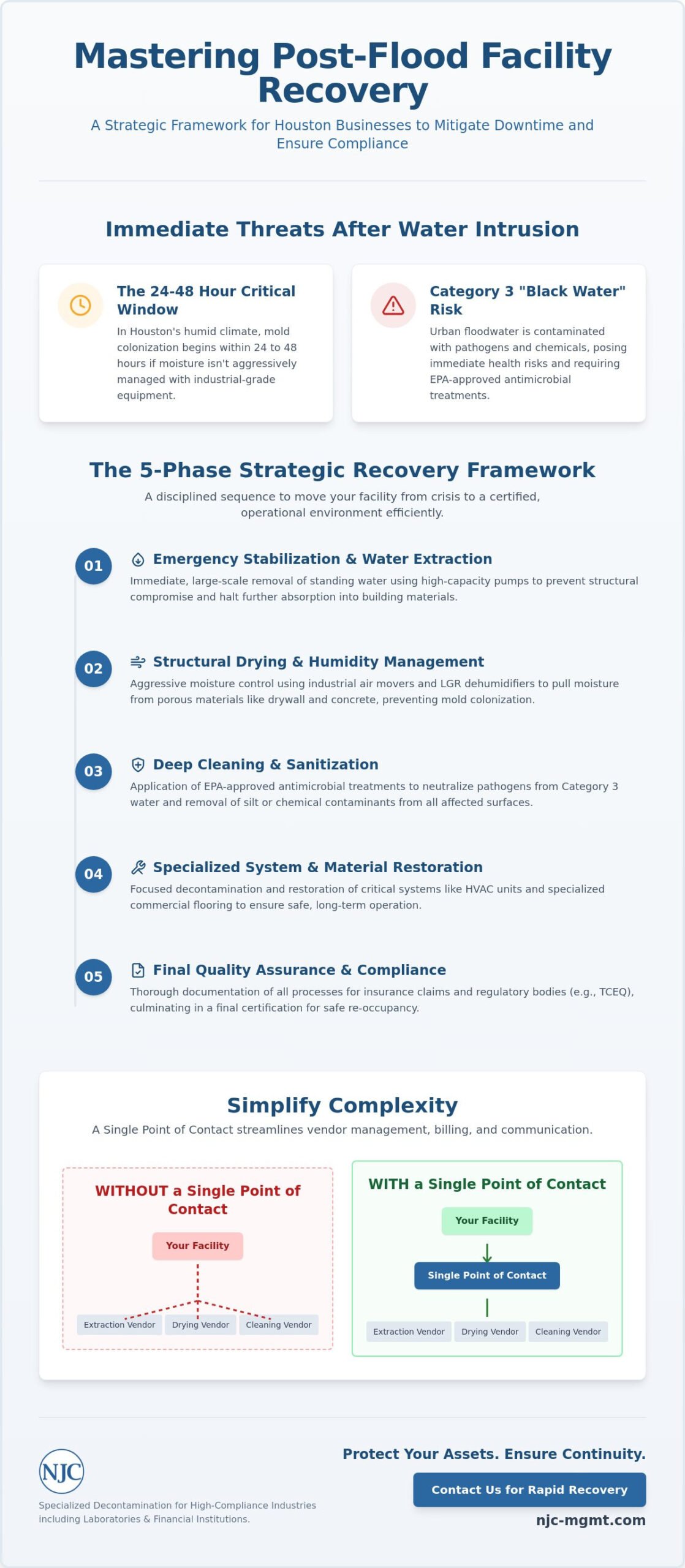
Time is your most scarce resource following a water intrusion event. In the Houston climate, mold colonization typically begins within a 24 to 48 hour window if moisture levels aren’t aggressively managed. Industrial dehumidification plays a central role here, as it pulls moisture from deep within porous substrates like drywall and concrete. Without this intervention, structural preservation becomes impossible. The stabilization phase is the first priority in commercial recovery to prevent catastrophic secondary damage.
Biohazard and Contamination Risks
Floodwaters in urban centers like Houston are almost universally classified as Category 3, or “Black Water.” This means the liquid contains significant pathogens, chemicals, and sewage that pose immediate health risks to your staff. Standard cleaning agents cannot neutralize these threats. We utilize EPA-approved antimicrobial treatments specifically formulated for commercial surfaces to ensure total decontamination. Safety protocols for cleaning crews are equally rigorous; initial entry always requires full personal protective equipment to mitigate exposure to airborne and waterborne biohazards. Managing these risks with precision is the only way to protect your organization’s human capital and long-term liability, a commitment to safety mirrored by professionals at TSIAC International when navigating the regulatory complexities of hazardous material abatement.
The 5-Phase Strategic Recovery Framework for Houston Facilities
Effective recovery demands a disciplined sequence of actions. You shouldn’t view this as a simple cleanup; it’s a structured restoration of your business environment. A fragmented approach leads to hidden costs and safety risks. Our 5-phase strategic framework provides the oversight needed to manage both budget and operational integrity:
- Phase 1: Emergency Stabilization and Water Extraction. Immediate removal of standing water to prevent structural compromise.
- Phase 2: Structural Drying and Humidity Management. Aggressive moisture control to stop mold colonization.
- Phase 3: Deep Cleaning and Sanitization. Neutralizing pathogens and removing silt or chemical contaminants.
- Phase 4: Specialized System Restoration. Focused care for HVAC units and commercial flooring.
- Phase 5: Final Quality Assurance and Compliance Certification. Documentation for insurance and safety clearance.
When choosing commercial deep cleaning services houston, ensure the provider follows this phased logic. This method moves your facility from a state of crisis to a certified, operational environment with minimal wasted motion.
Stabilization and Extraction Logistics
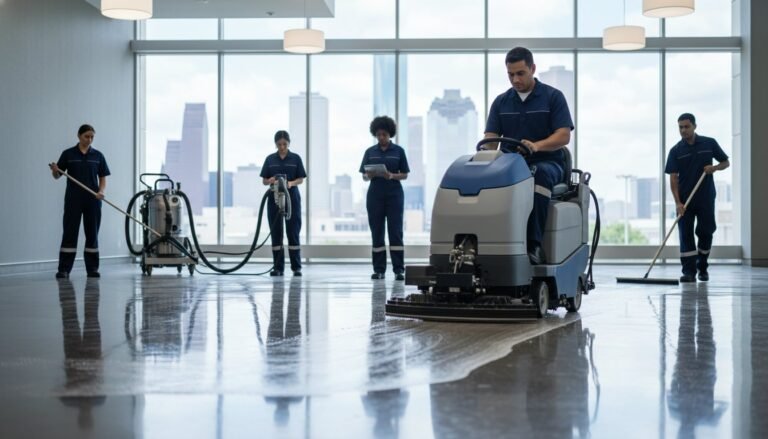
Coordination is the primary challenge during the stabilization phase. Multi-story buildings in downtown Houston require high-capacity, heavy-duty pumps and precise hose logistics to reach upper floors or basement levels. Resuming partial operations in lobbies or essential server rooms often takes priority to keep your core business functions alive. During these early, high-intensity hours, leveraging industrial cleaning services in Houston provides the necessary scale to handle large-scale water extraction while your internal teams focus on data and asset recovery.
Deep Cleaning and Decontamination Standards
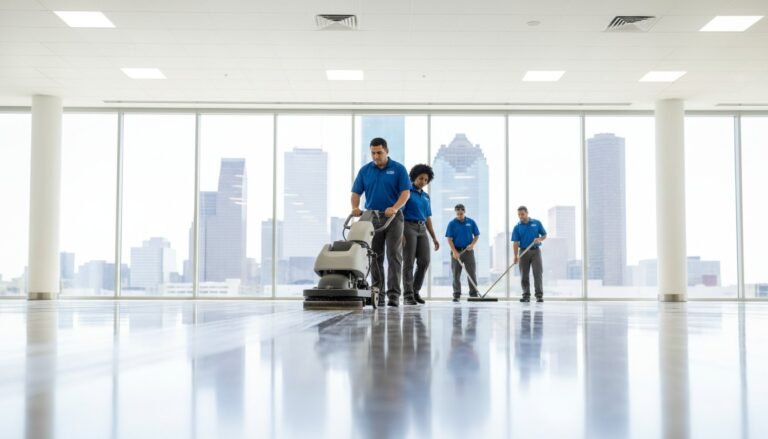
Surface wiping isn’t enough for Category 3 water damage. Pathogens and bacteria penetrate porous materials like drywall and ceiling tiles almost instantly. Following EPA guidelines for mold remediation is vital for the long-term safety of your workforce. Carpet cleaning protocols must involve deep antimicrobial rinsing, while hard floor surfaces like VCT or stone require professional stripping and waxing to remove trapped toxins. Integrating commercial floor cleaning in Houston into your long-term maintenance plan prevents the premature replacement of expensive flooring systems damaged by flood exposure. A single point of contact for quality assurance inspections can significantly reduce administrative friction during the final certification phase.
Specialized Decontamination for High-Compliance Houston Industries
Houston’s economic landscape is built on sectors that demand zero-margin-for-error environments. When a flood compromises a medical facility, a laboratory, or a financial hub, the recovery process moves beyond simple sanitation into the territory of technical validation. Managing commercial deep cleaning services houston for these high-compliance industries requires a deep understanding of the regulatory landscape and the specific biological or security risks involved. You aren’t just looking for a clean floor; you’re looking for a certified, operational environment that meets federal and industry-specific standards.
In facilities like daycare centers or commercial kitchens, the choice of decontamination chemicals is a matter of public health. We use EPA-approved antimicrobial treatments that are specifically rated for food-contact surfaces or educational environments. Adhering to OSHA flood cleanup safety standards is non-negotiable in these settings. It ensures that the transition back to daily operations doesn’t trade a water hazard for a chemical one. This level of detail is what separates a strategic recovery partner from a generic cleaning crew.
Restoring Labs and Clean Rooms
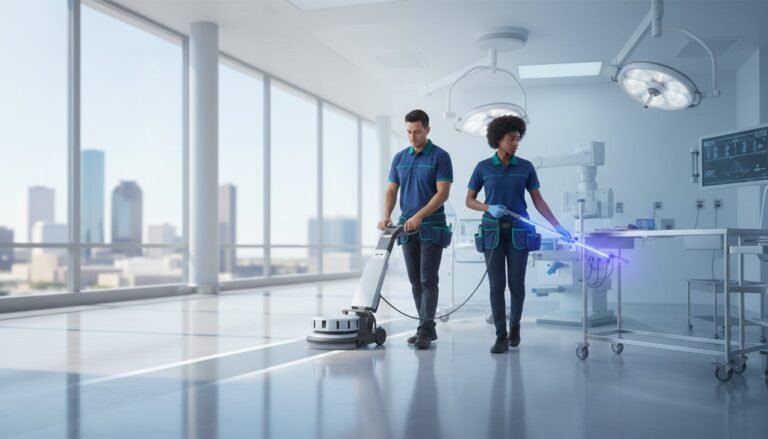
Clean room environments are defined by their ISO classification. Any environmental breach, especially Category 3 floodwater, invalidates that status immediately. Recovery isn’t complete until the space passes rigorous particulate testing and HEPA filtration audits to ensure air quality has returned to its baseline. Crews entering these zones need specialized training to navigate around sensitive mass spectrometers or clean-room-grade surfaces without causing secondary damage. We prioritize the strategic management of these high-compliance environments, ensuring that the recovery plan aligns perfectly with your facility’s specific validation requirements. It’s about restoring your scientific or manufacturing capability with clinical precision.
Financial Institutions and High-Security Sites
Banks and corporate headquarters present a unique set of logistical challenges. Security protocols don’t stop because of a flood event. Every member of a recovery crew must be properly vetted and background-checked before gaining access to secure vaults or sensitive document storage areas. Managing moisture in these zones is critical; high humidity can destroy physical records and compromise server room integrity within hours. Our approach maintains a discreet and professional tone, ensuring your organization’s reputation remains intact while we work behind the scenes to secure your physical infrastructure. We focus on the preservation of sensitive document storage areas, using controlled drying techniques that prevent the warping or mold growth that often follows traditional “wet” cleaning methods.
Streamlining Recovery Through Vendor Management and Consolidation
Managing a post-flood crisis is fundamentally a project management challenge. Many facility managers feel tempted to hire five different specialists to handle water extraction, structural repair, and commercial deep cleaning services houston. However, this fragmented approach often results in a communication vacuum. Coordination becomes your full-time job, pulling you away from your core business operations when they need you most. This lack of oversight can lead to overlapping schedules, conflicting priorities, and inflated costs.
A Single Point of Contact (SPOC) model replaces chaos with oversight. By consolidating your recovery phases under a strategic partner, you eliminate the friction between different crews. You no longer have to mediate when the drying team finishes late, delaying the cleaning crew. Instead, a managed layer ensures that every phase of the restoration flows logically into the next, maintaining a strict timeline for re-occupancy. This structure ensures that quality standards remain high across every square foot of your property.
The NJC Strategic Management Advantage
The Houston market is often flooded with “storm chasers” following a disaster, making the vetting process critical. We maintain a rigorous standard for every vendor in our network, ensuring they possess the specific technical expertise required for high-stakes recovery. Whether it’s a crew handling structural drying or a team focused on commercial deep cleaning services houston, quality must remain consistent across the entire project. This integrated approach is a cornerstone of our facility vendor management solutions. We bridge the gap between individual technical tasks and your broader business goals, ensuring that restoration work doesn’t just meet local codes but also aligns with your internal quality standards.
Staying updated on global cleaning standards and innovative maintenance techniques—such as those shared by Apartment Clean—can further help managers refine these internal quality benchmarks for any type of property.
Simplified Documentation for Insurance
Insurance adjusters and compliance auditors require precise, structured reporting to process claims and clear buildings for use. Managing ten different invoices and ten different sets of cleanup logs is an administrative nightmare that slows down your financial recovery. A consolidated management layer provides a single, comprehensive report that tracks every action taken from initial stabilization to final quality assurance. Centralized record-keeping ensures that no detail is lost, which is vital for long-term liability protection. Consolidated invoicing reduces the administrative burden on your finance department, allowing for faster processing and fewer disputes. If you’re ready to simplify your facility’s recovery, explore our vendor sourcing and management services to secure a professional partner before the next event occurs.
Building Post-Flood Resilience: Beyond the Initial Cleanup
Resilience is a strategic choice, not a reaction to a weather event. While the immediate focus remains on securing commercial deep cleaning services houston during a crisis, true operational stability comes from proactive facility management. High-performing organizations view post-flood recovery as the starting point for a more robust maintenance cycle rather than a one-time expense. You don’t want to be in a position where you’re reacting to the same structural vulnerabilities year after year. Instead, use the recovery phase to identify and fortify the weak points in your facility’s envelope.
The transition from emergency response to managed stability requires a disciplined approach to building care. It’s about moving beyond the “mop and bucket” mentality and embracing a framework where every maintenance task serves a defensive purpose. By integrating regular inspections and specialized cleaning into your annual budget, you reduce the likelihood of catastrophic downtime when the next storm hits the Gulf Coast.
Preventative Exterior Maintenance
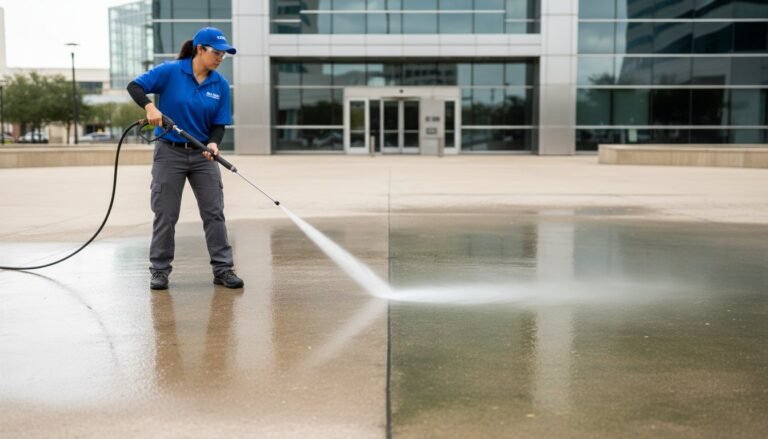
External maintenance is your first line of defense against water intrusion. Regular pressure washing and professional window cleaning do more than maintain your brand’s aesthetic; they prevent the accumulation of organic debris that clogs drainage systems during heavy rain. In Houston, a single blocked gutter or a neglected drainage grate can turn a standard storm into a facility-wide flood event. Integrating commercial window washing into your total care plan allows for regular inspections of the building facade, identifying potential seal failures before they become entry paths for water. Roof and gutter inspections should be scheduled quarterly to ensure your infrastructure is prepared for sudden atmospheric shifts.
Pre-Vetting Your Emergency Partners
Waiting for an active flood to find a vendor is a high-risk strategy. By the time water enters your lobby, the most reputable commercial deep cleaning services houston are already committed to their existing contract clients. Establishing a standing agreement with a professional janitorial company ensures you’re on a priority service list before a crisis hits. This proactive vetting process allows you to verify safety records and technical capabilities in a calm environment rather than under the pressure of a disaster. Priority service agreements often include pre-staged logistics and familiarization tours, allowing crews to act instantly without needing a site orientation during an emergency. The journey from crisis to resilience ends with a managed facility that’s always ready for the unexpected. Partner with NJC today to implement a comprehensive facility management strategy that protects your assets and your bottom line.
Strategic Readiness for the Houston Market
Houston’s climate and regulatory landscape in 2026 demand a transition from reactive cleanup to strategic facility management. By adopting a phased recovery framework and centralizing your vendor oversight, you eliminate the administrative friction that typically follows a disaster. Specialized environments, such as clean rooms and financial centers, require the technical validation only a partner with deep compliance expertise can provide. Securing commercial deep cleaning services houston is no longer just about aesthetics; it’s a vital component of business continuity and long-term risk mitigation. This integrated approach ensures that every square foot of your property meets the highest standards of safety and operational readiness.
Take the first step toward a more resilient facility today. Request a Strategic Janitorial Management Quote for Your Houston Property to leverage a single point of contact for over 20 facility solutions, including specialized compliance for labs and consolidated billing. We’re dedicated to aligning your recovery visions with the practical realities of the market. Building a resilient facility starts with the right partnership, and we look forward to helping you navigate your next recovery with confidence and precision.
Frequently Asked Questions
How soon can professional cleaning begin after a Houston flood?
Professional cleaning can begin as soon as the building is declared structurally safe and power has been secured by a licensed professional. In Houston’s humid climate, we prioritize entry within the first 24 to 48 hours to mitigate the risk of mold colonization. Rapid mobilization is essential for stabilizing the environment before secondary damage occurs.
Does commercial flood cleaning include mold remediation?
While commercial deep cleaning services houston focus on decontamination and sanitization, formal mold remediation is a separate process regulated by the Texas Department of Licensing and Regulation. We coordinate with licensed assessment and remediation specialists to ensure your facility meets all state requirements. This integrated approach ensures that biological threats are addressed by the appropriate certified professionals.
Can business operations continue during the post-flood cleaning process?
Business operations can often continue in unaffected zones once they’re professionally isolated and cleared for safety. We implement containment barriers and HEPA filtration to prevent cross-contamination between active recovery zones and operational areas. This strategic segmentation allows your core team to maintain essential functions while we restore the remainder of the facility.
What is the difference between water extraction and structural drying?
Water extraction is the physical removal of standing liquid using high-capacity pumps, whereas structural drying removes deeply embedded moisture from porous materials. Extraction is the immediate first step of the stabilization phase. Structural drying utilizes industrial dehumidifiers and air movers to reach the specific moisture equilibrium required to prevent long-term material failure.
How do you handle sensitive electronic equipment during flood cleanup?
Sensitive electronic equipment is moved to a climate-controlled, low-humidity environment immediately upon discovery. We don’t attempt to power on any device that’s been exposed to moisture or high humidity until it’s been inspected by a technical specialist. Proper handling during the initial recovery phase prevents short circuits and irreversible data loss in your critical IT infrastructure.
Are your cleaning chemicals safe for schools and daycare centers?
All antimicrobial treatments and cleaning agents used in educational environments are EPA-approved and rated for safety in high-occupancy areas. We select specific formulations that are effective against Category 3 contaminants but leave no hazardous residues on surfaces. This ensures that daycare centers and schools can return to operation with full confidence in their environment’s safety.
Do you provide the documentation needed for my insurance claim?
We provide comprehensive documentation, including detailed logs, photographs, and moisture readings, to support your insurance claim process. This data-driven reporting is essential for meeting the requirements of the National Flood Insurance Program and private carriers. Our consolidated management model ensures all recovery data is centralized, making the audit process more efficient for your administrative team.
Can you manage multi-location flood recovery simultaneously?
Our strategic management framework handles multi-location recovery through a single point of contact. We leverage a vetted network of specialty vendors to deploy crews across various Houston sites simultaneously while maintaining consistent quality standards. This centralized oversight ensures your entire property portfolio receives the same level of professional care and administrative reporting during a regional crisis.