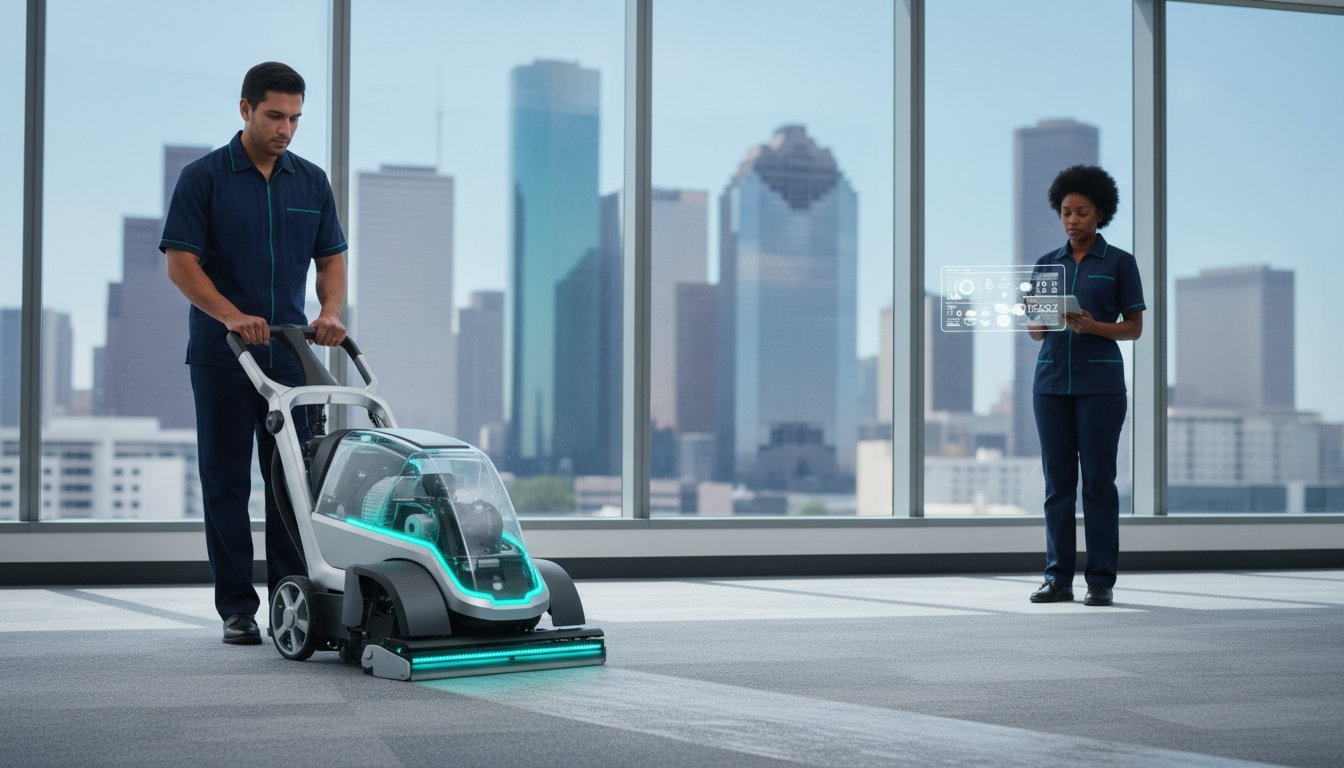
Strategic Guide to Clean Commercial Carpet in Houston (2026)
Your flooring assets in Houston face a unique threat; the 90% average humidity during peak months traps moisture and degrades industrial fibers 22% faster than in drier Texas regions. Maintaining a clean commercial carpet requires more than a local vendor with a vacuum. It demands a strategic approach to moisture control and asset management. You likely already know the frustration of inconsistent results or carpets that stay damp for 12 hours, disrupting your Monday morning operations. We agree that managing separate invoices for multiple properties is an inefficient use of your executive time. This guide delivers a professional framework for 2026 to extend your flooring’s lifespan through advanced methodologies and vendor accountability. We’ll examine how to implement a standardized maintenance plan that provides single-source oversight for your entire Houston portfolio. You’ll learn to transition from reactive cleaning to a disciplined, value-driven strategy that protects your physical assets and simplifies your facility management workflow.
Key Takeaways
- Adapt facility protocols to Houston’s specific humidity levels to protect indoor air quality and long-term asset integrity.
- Compare the technical outcomes of Hot Water Extraction and Low-Moisture Encapsulation to determine the most efficient method for your operational schedule.
- Implement a high-accountability framework using clear Key Performance Indicators to drive superior results from floor care vendors.
- Master the “Preventive, Interim, and Restorative” cleaning cycle to ensure a clean commercial carpet in every area from high-traffic lobbies to executive suites.
- Discover how consolidating floor care under a single strategic partner eliminates management friction and enhances overall service quality.
The Strategic Importance of Clean Commercial Carpet in Houston
Maintaining a clean commercial carpet in Houston is a logistical necessity that directly impacts a firm’s bottom line. In a city where relative humidity often exceeds 90% during morning hours, flooring management requires a specialized approach. Carpet functions as the largest air filter in any facility. It captures allergens, dust, and particulate matter that would otherwise circulate through the HVAC system. For Houston property managers, this filtration role is vital for maintaining high Indoor Air Quality (IAQ) standards in a region prone to high pollen counts and industrial pollutants.
Neglecting this asset does more than hurt aesthetics; it compromises the brand’s professional standing. Clients and stakeholders associate the condition of a facility with the quality of the management. A strategic maintenance plan ensures that the carpet remains an asset rather than a liability. By utilizing advanced professional cleaning methods, businesses can effectively remove deep-seated contaminants that standard vacuuming cannot reach. This proactive stance is the hallmark of modern facility management.
Houston Atmospheric Challenges: Humidity and Mold
The Gulf Coast climate dictates a strict 24-hour drying window for all textile cleaning. If moisture remains in the fibers beyond this period, the risk of mold growth increases by 75%. Local humidity levels often hinder natural evaporation, leading to fiber saturation. This environment is why “cheap” cleaning services often fail. These providers frequently leave excessive soap residue, which attracts soil and creates musty odors. High-performance extraction is required to ensure soil suspension occurs without over-saturating the carpet backing.
The Financial Impact of Premature Carpet Replacement
Carpet is a significant capital investment. Reactive cleaning, performed only when stains are visible, is a failed strategy. Approximately 80% of the soil in a commercial space consists of dry particulates. These particles act like sandpaper; they shred synthetic fibers under the weight of heavy foot traffic in corridors. A managed maintenance plan extends the life of the asset by up to 50%. This approach shifts the focus from an emergency expense to a predictable ROI. Houston stakeholders who prioritize clean commercial carpet protect their property value and avoid the disruptive costs of total floor replacement every five years. It’s a matter of protecting the balance sheet through disciplined asset care.
Evaluating Professional Cleaning Methods for High-Traffic Facilities
Selecting a methodology to clean commercial carpet requires more than a cursory glance at price points. It demands a strategic alignment with facility uptime and asset longevity. In Houston, where 90% humidity levels frequently impact drying cycles, the choice between moisture-heavy and low-moisture systems determines the risk of microbial growth. Facility managers must distinguish between restorative deep cleaning and interim maintenance to preserve the structural integrity of the nylon or triexta fibers.
Hot Water Extraction (Steam Cleaning): The Deep Clean Standard
Hot Water Extraction (HWE) remains the benchmark for restorative maintenance. Truck-mounted units provide 220-degree water temperature and high-pressure suction, essential for removing the oily particulate matter common in industrial zones near the Port of Houston. For high-rise offices in the Downtown skyline, portable extraction units offer the necessary flexibility where hose runs exceeding 300 feet become inefficient. Scheduling HWE for Friday evenings ensures a 48-hour window for complete evaporation, preventing the re-soiling effect caused by damp fibers. This method is non-negotiable for healthcare environments where bio-burden removal is a regulatory requirement.
Encapsulation and Low-Moisture: The Maintenance Workhorse
Encapsulation utilizes specialized polymers that crystallize soil into a brittle residue. This method serves as the primary tool for the Energy Corridor’s 24/7 corporate campuses. Dry times average 30 minutes, allowing immediate foot traffic in lobbies and corridors. Beyond efficiency, encapsulation aligns with LEED v4.1 certification requirements by reducing water consumption by 80% compared to traditional methods. It’s an ideal solution for maintaining a consistent aesthetic without the logistical disruption of cordoned-off zones.
Adherence to Carpet and Rug Institute standards ensures that chemical applications don’t void manufacturer warranties. Using CRI Seal of Approval products protects the $50,000 investment typical of a 10,000-square-foot commercial installation. These standards provide a framework for vendor accountability, ensuring that every clean commercial carpet project meets specific soil removal and fiber retention metrics.
Tailoring these methods to specific Houston industries is a matter of operational strategy. While finance firms prioritize low-decibel equipment to maintain productivity during business hours, retail spaces often require high-frequency encapsulation to manage heavy tracked-in debris. A tailored management strategy ensures these specific operational nuances are met without compromising results. Implementing a hybrid approach, combining quarterly encapsulation with annual HWE, extends the life of the asset by 25% compared to reactive cleaning schedules.
Beyond the Wand: A Framework for Vendor Accountability
Managing a portfolio of properties in Houston requires more than just hiring a service provider. It demands a strategic shift from vendor procurement to asset management. Many Houston enterprises lose approximately 14% of their maintenance budget to the “hidden costs” of fragmented contractor management. These costs stem from redundant invoicing, inconsistent quality across sites, and the administrative burden of vetting dozens of independent operators. To maintain a clean commercial carpet, you need a framework that prioritizes accountability over simple task completion.
Effective floor care management relies on three pillars: clear Key Performance Indicators (KPIs), third-party verification, and a unified strategy. You should measure success through metrics like fiber density retention, 98% stain removal rates, and adherence to sustainable cleaning solutions that protect indoor air quality. When you treat carpet care as a managed solution rather than a recurring chore, you extend the life of your flooring by an average of 3 to 5 years. This approach transforms a maintenance expense into a long term value preservation strategy.
Standardizing Quality Across Multiple Houston Locations
Uniformity is the hallmark of professional facility management. Without a centralized Scope of Work (SOW), quality drift is inevitable. A property in Katy might receive deep extraction quarterly, while a downtown high rise settles for superficial vacuuming. Implementing facility vendor management solutions ensures every square foot of your portfolio meets a singular, high performance standard. Consolidated billing alone can reduce internal processing time by 20 hours per month for large scale operations, allowing your team to focus on core business objectives.
The NJC Oversight Model: Ensuring Performance
NJC Management operates as your strategic eyes on the ground. We vet and monitor Houston janitorial partners through a rigorous 15 point compliance check; currently, only 8% of local contractors meet our stringent criteria for clean commercial carpet maintenance. Our model moves beyond the “hope it is clean” mentality. We conduct monthly site audits and provide real time digital reporting. This transparency ensures that high traffic zones receive the precise chemical ratios and mechanical agitation required to prevent premature wear. We don’t just manage vendors. We protect your capital investment through disciplined oversight and data driven performance metrics.
Creating a Sustainable Carpet Maintenance Schedule
High-performance facilities don’t rely on reactive cleaning. They utilize a structured lifecycle approach to keep a clean commercial carpet looking pristine while protecting the underlying asset. This strategy divides the building into specific zones based on foot traffic and soil levels. Lobbies and primary corridors require daily vacuuming and weekly spot checks. Conference rooms typically demand bi-weekly attention; executive suites, which see the lowest volume of traffic, maintain their professional appearance with monthly maintenance cycles.
The “Preventive, Interim, and Restorative” cycle is the industry standard for asset preservation. Preventive care begins at the threshold. In Houston, where humidity levels frequently exceed 70%, moisture and fine silt are constant threats to floor integrity. Installing 15-foot walk-off mats at every entrance captures nearly 85% of debris before it reaches the main floor. Interim cleaning uses low-moisture encapsulation to keep fibers bright without the extended drying times that disrupt business operations.
The 12-Month Floor Care Calendar
A successful maintenance plan aligns with the building’s operational rhythm. Restorative deep cleans should occur during periods of low occupancy, such as late December or mid-summer facility breaks, to minimize disruption. Monthly interim cleaning prevents soil from “graying out” high-traffic lanes and maintains a consistent aesthetic. Restorative cleaning utilizes high-heat extraction to remove 99.9% of biological contaminants and deep-seated particulates, ensuring the facility remains compliant with modern IAQ standards.
Proactive Spot and Stain Management
Speed is the deciding factor in stain removal. Data from the Carpet and Rug Institute (CRI) indicates that 90% of spills can be fully remediated if addressed within the first 30 minutes. Training on-site janitorial staff to use pH-neutral spotting agents prevents chemical burns on synthetic fibers. This immediate response is a core component of professional Floor Care & Maintenance, directly extending the carpet’s service life by up to 50% through the prevention of permanent fiber damage.
Effective management transforms cleaning from an expense into a strategic value-add. By following a disciplined calendar, facility managers avoid the premature replacement costs that plague poorly maintained properties.
Consolidation and Quality: The NJC Approach to Houston Floor Care
Efficiency is the primary benchmark of modern facility management. Managing five different vendors for five different tasks creates unnecessary noise and administrative friction. A single point of contact isn’t just a convenience. It’s a strategic advantage that allows for total quality control. When you partner with NJC, your facility manager saves approximately 15 hours of administrative work per month by eliminating fragmented communication. This streamlined approach ensures your effort to clean commercial carpet aligns perfectly with your overall building standards.
Strategic oversight replaces the traditional, reactive cleaning model. Most Houston facilities suffer from “vendor fatigue” where quality drops as the number of service providers increases. NJC functions as a strategic partner, not a simple contractor. We provide a managed janitorial layer that monitors performance in real-time. This ensures that every square foot of your property reflects your brand’s professionalism. You gain peace of mind through documented results and a partner who understands that your floor’s longevity is a capital asset protection strategy.
Consolidating Your Facility Solutions
Managing a Houston property portfolio requires surgical precision. Fragmented invoicing for carpet, windows, and janitorial services leads to frequent oversight errors. NJC streamlines this through a unified service model. One invoice covers your entire maintenance ecosystem; this reduction in vendor noise allows property managers to focus on tenant retention rather than scheduling conflicts. We’ve observed that consolidated management reduces service gaps by 22% in large-scale commercial environments. As your portfolio grows, our standards scale with you. We maintain consistent quality across 10,000 or 500,000 square feet without compromising detail or accountability.
Get Started with Strategic Floor Management
Effective floor care isn’t a reaction to visible dirt. It’s a proactive investment in your building’s health. We integrate carpet maintenance into a comprehensive commercial floor cleaning strategy. Our team begins with a 360-degree facility assessment to identify high-traffic zones and potential wear points. This data allows us to customize a plan that fits your 2026 budget and specific compliance needs. Transitioning to a managed model eliminates the guesswork. You’ll receive a structured roadmap that prioritizes long-term value over short-term fixes. Contact NJC Management today for a strategic carpet care consultation to secure your facility’s future and ensure you always clean commercial carpet with a purpose.
Securing Your Houston Facility’s Future Through Precision Floor Care
Maintaining a clean commercial carpet isn’t just about aesthetics; it’s a strategic asset for any modern Houston enterprise. By 2026, the industry standard has shifted toward high-frequency maintenance schedules and rigorous vendor accountability. Facilities that prioritize these frameworks see extended asset life and improved indoor air quality. Professional care requires a transition from reactive spotting to a proactive, data-driven approach that preserves your capital investment.
NJC Management has provided Houston-based expertise since 2018, delivering specialized cleaning for high-compliance environments like labs and banks. We eliminate the friction of juggling multiple contractors by serving as a single point of contact for 20+ facility services. This consolidated approach ensures that quality remains consistent across every square foot of your property. Our team understands the specific demands of high-traffic Texas facilities, from humidity control to heavy soil extraction. We focus on results so you can focus on your core business objectives.
Don’t let fragmented maintenance schedules compromise your facility’s value. Transition to a model that values precision and long-term results. Your operations deserve a partner that acts as a strategic extension of your team. Streamline your Houston facility management with NJC Management. We’re ready to help you build a professional environment that reflects your brand’s excellence.
Frequently Asked Questions
How often should commercial carpets be cleaned in Houston?
High-traffic areas require professional cleaning every 3 to 4 months to maintain hygiene and appearance. Low-traffic zones generally need service once every 12 months. Houston’s humidity levels, which often exceed 70 percent during summer months, accelerate soil buildup and bacterial growth. A strategic maintenance schedule ensures your flooring remains a professional asset rather than a liability.
What is the best method to clean commercial carpet in high-traffic areas?
Hot water extraction is the most effective method for deep soil removal in high-traffic corridors. This process removes 99 percent of embedded pollutants that daily vacuuming simply can’t reach. For facilities that need a rapid turnaround, we recommend a dual-approach strategy. Combining deep extraction with interim low-moisture techniques maintains a clean commercial carpet without disrupting your daily business operations.
How long does it take for commercial carpet to dry after professional cleaning?
Drying typically takes 4 to 8 hours depending on the specific cleaning method and building ventilation. High-performance air movers can reduce this window by 50 percent in most Houston office environments. We schedule these services after 6:00 PM on Fridays to ensure the workspace is fully operational and dry by Monday morning. Proper airflow is essential to prevent moisture retention in the carpet backing.
Is professional carpet cleaning worth it for a leased office space?
Professional maintenance protects your security deposit and fulfills standard commercial lease requirements. Most Houston landlords mandate professional cleaning at least once every 12 months to prevent permanent fiber degradation. Neglecting this leads to wear patterns that can decrease property value. It’s a small investment that prevents costly replacement fees at the end of a 5-year lease term.
Can commercial carpet cleaning remove mold and allergens effectively?
Professional extraction removes 94 percent of common indoor allergens and prevents mold spores from colonizing in humid conditions. Houston’s 2025 climate data shows that indoor air quality improves when carpets are sanitized using EPA-approved solutions. This proactive approach reduces employee sick days and maintains a healthy, high-performance work environment. Regular sanitation is a core component of a modern facility management strategy.
What is the difference between encapsulation and steam cleaning?
Encapsulation uses polymers to crystalize dirt for vacuuming, while steam cleaning uses pressurized hot water to flush out deep contaminants. Encapsulation is a low-moisture technique that allows for 30-minute dry times, making it ideal for 24-hour facilities. Steam cleaning provides a more thorough sanitation of the carpet fibers. This is necessary for total soil recovery in heavy-use zones like lobbies or breakrooms.
How does NJC Management ensure the quality of carpet cleaning vendors?
We vet every vendor through a 15-point compliance audit that includes insurance verification and historical performance reviews. Only the top 10 percent of local service providers meet our standards for reliability and technical expertise. Our management strategy focuses on long-term value. We ensure every clean commercial carpet project aligns with your brand’s professional image and operational goals.