Restaurant Kitchen Deep Cleaning in Houston: The 2026 Facility Manager’s Guide
With 50% of Texas restaurants reporting they weren’t profitable in 2025, your facility management strategy isn’t just about maintenance; it’s a critical component of your bottom line. Since the City of Houston adopted the FDA Model Food Code and Texas Food Establishment Rules on September 1, 2025, the margin for error in sanitation has vanished. You shouldn’t have to worry about failing an inspection because of inconsistent work from unvetted vendors. Managing a high-traffic establishment requires a strategic partner who understands that restaurant kitchen deep cleaning houston is a mandatory compliance protocol to ensure operational continuity.
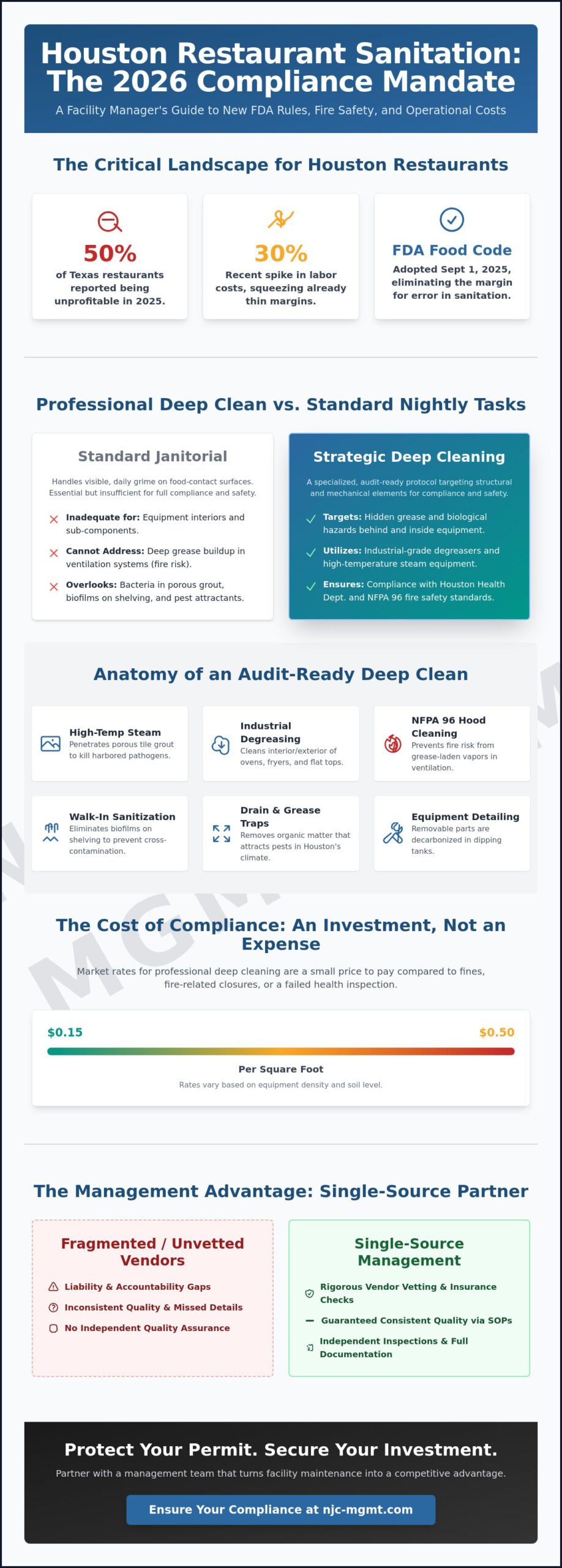
We understand the frustration of managing fragmented vendors while facing rising labor costs that spiked by 30% recently. This guide provides the framework you need to master 2026 sanitation standards, reduce fire risks through professional degreasing, and consolidate your maintenance under one point of contact. You’ll learn how to navigate current market rates, which range from $0.15 to $0.50 per square foot, and implement a quality assurance system that targets zero health department violations. We’ll examine the specific equipment detailing requirements and vendor sourcing strategies that turn facility management into a competitive advantage.
Key Takeaways
- Understand how the 2025 adoption of the FDA Model Food Code impacts your Houston Health Department scores and permit renewals.
- Identify the technical requirements of an audit-ready clean, from high-temperature steam application to industrial-grade degreasing of equipment interiors.
- Discover why professional project management for restaurant kitchen deep cleaning houston eliminates the liability and accountability gaps common with unvetted labor.
- Master a strategic checklist to determine optimal cleaning frequencies and coordinate with back-of-house teams to protect your inventory.
- Learn how a single-source management partner ensures consistent quality through rigorous vendor vetting and independent inspections.
The Critical Role of Professional Kitchen Deep Cleaning in Houston
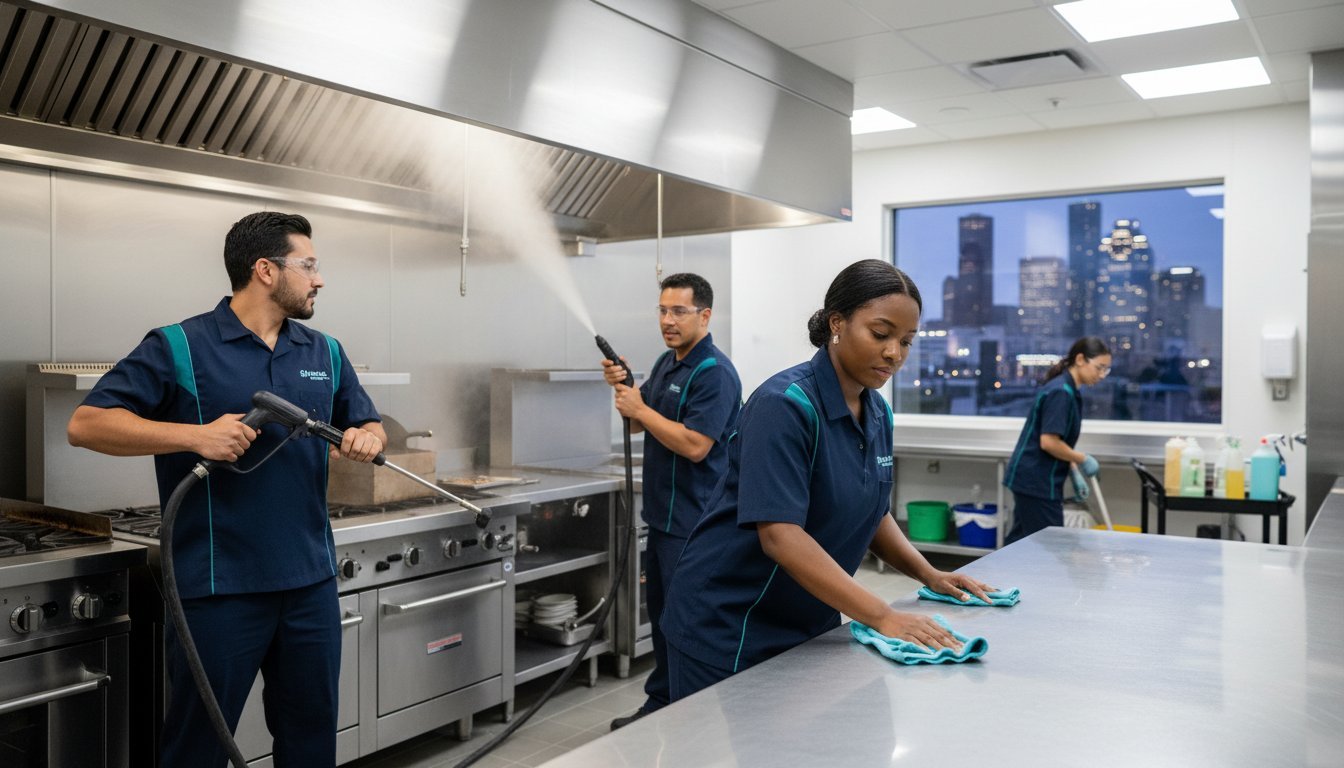
Professional restaurant kitchen deep cleaning houston is a strategic sanitation protocol that targets the structural and mechanical elements of your facility. It isn’t a replacement for nightly janitorial tasks; it’s a specialized intervention. While your internal team handles visible food-contact surfaces, deep cleaning addresses equipment interiors, ventilation systems, and the porous grout lines that harbor dangerous bacteria. This process ensures that your ‘City of Houston Food Service’ permit renewal remains secure by eliminating the hidden grease and biological hazards that standard nightly crews often overlook.
Effective management of these procedures is essential for operational continuity. Standard janitorial labor rarely possesses the industrial-grade chemicals or high-temperature steam equipment needed to sanitize complex machinery. When grease accumulates in ventilation or behind heavy appliances, it creates a dual threat: a breeding ground for pests and a high-velocity fuel source for commercial kitchen fires. Strategic facility managers recognize that professional degreasing is an investment in risk mitigation that protects both the brand’s reputation and its physical assets.
Houston Health Department and Harris County Compliance
The regulatory landscape in Houston underwent a major shift on September 1, 2025, when the city adopted the FDA Model Food Code. This update replaced the previous local ordinances with standardized, rigorous inspection criteria. To remain audit-ready, your facility must demonstrate adherence to Sanitation Standard Operating Procedures (SSOPs) through meticulous documentation. Maintaining a professional cleaning log is no longer optional; it’s a primary requirement for inspectors. A scheduled restaurant kitchen deep cleaning houston program directly mitigates the risk of ‘Critical Violations’ by ensuring that non-food contact surfaces and equipment sub-components meet the updated 2026 hygiene standards.
NFPA 96 Standards and Fire Safety in Houston
Compliance with NFPA 96 is the baseline for fire protection and ventilation control in any commercial environment. These standards dictate how grease-laden vapors are managed and removed from your facility. For high-volume Houston kitchens operating 24 hours or utilizing solid fuel, NFPA 96 mandates professional hood and duct cleaning every 30 days to prevent hazardous grease buildup. Professional oversight ensures your kitchen meets these insurance-mandated safety protocols, preventing the catastrophic financial loss associated with fire-related closures. By consolidating these high-stakes tasks under a single point of management, you ensure that every degreasing cycle is performed to code and fully documented for your underwriters.
What a Strategic Kitchen Deep Clean Includes: Beyond the Surface
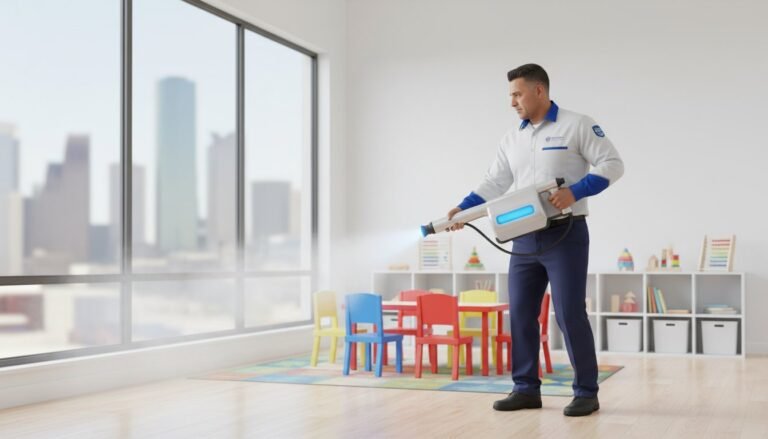
A strategic clean transcends the standard nightly wipe-down by focusing on mechanical integrity and biological safety. While daily crews manage surface-level debris, professional restaurant kitchen deep cleaning houston utilizes high-temperature steam to penetrate porous surfaces like tile grout. This process is essential because grout lines often harbor pathogens that standard mopping simply redistributes. Industrial-grade degreasing of ovens, fryers, and flat tops targets both the interior and exterior components, ensuring that heat transfer remains efficient and carbon buildup doesn’t compromise food flavor profiles.
Sanitization of walk-in coolers and dry storage shelving is equally critical for preventing cross-contamination. Biofilms can develop on storage racks over time, creating a persistent risk of foodborne illness if not addressed with specialized antimicrobial agents. Adhering to FDA cleaning and sanitizing guidelines during these deep-clean cycles protects your inventory and your guests. Detail cleaning of floor drains and grease traps follows, which is vital for eliminating the organic matter that serves as a primary attractant for pests in the humid Houston climate.
Equipment-Specific Deep Cleaning Protocols
Technical precision is required for heavy line equipment. Removable parts, such as burner grates and fryer baskets, undergo a ‘dipping’ process in decarbonizing tanks to remove years of accumulated grease. Beyond the cooking line, cleaning refrigeration coils is a high-priority task. Dirty coils force compressors to work harder, but professional maintenance can improve energy efficiency by 15% to 25%. This service extends the lifespan of expensive assets while reducing utility costs, which is a significant advantage given the 35% increase in food costs reported by Texas operators recently. Addressing ‘hidden’ grease traps behind heavy equipment ensures that no flammable residue remains in the shadows of your kitchen.
Ceiling-to-Floor Sanitation Framework
The sanitation process must follow a top-down logic to prevent re-contaminating cleaned surfaces. High-dusting of HVAC vents and ceiling tiles removes particulates that could otherwise fall into active prep areas. This leads into wall-to-wall sanitation, where stainless steel backsplashes and prep stations are restored to a surgical standard. Integrating these rigorous protocols into a comprehensive facility management strategy ensures your kitchen operates at peak performance. The final phase involves a deep floor treatment, including stripping and scrubbing, to restore the slip-resistance necessary for a safe, high-volume work environment.
Professional Management vs. Traditional Janitorial Labor
Relying on unvetted, “mom-and-pop” cleaners creates a significant liability gap for modern hospitality groups. These crews often lack the technical training required to handle industrial-grade chemicals, which can lead to etched stainless steel or permanent damage to equipment gaskets. A failed inspection under the Texas Food Establishment Rules (TFER) isn’t just a minor setback; it’s a public record that immediately erodes brand equity. For any high-volume establishment, restaurant kitchen deep cleaning houston must be performed by technicians who carry comprehensive liability insurance and industry-specific certifications.
Nationwide Janitorial Connect introduces a layer of accountability that labor-only crews simply can’t provide. Multi-unit restaurant owners in Houston often struggle with fragmented billing from dozens of different service providers. Consolidating these requirements through a strategic management partner streamlines your entire operation. You receive a single invoice, maintain one point of contact, and ensure a uniform standard of excellence across your entire portfolio. This approach eliminates the administrative friction that typically drains a facility manager’s resources, allowing for long-term value creation rather than constant crisis management.
The Single Point of Contact Advantage
Managing multiple maintenance vendors often leads to a “blame game” when operational issues arise. If a floor crew blames the degreasing team for chemical residue, the facility manager is forced to mediate. Nationwide Janitorial Connect eliminates this conflict by coordinating all workflows through a single, authoritative channel. This centralized scheduling ensures that restaurant kitchen deep cleaning houston occurs without overlapping other maintenance cycles, which prevents unnecessary operational downtime. For those looking to optimize their entire maintenance stack, exploring facility vendor management solutions is the logical next step for growth-oriented brands.
Quality Assurance and Third-Party Inspections
The Nationwide Janitorial Connect method prioritizes verification over trust. Every deep clean is followed by a rigorous post-service inspection to ensure all 2026 compliance standards are met. We utilize digital reporting and high-resolution photo documentation to provide stakeholders with undeniable proof of sanitation. This transparency significantly reduces the administrative burden on Houston restaurant managers. They no longer need to spend hours chasing down cleaning logs or verifying work quality manually. Managed cleaning isn’t just about the physical work performed; it’s about the security provided by professional oversight and disciplined reporting.
Planning Your Deep Clean: A Facility Manager’s Checklist
Planning restaurant kitchen deep cleaning houston requires precise logistical coordination to protect your bottom line. High-volume establishments, particularly those utilizing solid fuels or high-protein menus, should adhere to a quarterly schedule. Standard dining operations might find semi-annual service sufficient. Since 50% of Texas restaurants reported being unprofitable in 2025, every hour of operational downtime must be strictly optimized. Setting clear KPIs before the crew arrives, such as 100% grease removal from secondary surfaces or verified sanitization of refrigeration coils, ensures the team meets your exact standards. Safety protocols remain the highest priority. Every session must include electrical lockout/tagout procedures for heavy line equipment and strict adherence to localized chemical storage regulations to prevent cross-contamination.
Strategic facility managers view these sessions as an opportunity to reset the facility’s baseline. By coordinating with the back-of-house (BOH) team, you ensure that inventory is secured and prep surfaces are cleared, allowing technicians to work without obstruction. This level of preparation prevents the ‘blame game’ between staff and vendors regarding missing inventory or damaged equipment. It’s a disciplined approach that reflects the modern business elegance of a well-managed establishment.
Scheduling for Zero Operational Disruption
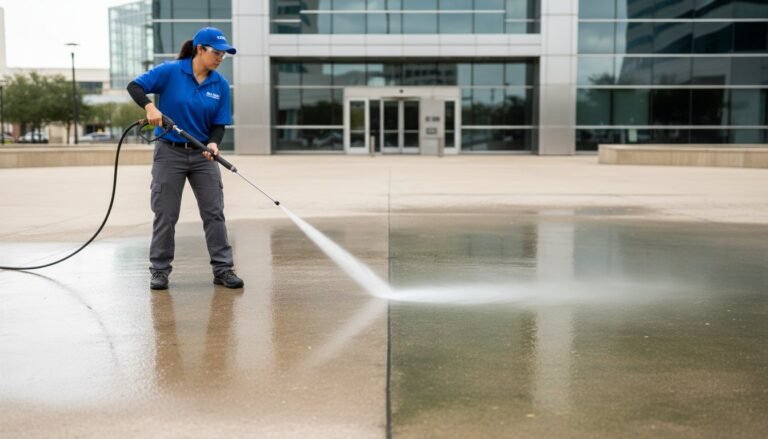
Operational continuity depends on invisible maintenance. Overnight sessions are the standard for the Houston market, but ‘dark day’ cleaning allows for more intensive structural work without the pressure of a morning shift. You can maximize efficiency by integrating these sessions with broader industrial cleaning services, such as pressure washing exterior loading docks or specialized floor care. Clear communication with the morning prep team is essential. They must know exactly when the kitchen will be back online to avoid delays in their production start times. This prevents the friction that often arises from poorly coordinated maintenance cycles.
Pre-Service Preparation for Restaurant Managers
A successful deep clean begins before the technicians arrive on-site. Your BOH team must follow a strict closing protocol to minimize billable labor hours and maximize results. A disciplined manager ensures the following steps are completed before the service window begins:
- Remove Perishables: Clear all walk-ins and prep stations to prevent any risk of chemical exposure.
- Protect Electronics: Cover POS systems and sensitive kitchen display units with heavy-grade plastic.
- Empty Grease Bins: Ensure all waste is disposed of to allow technicians full access to traps and floor drains.
Technicians need immediate access to high-pressure water sources and high-voltage outlets to operate specialized steam equipment. Establishing this ‘closing’ protocol ensures the team spends their time cleaning, not prepping the site. If you’re ready to professionalize your facility maintenance and ensure long-term value creation, contact Nationwide Janitorial Connect for a strategic facility assessment.
The Nationwide Janitorial Connect Solution: Elevating Houston’s Kitchen Standards
Nationwide Janitorial Connect operates as a strategic partner rather than a mere service provider. We recognize that facility maintenance is a critical component of your brand’s equity. Managing restaurant kitchen deep cleaning houston through a fragmented vendor list leads to inconsistent quality and administrative fatigue. Our model eliminates these inefficiencies by consolidating over 20 facility solutions into a single monthly invoice. This approach allows facility managers to focus on high-level strategy while we handle the operational details. Whether your establishment is located in the historic Heights or the growing commercial hubs of Sugar Land, we ensure your sanitation standards remain identical across every location in your portfolio.
Our commitment to excellence begins with a rigorous vetting process for every local technician. We don’t just source labor; we curate a portfolio of specialized vendors who possess the certifications required for 2026 compliance. This disciplined oversight ensures that every degreasing cycle and equipment detail meets our surgical standards. By acting as a bridge between your vision and the reality of the Houston market, we provide a stable background for your culinary team to excel.
Strategic Vendor Sourcing in Houston
We leverage an exclusive network to identify the most capable specialized kitchen cleaners in the region. This isn’t about finding the lowest bidder. It’s about securing a partner who understands the nuances of high-volume commercial environments. Our approach to Houston janitorial services involves continuous performance monitoring to ensure long-term service quality. We use independent quality assurance inspections to verify that every technician remains compliant with both our internal benchmarks and the latest municipal food codes. This proactive management style prevents the service drift common with unmanaged crews.
Transitioning to a Managed Facility Model
Moving away from direct vendor management is a logical step for growth-oriented brands. The onboarding process begins with a comprehensive site audit to establish a baseline for your facility. We then develop a consolidated maintenance schedule that aligns with your operational rhythm. Houston facility managers are increasingly adopting this model to escape the administrative friction of managing dozens of individual contracts. Our system provides a clear direction and a single point of accountability for your entire facility stack. Ready to simplify your kitchen maintenance? Contact Nationwide Janitorial Connect for a consolidated quote and discover the value of a managed facility strategy.
Strategic Sanitation for Houston’s Culinary Leaders
Mastering restaurant kitchen deep cleaning houston is no longer a matter of simple hygiene; it’s a strategic necessity for protecting your permit and your people. Since the regulatory shift on September 1, 2025, the demand for audit-ready facilities has only intensified. You’ve learned how specialized equipment detailing and rigorous scheduling prevent the critical violations that lead to closures. By moving away from unvetted labor and embracing a managed model, you secure the operational continuity required to thrive in Houston’s competitive 2026 market.
NJC Management serves as your strategic partner in this transition. We provide a single point of contact for over 20 facility solutions, backed by rigorous vendor vetting and independent QA inspections. Our model ensures that multi-unit operators benefit from consolidated billing and uniform standards across every location. It’s time to replace administrative friction with professional certainty. Consolidate your kitchen maintenance with NJC Management today and ensure your establishment remains a benchmark of excellence.
Frequently Asked Questions
How often should a commercial kitchen in Houston undergo deep cleaning?
High-volume establishments using solid fuels or operating 24 hours a day require professional deep cleaning every 90 days. Standard full-service restaurants typically find a semi-annual schedule sufficient for maintaining compliance. These frequencies align with NFPA 96 fire safety standards and ensure your facility remains ready for unannounced municipal inspections.
What is the difference between nightly janitorial services and deep cleaning?
Nightly janitorial services focus on visible food-contact surfaces, floor sweeping, and trash removal to maintain daily hygiene. Professional restaurant kitchen deep cleaning houston is a restoration process that targets equipment interiors, ventilation ducts, and porous surfaces. It involves industrial-grade degreasing and high-temperature steam that standard nightly crews aren’t equipped to perform.
Does professional kitchen cleaning help in passing Houston Health Department inspections?
Yes, professional deep cleaning directly addresses the “Critical Violations” that lead to point deductions and permit suspensions. Since the city’s adoption of the FDA Model Food Code in late 2025, inspectors have placed higher scrutiny on non-food contact surfaces. A documented deep-cleaning log proves you’re following required Sanitation Standard Operating Procedures (SSOPs).
How long does a typical restaurant kitchen deep clean take?
A comprehensive deep clean usually requires 6 to 10 hours depending on the square footage and equipment density. Larger facilities or those with significant carbon buildup may require staggered sessions over two nights. We coordinate these windows to ensure the kitchen is fully sanitized and dry before the morning prep team arrives.
Do I need to shut down my restaurant during the deep cleaning process?
No, you don’t need to disrupt your service hours for this maintenance. Most sessions are performed during “dark hours” when the kitchen is closed to ensure zero operational downtime. For establishments that operate 24/7, we implement a phased approach to clean specific zones while the line remains functional.
Are the chemicals used in deep cleaning safe for food-contact surfaces?
All cleaning agents used by our vetted technicians are EPA-registered and specifically formulated for food-service environments. These industrial degreasers are biodegradable and followed by a thorough potable water rinse. This process ensures no chemical residue remains to compromise food safety or flavor profiles.
Can NJC Management handle multi-location restaurant groups in Texas?
Yes, we specialize in managing facility portfolios for multi-unit operators across Houston and the surrounding regions. Our model provides a single point of contact for all your locations, ensuring identical standards in The Heights, Sugar Land, or Katy. You receive one consolidated invoice, which significantly reduces the administrative burden on your accounting team.
What certifications should I look for in a Houston kitchen cleaning vendor?
You should verify that your vendor holds IKECA or PHILTRE certifications for exhaust system cleaning and adheres to NFPA 96 standards. It’s also vital to ensure they carry comprehensive liability insurance and workers’ compensation coverage. NJC Management handles this vetting process internally, so you only work with technicians who meet these professional benchmarks.