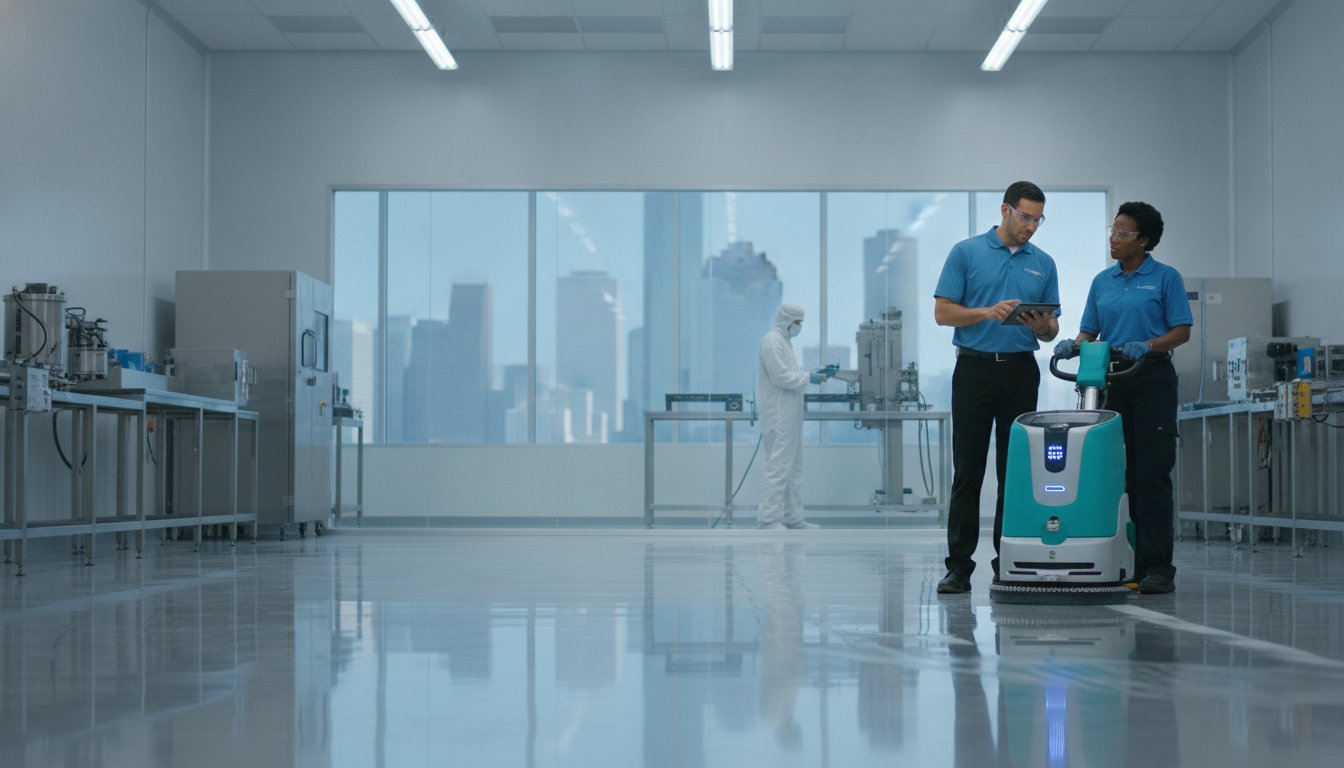
Industrial Cleaning Management Services: A Strategic Guide to Facility Excellence
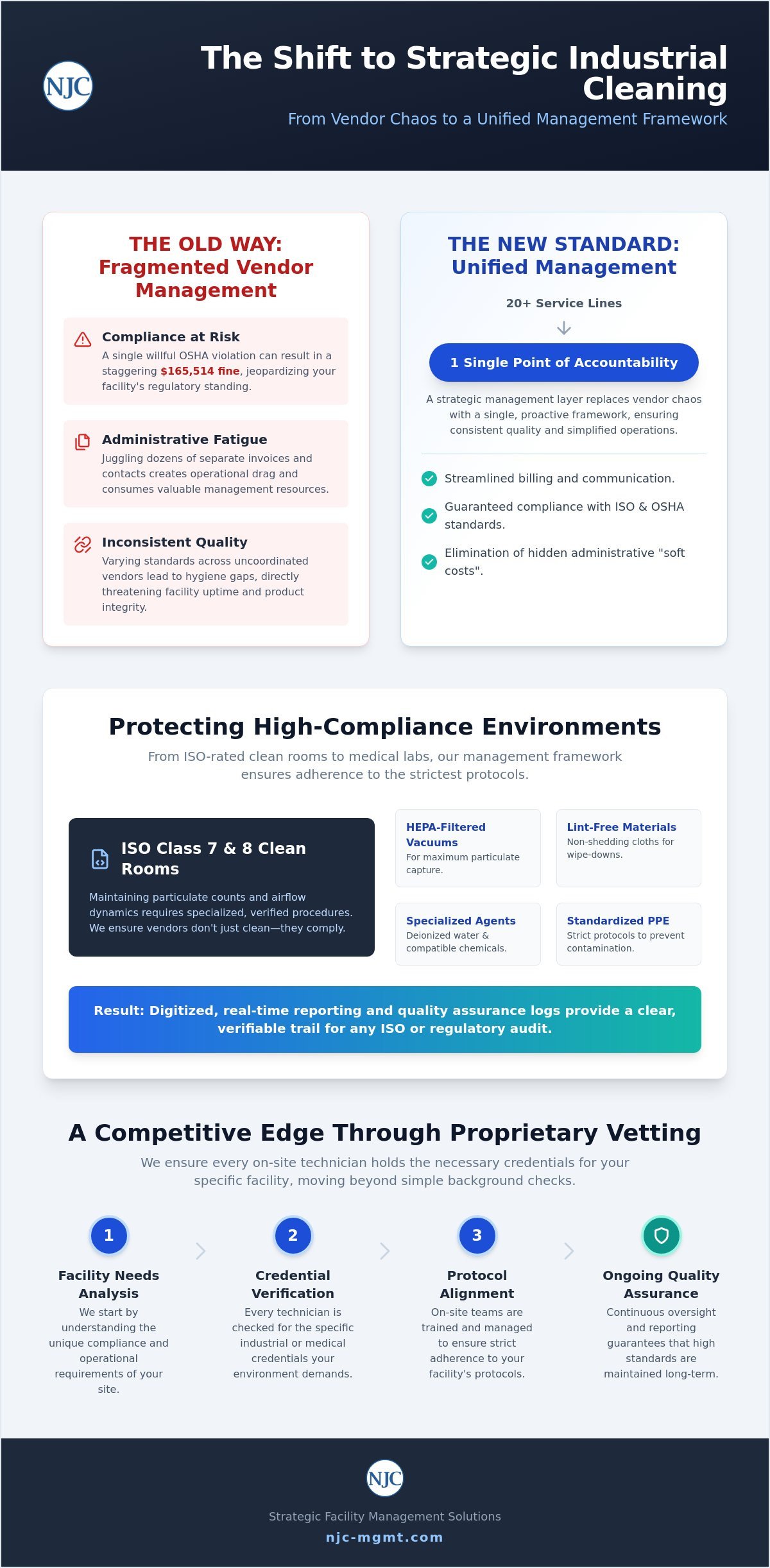
A single willful OSHA violation in 2026 can cost your facility upwards of $165,514, yet many organizations continue to gamble their compliance on a fragmented network of uncoordinated vendors. Managing dozens of separate invoices and varying quality standards across clean rooms and laboratories creates a level of administrative fatigue that stifles operational growth. You recognize that inconsistent hygiene isn’t just a maintenance issue; it’s a direct threat to your facility’s uptime and regulatory standing.
This guide details how a sophisticated approach to industrial cleaning management services can replace vendor chaos with a single, strategic framework. You’ll learn how to consolidate over 20 service lines into one point of accountability, ensuring that high-compliance zones meet every ISO and OSHA requirement without constant oversight. We’ll examine the transition from reactive cleaning to a proactive management model that guarantees consistent quality, simplifies your billing, and secures your facility’s operational excellence for the long term.
Key Takeaways
- Move beyond managing individual laborers by adopting a strategic management layer that oversees all specialized facility hygiene and maintenance.
- Protect your high-compliance zones, including ISO Class 7 and 8 clean rooms, through standardized PPE protocols and verified chemical management.
- Streamline your operations using industrial cleaning management services to consolidate 20+ vendors into a single point of contact and billing.
- Identify and eliminate hidden administrative “soft costs” by replacing reactive vendor management with a site-wide preventative framework and audit.
- Gain a competitive edge with a proprietary vetting process that ensures every on-site technician holds the necessary industrial or medical credentials for your specific facility.
What Are Industrial Cleaning Management Services?
Industrial cleaning management services represent the strategic oversight and coordination of all specialized hygiene and maintenance vendors within a facility. This is not merely a labor contract; it’s a high-level management framework designed for complexity. While a direct labor provider focuses on performing specific tasks, a single-source management partner ensures those tasks align with broader operational objectives. In high-stakes sectors like manufacturing, pharmaceuticals, and aerospace, the margin for error is effectively zero. The management layer functions as the essential bridge between overarching facility goals and the tactical execution of third-party vendors.
The Evolution of Integrated Facility Management (IFM)
The 2026 industrial market has matured beyond the fragmented “break-fix” models that once dominated the industry. Modern facility leaders now prioritize Integrated Facility Management (IFM), which emphasizes proactive, data-driven maintenance schedules. This shift recognizes that “soft services” such as janitorial care are now critical to “hard” operational uptime, often incorporating remote monitoring from inTouch R&B to safeguard HVAC and pump systems. By utilizing industrial cleaning management services, companies can move away from reactive troubleshooting and toward a model where hygiene standards are maintained through predictive analysis. This ensures that facility performance remains consistent, even as production demands fluctuate or regulatory requirements tighten.
Soft vs. Hard Maintenance in an Industrial Setting
Facility management typically categorizes tasks into hard and soft maintenance. Hard maintenance involves the technical repairs of physical infrastructure, like HVAC systems, plumbing, and electrical grids. For facilities that need custom-fabricated components or precision-engineered parts, check out CNC Cut to Size for professional CNC and 3D printing services. Soft maintenance covers specialized hygiene, waste management, and custodial services. While hard maintenance is often wedding viewed as more technical, specialized janitorial services require a management approach that is just as rigorous.
This is especially true when coordinating industrial parts cleaning processes, where the presence of microscopic particulates or chemical residues can compromise high-value aerospace components or pharmaceutical batches. Managing these services requires deep technical knowledge that goes far beyond standard office cleaning. For organizations looking to streamline these complexities, reviewing the current standards for industrial cleaning services in Houston provides a clear roadmap for local implementation. Strategic oversight ensures that these soft services are executed with the same precision and accountability as the most complex engineering repairs.
Managing High-Compliance Environments: Labs and Clean Rooms
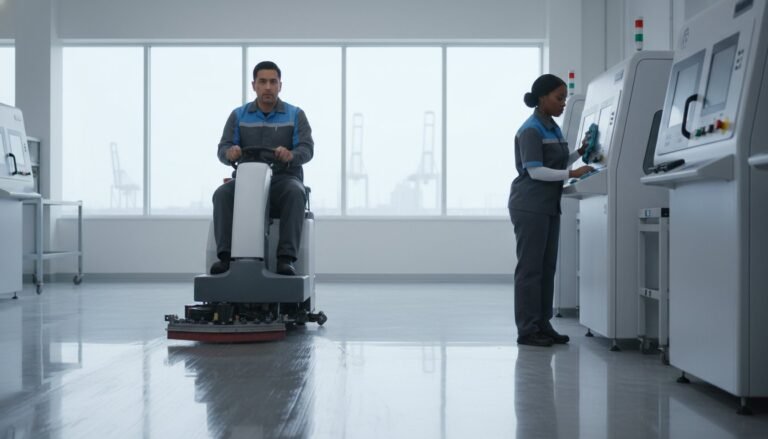
High-compliance zones are the heartbeat of specialized facilities. In these spaces, even a microscopic lapse in hygiene can lead to catastrophic production failure or regulatory rejection. Industrial cleaning management services provide the oversight necessary to ensure that third-party vendors don’t just “clean,” but adhere to the precise chemical and PPE protocols required for sensitive environments. Whether you’re managing a medical laboratory or a financial data hub, the risk of cross-contamination is a constant threat that demands a strategic response rather than a casual cleaning schedule.
ISO Standards and Cleaning Protocols
Maintaining ISO Class 7 and 8 clean rooms requires an understanding of particulate counts and airflow dynamics. Standard janitorial equipment won’t suffice here. Management partners ensure that vendors utilize specific tools and materials that prevent the introduction of new contaminants:
- HEPA-filtered vacuums designed for particulate capture.
- Lint-free, non-shedding materials for all wipe-down procedures.
- Deionized water and specialized cleaning agents compatible with sensitive surfaces.
Vetting these vendors involves more than checking references; it requires verifying their technical proficiency in controlled environment maintenance. Documentation is the cornerstone of this process. In the event of an audit, a facility must produce a clear, verifiable trail of every cleaning action performed. Management services digitize this process, providing real-time reporting and quality assurance logs that protect your facility during ISO inspections.
Regulatory Compliance: OSHA and Beyond
Safety protocols must extend beyond the clean room to the entire facility floor. Compliance involves strict adherence to OSHA’s general requirements for workplace safety, which dictate the maintenance of walking-working surfaces to prevent slips and falls. Integrating professional industrial cleaning management services ensures that every contractor carries the appropriate insurance and has completed necessary safety training before stepping on-site.
A management partner takes on the heavy lifting of liability oversight, shielding your organization from the risks associated with unvetted labor. For those navigating the complexities of the local market, choosing the right janitorial company in Houston often starts with identifying a partner capable of managing these diverse regulatory layers simultaneously. By centralizing this oversight, facility leaders can reduce their exposure to risk while maintaining a pristine environment. If your current hygiene program lacks the documentation required for high-compliance audits, it’s time to consider a more robust quality assurance inspection framework that bridges the gap between effort and excellence.
The Strategic ROI of Vendor Consolidation
Managing a network of 20 or more specialized vendors is a significant drain on facility resources. Each provider requires separate contract negotiations, insurance verification, and safety training. By utilizing industrial cleaning management services, organizations can transform this fragmented overhead into a single point of strategic accountability. This consolidation does not just save time; it eliminates the administrative “soft costs” that erode your bottom line. When your internal team spends hours reconciling invoices or chasing down vendor certificates, they aren’t focusing on production or facility growth. A management layer recovers this lost time.
The financial benefits extend beyond simple volume pricing. For multi-location industrial properties, the complexity of managing disparate hygiene standards can lead to inconsistent quality and unpredictable spending. Centralizing these operations allows for standardized pricing and service levels across your entire portfolio. This ensures that every site, regardless of its specific function, adheres to the same rigorous disinfection and sterilization guidelines required for high-compliance environments. A strategic partner acts as the guardian of these standards, ensuring that cost savings never come at the expense of safety or hygiene.
Consolidating Billing and Reporting
A single monthly invoice simplifies the life of a facility manager and streamlines the accounts payable process. Instead of managing a mountain of paperwork, you receive one clear, itemized report that covers all your specialized cleaning needs. This centralized reporting provides a holistic view of facility-wide spending and performance. It allows you to identify trends, predict future maintenance needs, and justify budget allocations with hard data. Transitioning to these facility vendor management solutions turns your maintenance department from a cost center into a data-driven strategic asset.
Independent Quality Assurance (QA) vs. Self-Policing
Traditional vendors often fail when they are left to inspect their own work. Self-policing creates a conflict of interest that frequently leads to overlooked details or “pencil-whipping” inspection forms. The NJC approach utilizes independent Quality Assurance (QA) inspections to maintain vendor accountability. These third-party audits provide an unbiased assessment of performance, ensuring that every protocol is followed to the letter. This data doesn’t just catch errors; it drives continuous improvement. By analyzing inspection results over time, management services can refine schedules and methods to optimize facility maintenance. This level of oversight ensures that your facility remains in a constant state of audit-readiness without requiring your constant presence on the floor.
Implementing a Preventative Framework for Houston Facilities
Transitioning from a fragmented vendor list to a cohesive management model requires more than just changing contracts. It demands a systematic framework that prioritizes prevention over reaction. This shift ensures that your facility remains operational and compliant without constant administrative intervention. Implementing industrial cleaning management services follows a logical progression of five critical steps designed to build a resilient hygiene program.
- Step 1: Conduct a site-wide audit. Map every specialized zone, from the warehouse floor to the ISO-rated clean room. Identify the specific hygiene requirements and compliance risks for each area.
- Step 2: Source and vet specialized vendors. Look beyond basic janitorial experience. Ensure your partners hold specific industrial or medical credentials required for your facility’s unique environment.
- Step 3: Establish a master schedule. Map cleaning activities to your production cycles. The goal is to perform high-intensity maintenance during natural lulls or planned shutdowns to avoid costly downtime.
- Step 4: Implement a centralized communication hub. Create a single point of contact for all emergency requests. This eliminates the confusion of calling multiple vendors when a spill or equipment failure occurs.
- Step 5: Review performance metrics. Use the data from your Quality Assurance inspections to adjust service frequency. If certain zones show consistently high scores, you may be able to optimize costs by refining the schedule.
Addressing Houston’s Unique Industrial Climate
Facilities in the Houston energy corridor face environmental challenges that standard cleaning models often ignore. Excessive humidity can lead to rapid mold growth and compromise the integrity of specialized coatings. Managing these risks requires a proactive approach to commercial floor cleaning in Houston, where moisture control is just as important as dirt removal. Your preventative framework must also account for seasonal weather shifts. Hurricane-related exterior maintenance and drainage clearing should be hard-coded into your annual schedule to prevent minor issues from becoming catastrophic failures during a storm.
Scheduling for Minimum Operational Disruption
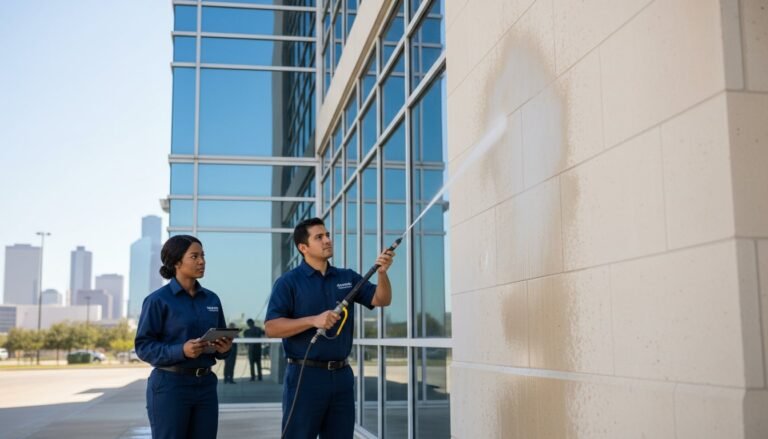
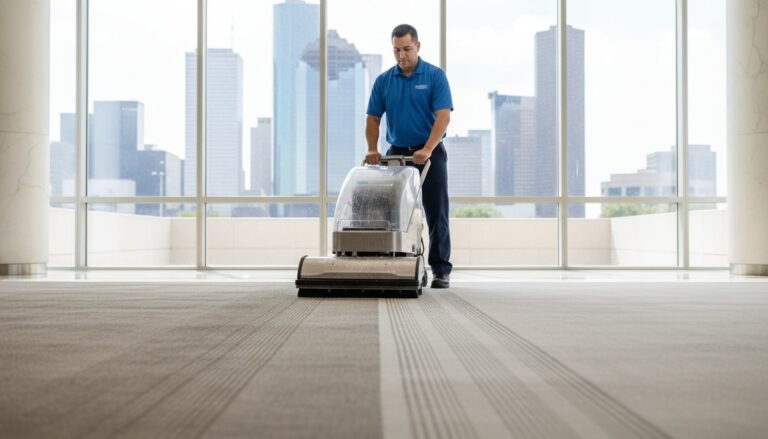
Strategic scheduling is the hallmark of professional industrial cleaning management services. High-traffic industrial zones often benefit from day porter services, providing real-time maintenance that prevents debris buildup throughout a shift. This keeps the facility safe and productive without requiring a full shutdown. Larger projects, such as deep carpet extraction or high-pressure washing, are best coordinated during planned facility breaks. Even aesthetic maintenance, like searching for commercial window washing near me, should be folded into this master plan to ensure that exterior crews don’t interfere with loading dock operations. If your current schedule is creating bottlenecks, it’s time to partner with a management expert who can align your hygiene goals with your production reality.
Optimizing Efficiency with NJC Management Solutions
Nationwide Janitorial Connect serves as the definitive strategic partner for Houston industrial leaders who demand more than just manual labor. We provide a sophisticated management layer that transforms how facilities approach long-term maintenance. Instead of managing a fragmented list of uncoordinated providers, our clients benefit from a single point of accountability for over 20 facility solutions. This isn’t just about outsourcing; it’s about shifting the burden of vendor sourcing, technical vetting, and performance tracking to a team of dedicated experts. By utilizing our industrial cleaning management services, you gain a partner that aligns your maintenance schedule with your production goals.
Our proprietary vetting process ensures that every third-party vendor meets the specific industrial or medical credentials your environment requires. Whether it’s laboratory hygiene or heavy-duty floor care, we only deploy teams that have passed our rigorous quality and safety checks. This management layer simplifies your life through consolidated billing and independent Quality Assurance (QA) inspections. You get one call for problem-solving and one monthly invoice for your entire operation. By centralizing these industrial cleaning management services, we eliminate the administrative friction that slows down high-performance organizations.
Why Industry Leaders Choose Nationwide Janitorial Connect
With decades of experience navigating high-compliance sectors, Nationwide Janitorial Connect understands the nuances of pharmaceutical labs and financial institutions. We are a Houston-headquartered firm that combines local market intelligence with national-standard systems. This allows us to react immediately to local challenges while maintaining the professional rigor expected by global corporations. To see how this strategic approach translates into real-world results, review our commercial cleaning in Houston case study, which highlights our impact on large-scale facility efficiency and vendor accountability.
Request Your Facility Management Audit
The journey from vendor chaos to managed excellence begins with a clear understanding of your current gaps. Continuing to manage 20+ vendors individually is a legacy model that no longer serves the needs of modern industrial facilities. Consolidating your maintenance into a strategic framework reduces overhead, ensures compliance, and protects your uptime. Our team is ready to help you transition to a model where hygiene is a strategic asset, not a daily headache. We bridge the gap between your facility’s vision and the tactical execution required to achieve it.
Take the first step toward facility excellence today. Request a Strategic Management Quote for Your Industrial Facility and discover how our specialized management can streamline your operations for the 2026 market and beyond.
Securing Long-Term Operational Excellence
Transitioning to a managed model is the definitive step toward protecting your facility’s uptime and regulatory standing. You’ve seen how consolidating 20+ vendors into a single point of accountability eliminates administrative fatigue and ensures that high-compliance zones like laboratories meet every ISO requirement. Strategic industrial cleaning management services replace the unpredictability of fragmented labor with a disciplined, data-driven framework that prioritizes results over mere activity.
Based in Houston, NJC Management provides the specialized expertise and national-standard systems required to navigate today’s complex industrial climate. We act as your strategic partner, bridging the gap between your facility goals and tactical execution through rigorous quality assurance and consolidated reporting. It’s time to move beyond the legacy “break-fix” mentality and embrace a proactive maintenance culture that supports sustainable professional growth and operational stability.
Ready to transform your facility’s hygiene standards? Simplify Your Industrial Maintenance with NJC Management today and secure the stability your organization deserves.
Frequently Asked Questions
What is the difference between an industrial cleaning company and a management service?
An industrial cleaning management service provides a strategic oversight layer that coordinates multiple specialized vendors under a single point of contact. Unlike a direct labor provider, a management partner handles the administrative burden of sourcing, vetting, and quality control. This approach ensures that your facility goals align with tactical execution across all maintenance service lines.
How does vendor consolidation actually save my facility money?
Consolidation eliminates the administrative fatigue associated with managing separate contracts, insurance documents, and invoices for dozens of vendors. By centralizing these operations, facilities reduce internal overhead and capture savings through standardized pricing. This model ensures that resources are allocated efficiently across your entire property portfolio without redundant spending.
Can NJC Management handle specialized ISO Class 7 clean room cleaning?
NJC Management specializes in the rigorous protocols required for ISO Class 7 and 8 clean room environments. Our management framework ensures that all vendors utilize HEPA-filtered vacuums and lint-free materials while strictly adhering to site-specific PPE requirements. We provide the documentation and audit trails necessary to maintain compliance during high-stakes inspections.
What industries in Houston benefit most from managed janitorial services?
Pharmaceutical labs, energy production facilities, and aerospace manufacturing plants in the Houston area benefit most from these managed solutions. These sectors require the precise coordination of industrial cleaning management services to navigate regional challenges like high humidity. A managed approach ensures that specialized hygiene standards are met without compromising facility uptime.
How often should an industrial facility undergo independent quality assurance inspections?
Independent quality assurance inspections should be conducted on a recurring schedule tailored to your facility’s specific traffic and compliance needs. Most high-performance organizations implement monthly or quarterly audits to ensure consistent vendor accountability. These unbiased assessments provide the data necessary to drive continuous improvement and maintain a constant state of audit-readiness.
What is included in a typical industrial preventative maintenance plan?
A typical preventative plan includes a site-wide audit of specialized needs, a master schedule aligned with production cycles, and proactive floor care. It integrates daily janitorial tasks with periodic services like pressure washing and window cleaning. This structured framework prevents minor maintenance issues from escalating into costly operational disruptions.
How does NJC vet its third-party maintenance and cleaning vendors?
We employ a proprietary vetting process that verifies the technical proficiency and safety credentials of every third-party vendor. NJC confirms that all contractors possess the necessary industrial or medical certifications required for high-compliance zones. This rigorous oversight shields your facility from the liability risks associated with unvetted or under-trained labor.
Is consolidated billing available for businesses with multiple Texas locations?
Consolidated billing is a standard feature for our clients managing multiple industrial locations across Texas. You receive a single, itemized monthly invoice that covers all industrial cleaning management services performed throughout your portfolio. This centralized reporting simplifies your accounts payable process and provides a holistic view of your total facility spending.