Houston Industrial Cleaning for Manufacturing Plants: A 2026 Strategic Guide
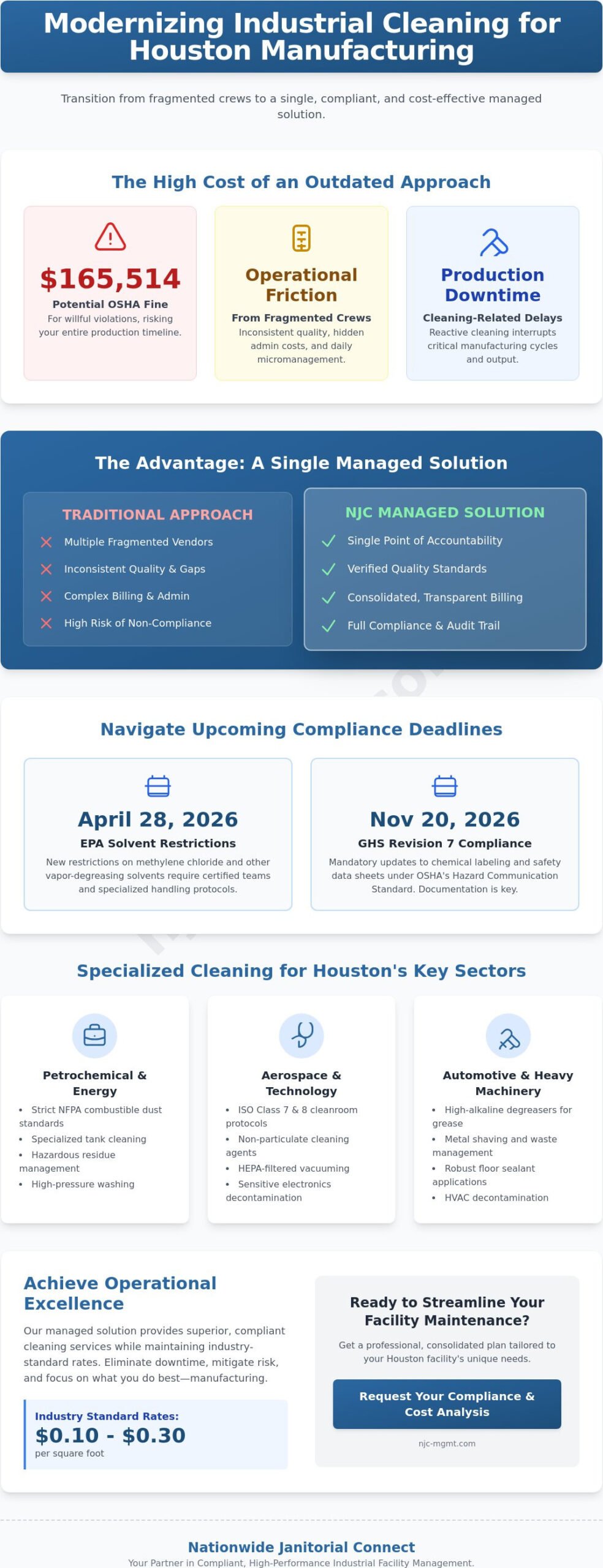
Treating facility maintenance as a simple janitorial expense is a high-stakes gamble when OSHA penalties for willful violations now reach $165,514. You likely find that managing fragmented crews for houston industrial cleaning for manufacturing plants creates unnecessary friction, inconsistent shift quality, and hidden administrative costs. It’s a significant burden to oversee these details while simultaneously preparing for the November 20, 2026, deadline for updated chemical labeling and GHS Revision 7 compliance. Professional facility managers recognize that a reactive approach to cleaning isn’t just inefficient; it’s a risk to the entire production timeline.
This strategic guide provides a clear framework to consolidate your industrial cleaning into a single, managed solution that prioritizes operational uptime. You’ll discover how to eliminate cleaning-related downtime and ensure full compliance with the April 28, 2026, EPA solvent restrictions without requiring your daily intervention. We’ll explore how modernizing your vendor portfolio can secure verified quality standards and consolidated billing while maintaining industry-standard rates of $0.10 to $0.30 per square foot. This is how you transition from micromanaging crews to leading a streamlined, compliant manufacturing environment.
Key Takeaways
- Align your facility maintenance with the specific environmental and safety standards required for the unique petrochemical and maritime manufacturing corridors surrounding the Port of Houston.
- Master the latest OSHA safety protocols and specialized chemical requirements for houston industrial cleaning for manufacturing plants to mitigate liability and protect your workforce.
- Identify the hidden administrative costs of managing fragmented cleaning crews and discover the strategic benefits of moving toward a single, managed vendor solution.
- Implement scheduling strategies for deep cleans during planned maintenance shutdowns to maximize machine longevity without disrupting critical production cycles.
- Access a professional vetting checklist to evaluate potential cleaning management partners based on local Houston expertise and verified vendor networks.
The Landscape of Houston Industrial Cleaning for Manufacturing
Houston’s industrial sector operates on a scale that dwarfs standard commercial maintenance. In a city housing the largest petrochemical complex in the nation, houston industrial cleaning for manufacturing plants requires more than basic janitorial oversight. It demands a strategic partnership. The 25-mile stretch of the Houston Ship Channel and the surrounding petrochemical corridor set a rigorous baseline for cleanliness that directly impacts safety and export viability. In 2026, the standard has shifted from simple labor to a “managed facility solution.” This approach treats maintenance as a critical component of the supply chain rather than a back-office expense.
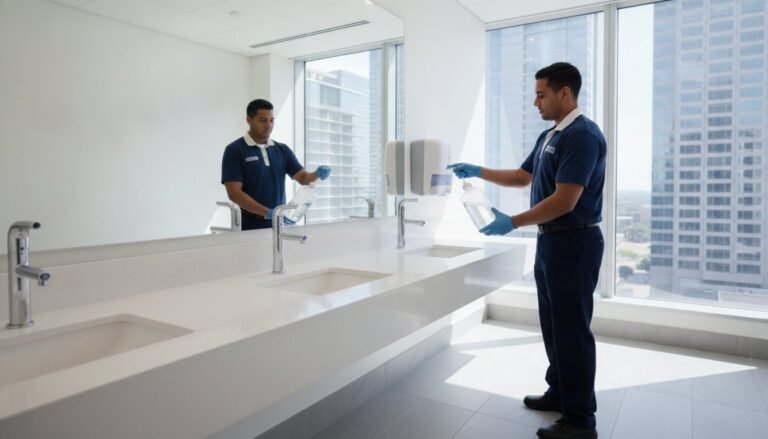
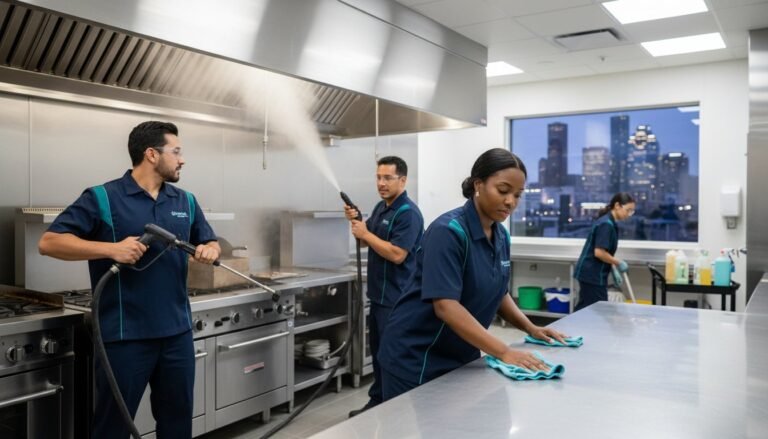
Traditional janitorial services often fail in these environments because they lack the technical expertise to handle heavy machinery or hazardous residues. Standard crews aren’t trained in complex Industrial Parts Cleaning Processes, which are essential for maintaining equipment longevity. A managed solution provides a single point of accountability; it consolidates specialized tasks like high-pressure washing, chemical degreasing, and HVAC decontamination into one cohesive strategy. This ensures that every shift meets the same high-tier quality benchmarks without requiring your constant supervision.
Houston’s Unique Environmental Challenges
The Gulf Coast climate introduces variables that can compromise facility integrity within weeks. Houston’s average humidity often exceeds 75%, creating a breeding ground for mold and accelerating the oxidation of metal components. In large-scale warehouses, moisture management is a primary cleaning objective. Specialized industrial cleaning in Harris County must also address specific airborne pollutants from nearby refineries. These particulates settle on sensitive electronics and machinery, requiring precise filtration and surface-level decontamination to prevent hardware failure. Even floor care is dictated by the climate. The intense Texas heat can cause standard sealants to delaminate if they aren’t matched to the specific moisture-wicking needs of the facility.
Manufacturing Sectors Served in the Greater Houston Area
The diversity of Houston’s manufacturing hub requires a versatile cleaning repertoire. Requirements vary significantly across three primary sectors:
- Petrochemical and Energy: These facilities demand strict adherence to NFPA standards for combustible dust and specialized tank cleaning to prevent cross-contamination.
- Aerospace and Technology: With the expansion of the Houston Spaceport, ISO Class 7 and 8 clean room standards are now common. These environments require non-particulate cleaning agents and HEPA-filtered vacuuming.
- Automotive and Heavy Machinery: Managing the heavy grease and metal shavings inherent in these plants requires high-alkaline degreasers and robust waste management permits.
By tailoring protocols to these specific industrial needs, houston industrial cleaning for manufacturing plants becomes a tool for operational excellence rather than just a line item on a budget.
Specialized Cleaning Protocols for Manufacturing Compliance
Regulatory compliance in 2026 is a moving target that requires more than a checklist. It demands a rigorous adherence to the OSHA Hazard Communication Standard, especially as facilities approach the November 20, 2026, deadline for GHS Revision 7 updates. For facility managers, houston industrial cleaning for manufacturing plants is no longer just about removing debris; it’s about mitigating the risk of $165,514 fines for willful violations. Every cleaning cycle must be documented to provide a transparent audit trail for safety inspectors and insurance underwriters. This level of precision ensures that your plant remains operational and legally protected.
High-risk industrial zones, such as confined spaces or areas with hazardous chemical exposure, require labor that’s specifically certified for those environments. Standard cleaners don’t possess the training to handle the April 28, 2026, EPA restrictions on methylene chloride or other vapor-degreasing solvents. Utilizing specialized teams ensures that your facility follows the latest TSCA regulations while maintaining peak efficiency. Strategic partners often find that integrating managed facility solutions provides the most reliable route to sustained compliance without increasing the administrative workload on internal staff.
Clean Room and Laboratory Standards
Houston’s burgeoning life sciences and tech sectors require ISO-certified cleaning protocols that go beyond surface level. Maintaining ISO Class 7 or 8 environments involves strict air particulate controls and the use of specialized, low-VOC chemicals that prevent cross-contamination. These controlled environments demand high-precision industrial cleaning services that understand the sensitivity of medical and financial-grade manufacturing. Using the wrong surfactant or failing to follow gowning protocols can result in millions of dollars in lost product or failed batches.
Safety and Quality Assurance (QA) Frameworks
Quality assurance is the backbone of modern industrial maintenance. A robust QA framework replaces guesswork with data-driven inspections and digital documentation. By implementing regular quality checks, you can identify potential hygiene bottlenecks before they lead to production delays. We recommend a single point of contact to manage these QA standards across all shifts. This ensures that the quality of houston industrial cleaning for manufacturing plants remains consistent at 3:00 AM just as it is at 3:00 PM. This centralized oversight simplifies the reporting process and provides a clear, defensible record of compliance during any regulatory audit.
Consolidating Vendors: The Strategic Advantage for Houston Plants
Managing a fragmented roster of ten or more service providers is a common but costly inefficiency for Houston facility directors. When you source separate crews for pressure washing, floor care, and daily janitorial tasks, you aren’t just paying for labor. You’re paying a massive “management tax” in the form of administrative friction. Every new vendor requires background checks, insurance verification, and site-specific safety orientations. For houston industrial cleaning for manufacturing plants, this decentralized approach often leads to inconsistent quality across different shifts and a lack of accountability when production deadlines are at stake.
The transition to a single-source management layer like Nationwide Janitorial Connect eliminates these logistical bottlenecks. By implementing facility vendor management solutions, you replace a chaotic web of contacts with one strategic partner. This consolidation provides a unified view of your facility’s health while ensuring every subcontractor adheres to the same OSHA safety and health standards. You gain the ability to scale services up or down based on production cycles without the need to vet a new provider for every specialized project.
Reducing Administrative Friction
Administrative overhead is a silent profit killer. Processing a dozen different invoices every month consumes valuable hours from your accounting and operations teams. A consolidated billing model simplifies this into a single monthly invoice, regardless of how many locations you manage in the Greater Houston area. This transparency allows for more accurate budgeting and faster identification of cost-saving opportunities. Beyond the numbers, communication speed improves significantly. You no longer have to track down three different supervisors to address a single maintenance issue; one point of contact handles the entire ecosystem.
Quality Control Through Centralized Management
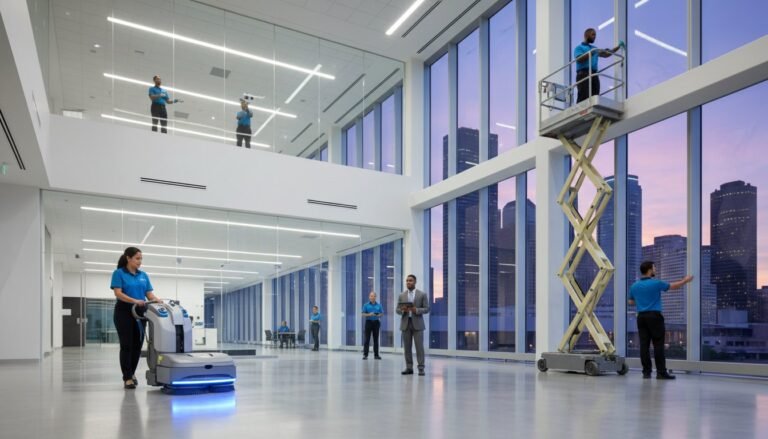
Standardization is the ultimate goal of centralized oversight. We ensure that the cleaning protocols used in your Pasadena petrochemical plant are identical to those in your Sugar Land technology facility. By monitoring performance through centralized KPIs and digital reporting, we maintain a verified level of excellence that fragmented crews cannot match. This system also allows for a rapid response to specialized needs. If an unexpected equipment leak requires heavy degreasing or a VIP visit necessitates immediate window cleaning, the infrastructure is already in place. Your houston industrial cleaning for manufacturing plants becomes a predictable, high-performance asset that supports your broader business objectives.
Operational Continuity: Cleaning Without Downtime
Downtime is a manufacturing killer. In the high-volume Houston market, every minute of halted production translates to thousands in lost revenue. Effective houston industrial cleaning for manufacturing plants shouldn’t disrupt the workflow; it should facilitate it. By integrating cleaning schedules with your existing maintenance windows, you ensure that deep sanitation happens when machines are already offline. This proactive synchronization prevents the need for emergency shutdowns caused by equipment failure or safety hazards. It’s about maintaining a rhythm where cleanliness supports production rather than competing with it.
There’s a direct correlation between facility hygiene and machine longevity. Dust, metal shavings, and oil mist act as abrasives that wear down precision components over time. Regular degreasing and particulate removal can extend the mean time between failures (MTBF) for critical assets. If your current vendor only focuses on the breakroom, they’re ignoring the areas that actually drive your bottom line. Transitioning to a managed solution allows you to synchronize these technical cleaning tasks with your broader operational strategy. Request a strategic facility assessment to align your maintenance with production goals.
Day Porter Services for Active Plants
Active production lines generate constant waste. Day porters provide the immediate response necessary to manage high-traffic zones and high-touch points without stopping the line. Their presence is vital for preventing slip-and-fall accidents, especially in Houston plants where humidity can make concrete floors dangerously slick. With OSHA’s 2026 focus on heat-related hazards, day porters also play a role in maintaining hydration stations and ensuring that rest areas remain sanitary and accessible for workers following acclimatization protocols. They act as the first line of defense in maintaining both safety and operational flow.
Floor Care and Heavy Machinery Maintenance
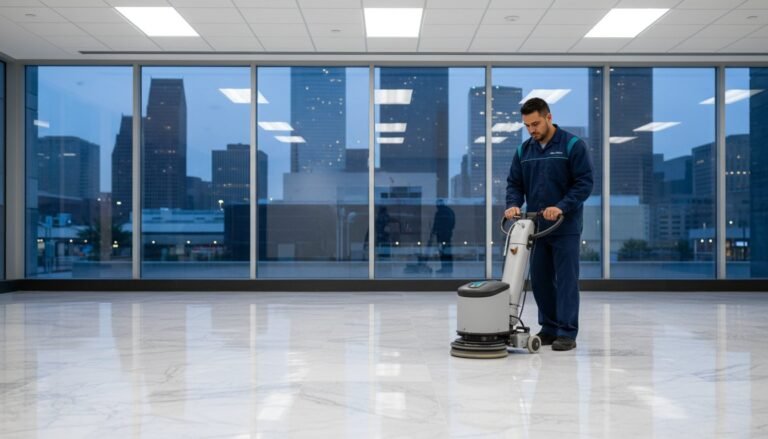
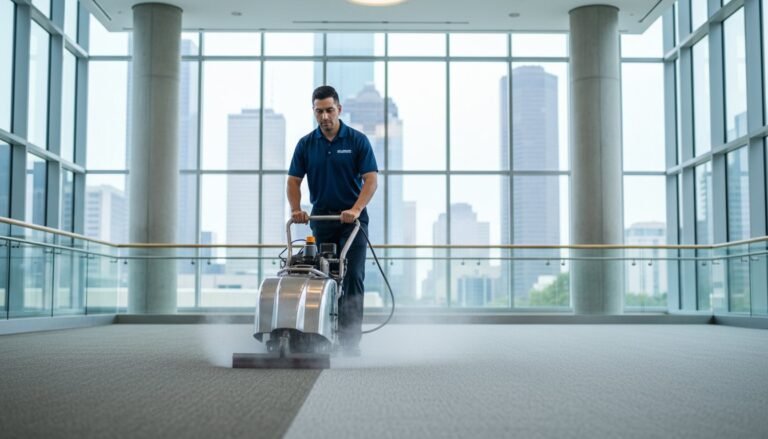
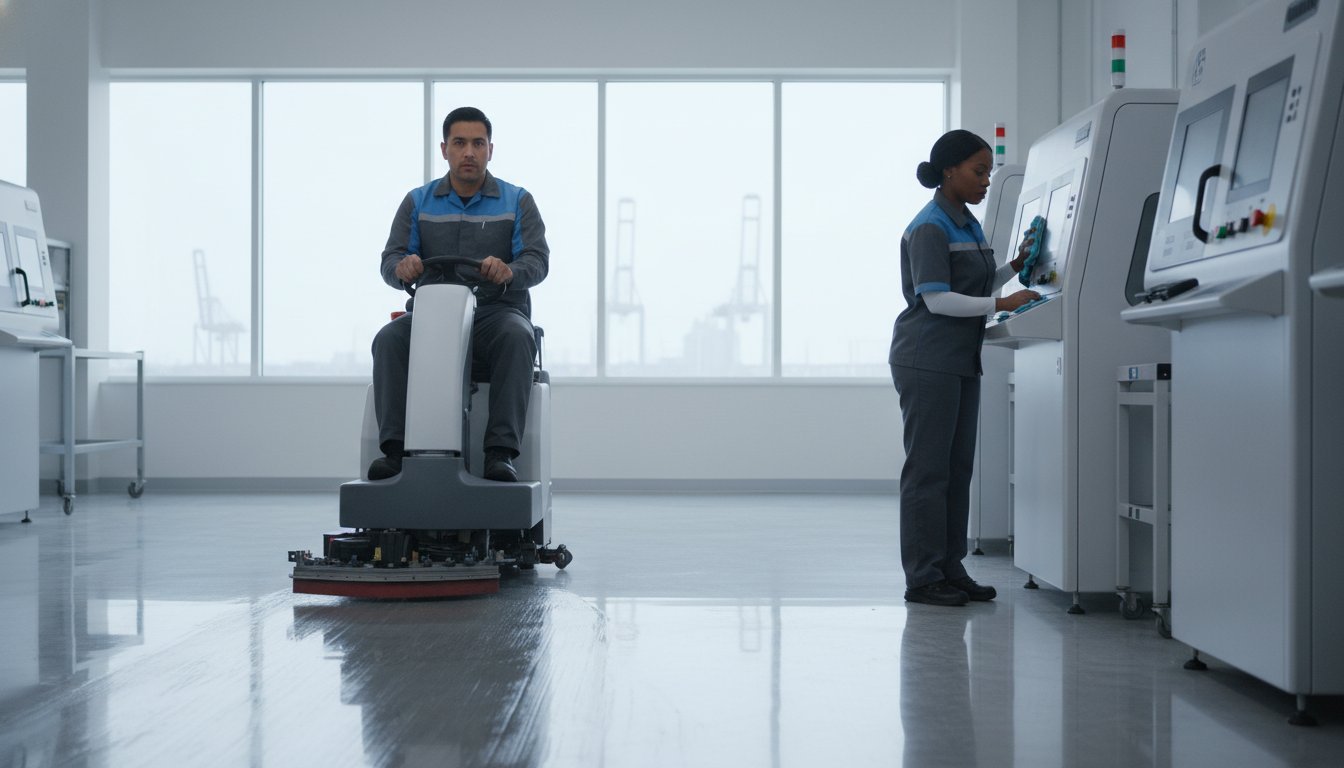
Industrial surfaces require more than a mop and bucket. We utilize specialized commercial floor cleaning techniques, such as auto-scrubbing and high-performance degreasing, to maintain the integrity of industrial-grade coatings. These services are particularly critical during plant expansions or renovations, where post-construction cleanup must be handled swiftly to allow for new equipment installation. Whether it’s removing stubborn grease from a 50,000-square-foot warehouse or performing deep sanitation on a production line, the goal is always zero-impact on your operational continuity. Professional houston industrial cleaning for manufacturing plants ensures that your floors can handle the $0.30 to $0.50 per square foot investment required for periodic stripping and recoating.
Choosing Your Houston Industrial Cleaning Partner
Selecting a partner for houston industrial cleaning for manufacturing plants is a strategic decision that directly influences your operational risk profile. In a market where 58% of cleaning businesses reported increased demand in 2026, the ability to distinguish between a labor provider and a management partner is vital. You don’t just need a crew; you need a firm that understands the nuances of the Houston Ship Channel and the technical requirements of Harris County industrial permits. A true partner views your facility as a high-value asset, not just a series of square feet to be scrubbed.
A strategic partnership beats a traditional cleaning model by removing the administrative burden from your shoulders. Instead of micromanaging shift quality or chasing down multiple points of contact, you gain a single, authoritative management layer. This transition is essential for facilities that prioritize zero downtime and verified compliance. Whether you’re managing a single site in Pasadena or a multi-state portfolio, your cleaning partner must offer the scalability to grow alongside your operations while maintaining a localized expertise in Houston’s unique environmental challenges.
The Vetting Process: Beyond the Price Tag
Evaluating a potential partner requires looking past the initial quote. While industry averages for industrial cleaning often range from $0.10 to $0.30 per square foot, the real value lies in risk mitigation. Verify that the company maintains robust insurance coverage and a clean safety record, especially regarding OSHA’s 2026 agenda of stricter enforcement. Ask for specific manufacturing case studies within the Greater Houston area that demonstrate their ability to handle specialized waste under 30 TAC Chapter 335. If they can’t prove their local expertise, they aren’t prepared for the complexities of your plant.
Technology is another non-negotiable factor in the vetting process. Modern management firms use data-driven software to track inspections and monitor supply levels in real-time. This transparency ensures accountability across all shifts and provides the digital audit trail necessary for regulatory compliance. If a vendor can’t provide instant visibility into their performance KPIs, they’re likely adding to your management burden rather than reducing it. You deserve a partner that uses innovation to simplify your oversight duties.
The NJC Management Difference in Houston
We don’t operate as a traditional cleaning company. NJC Management acts as a strategic extension of your leadership team, focusing on long-term facility health and value creation. We ensure that your maintenance strategy aligns with your 2026 production goals, providing a disciplined and result-oriented approach to houston industrial cleaning for manufacturing plants. Our team bridges the gap between your operational needs and the complex realities of the Texas industrial market, allowing you to focus on high-value decision-making while we handle the creative chaos of facility maintenance.
Our commitment is to provide stability and professional elegance in every interaction. We understand that your time is a finite resource that shouldn’t be spent vetting subcontractors or reviewing fragmented invoices. By taking full responsibility for your vendor network and quality assurance, we build a foundation for sustainable growth. Request a specialized industrial cleaning management quote for your Houston plant to begin a partnership built on transparency and excellence.
Securing Operational Excellence in the Houston Industrial Corridor
The shift toward managed facility maintenance reflects the growing complexity of the Texas manufacturing sector. By prioritizing specialized protocols and vendor consolidation, you move beyond the limitations of traditional labor. You secure a framework where compliance with the November 20, 2026, OSHA standards is a baseline; not a struggle. This strategic approach to houston industrial cleaning for manufacturing plants ensures that your production lines remain active while your administrative burden disappears. It’s about transforming a line-item expense into a competitive advantage.
NJC Management provides the stability you need to navigate these requirements. We offer a single point of contact for 20+ facility solutions; ranging from heavy machinery degreasing to specialized clean room and laboratory maintenance. Our comprehensive Quality Assurance (QA) inspection process guarantees that every shift meets your exact standards without requiring daily oversight. It’s time to transition from managing crews to leading a high-performance facility. Our expertise allows you to maintain your strategic focus while we handle the operational details.
Request Your Strategic Houston Industrial Cleaning Audit today to align your maintenance with your long-term business objectives. Let’s build a more resilient and efficient operational future together.
Frequently Asked Questions
What is the difference between standard janitorial and industrial cleaning?
Standard janitorial focuses on administrative spaces and restrooms. Industrial cleaning involves technical procedures like degreasing, high-pressure washing, and parts cleaning for production areas. It requires specialized equipment and safety certifications that typical office cleaners don’t possess. This distinction is critical for houston industrial cleaning for manufacturing plants where machinery uptime depends on removing abrasive particulates and chemical residues. We focus on the technical details that keep your plant running.
How much does industrial cleaning for a manufacturing plant in Houston cost?
Industrial cleaning costs in Houston generally range from $0.10 to $0.30 per square foot for routine facility maintenance as of April 2026. Hourly rates for specialized crews typically fall between $30 and $50 per worker. For a standard 50,000-square-foot plant, annual contracts often range from $6,000 to $15,000. These rates vary based on the complexity of your equipment and the required safety certifications. Specialized work like hazmat handling can command $50 to $75 per hour.
Can you provide OSHA-compliant cleaning for petrochemical facilities?
We provide full compliance with OSHA’s updated Hazard Communication Standard and GHS Revision 7 requirements. Our protocols meet the November 20, 2026, deadline for reclassifying substances and updating safety data sheets. In petrochemical environments, we also manage heat-illness prevention plans and follow the April 28, 2026, EPA restrictions on vapor-degreasing solvents. Our team stays current with every regulatory shift to protect your facility and workers.
How does vendor consolidation save money for my manufacturing plant?
Consolidation reduces the management tax of supervising multiple crews. By moving to a single-source provider, you eliminate redundant administrative costs and fragmented invoicing. This strategy allows for bulk service rates and ensures that every shift follows identical quality standards. It’s an effective way to reduce overhead while maintaining verified safety compliance without daily oversight. You gain efficiency through streamlined communication and a single point of accountability.
Do you offer specialized cleaning for clean rooms or laboratories?
We manage ISO Class 7 and 8 clean room environments for Houston’s technology and medical sectors. Our teams use low-odor, low-VOC products that align with corporate sustainability goals. These specialized protocols prevent particulate contamination and ensure your laboratory meets the air toxics standards signed in March 2026. We understand the high stakes of controlled environments and maintain them with surgical precision to prevent product loss.
What happens if a cleaning vendor fails a quality inspection?
Our managed solution includes a rigorous Quality Assurance (QA) framework that identifies performance gaps before they impact production. If a vendor fails to meet specific KPIs, our management layer intervenes to rectify the issue or deploy a replacement crew immediately. This centralized oversight removes the burden of conflict resolution from the facility manager. It ensures consistent service quality across all shifts regardless of the individual vendor on site.
Are your cleaning services available 24/7 for plant shutdowns?
Yes, we coordinate 24/7 cleaning support specifically for planned maintenance shutdowns. This allows for deep sanitation and heavy machinery maintenance during off-hours to ensure zero downtime during active production cycles. Our teams are trained to work around complex manufacturing schedules. We provide the flexibility required to maintain operational continuity in high-volume environments. We do the heavy work when your machines are idle.
How do you manage cleaning for multiple manufacturing locations in Houston?
We utilize a centralized management model to standardize protocols across all your Houston locations. This ensures a plant in Pasadena receives the same quality of houston industrial cleaning for manufacturing plants as a facility in Sugar Land. You receive a single monthly invoice and one dedicated point of contact. This structure simplifies communication and reporting for multi-site operations while maintaining high-tier quality benchmarks across your entire portfolio.