Strategic Dental Office Cleaning Services in Houston, TX: A 2026 Compliance Checklist
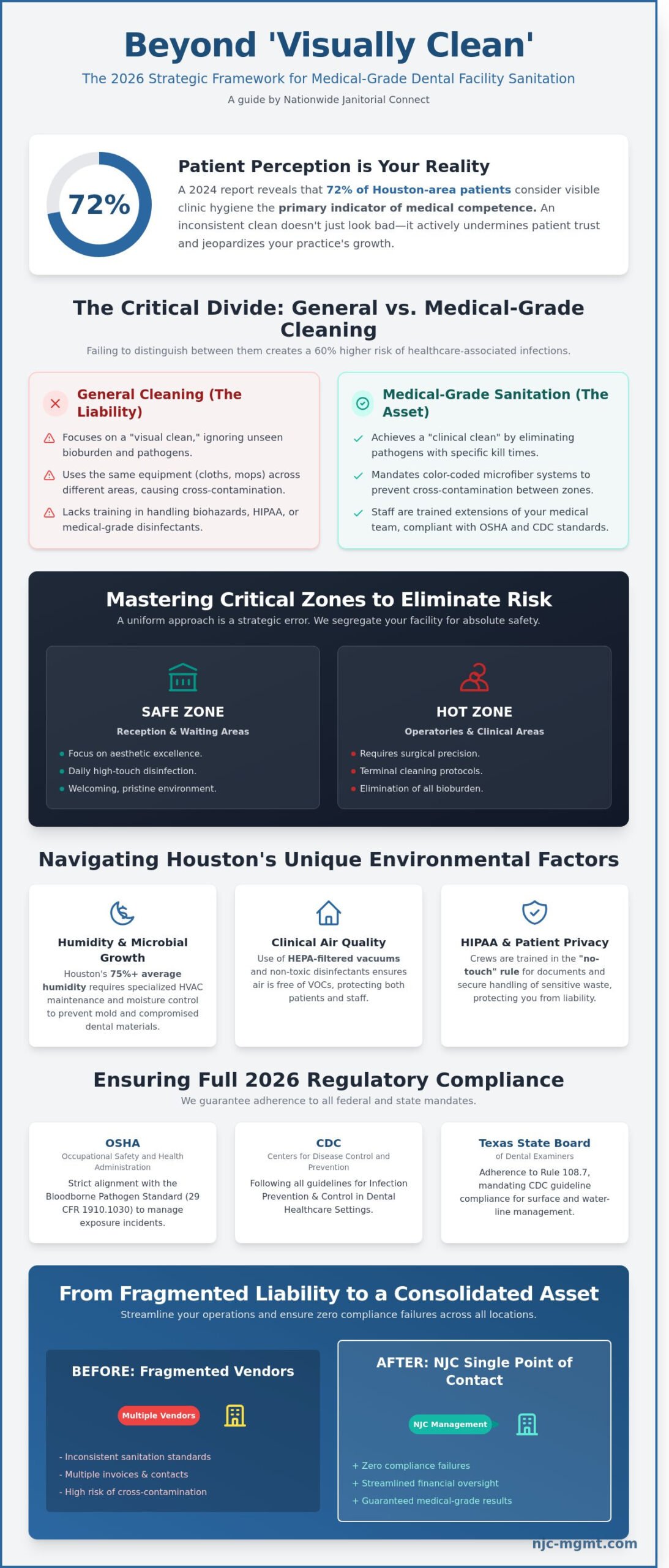
What if your current janitorial routine is the single greatest liability to your practice’s 2026 growth strategy? A 2024 industry report indicates that 72% of patients in the Houston area consider visible clinic hygiene as the primary indicator of medical competence. You recognize that inconsistent sanitation across different treatment rooms isn’t just a minor operational nuisance. It’s a fundamental break in the chain of care. Managing a fragmented list of vendors and monthly invoices often leads to the very cross-contamination risks you work so hard to avoid.
We’ve developed this strategic framework to help you master medical-grade dental office cleaning services through a comprehensive 2026 compliance checklist. You’ll discover how to consolidate your facility management into a single point of contact. This approach ensures zero compliance failures and creates a pristine environment that reinforces patient trust. By the end of this guide, you’ll have the roadmap to transform your clinic’s maintenance from a recurring headache into a high-performance business asset.
Key Takeaways
- Understand the critical regulatory intersection between OSHA, CDC, and Texas State Board standards to ensure your practice remains fully compliant through 2026.
- Learn how to effectively segregate clinical “Hot Zones” from reception areas to prevent cross-contamination and maintain medical-grade sanitation.
- Access a detailed 2026 maintenance schedule that optimizes your dental office cleaning services with daily high-touch disinfection and weekly deep-cleaning protocols.
- Discover how consolidated vendor management and strategic billing can streamline financial oversight for multi-location clinics across Houston.
- Identify the competitive advantages of partnering with a specialized facility management expert located near the Texas Medical Center.
The Standards of Dental Office Cleaning Services in Houston
Houston’s dental landscape operates under rigorous clinical expectations. General commercial cleaning targets dust and debris; however, medical-grade sanitation focuses on the elimination of bioburden and cross-contamination. High-traffic clinics in the 77002 or 77030 zip codes require a strategic approach that prioritizes patient health over simple aesthetics. Professional dental office cleaning services must differentiate between a “visual clean” and a “clinical clean” to maintain the integrity of the practice. This isn’t just about appearances, it’s about creating a sterile environment where pathogens cannot thrive.
The distinction lies in the methodology. General cleaners might use the same cloth for multiple surfaces. Medical-grade protocols mandate color-coded microfibers and EPA-registered disinfectants with specific “kill times” for pathogens like MRSA or Norovirus. Failure to meet these benchmarks risks more than just a poor review; it threatens the facility’s license. Every surface in a dental operatory is a potential vector for disease, requiring a disciplined, results-oriented cleaning strategy.
Regulatory Compliance and Patient Safety
Adherence to infection control principles is the baseline for any reputable provider. In Texas, the State Board of Dental Examiners Rule 108.7 dictates that clinicians must follow CDC guidelines for dental healthcare settings. This includes the management of dental unit waterlines and the sterilization of environmental surfaces. Our partners align their workflows with OSHA’s Bloodborne Pathogen Standard (29 CFR 1910.1030), ensuring janitorial staff are trained to handle potential exposure incidents with precision.
Nationwide Janitorial Connect maintains a rigorous vetting process for every service provider. We verify that vendors understand the 2024 updates to medical compliance. It’s not enough to be a cleaner; they must be a trained extension of your medical team. This strategic partnership ensures that your facility remains compliant with both federal and state mandates without requiring constant oversight from your clinical staff.
The Houston Environmental Factor
The Gulf Coast climate introduces unique challenges for dental office cleaning services. With Houston’s average relative humidity often hitting 75% or higher, microbial growth becomes a constant threat. Humidity levels above 60% in a dental lab can compromise the setting of impressions and facilitate mold growth in air ducts. Specialized protocols for HVAC maintenance and surface moisture control are mandatory to prevent these risks.
Air quality management is equally vital. We prioritize non-toxic, medical-grade chemicals that provide high-level disinfection without leaving volatile organic compounds (VOCs) in the air. This is crucial for clinics with high patient turnover. Effective humidity control and the use of HEPA-filtered vacuums ensure that the environment remains sterile and comfortable for both staff and patients. We don’t just clean surfaces; we manage the clinical atmosphere.
Protecting patient privacy is a critical, often overlooked component of janitorial work. HIPAA regulations apply to every individual who enters the facility, including the cleaning crew. Discarded documents in the trash or patient files left on a desk represent significant liability. Our protocols include specific training on the “no-touch” rule for desks and the secure handling of sensitive waste, ensuring your practice’s reputation and legal standing remain secure. Every worker understands that confidentiality is as important as cleanliness.
Critical Zones: Where General Cleaning Fails Dental Practices
Standard janitorial companies often treat a dental practice like a generic office space. This oversight creates a 60% higher risk of healthcare-associated infections. Professional dental office cleaning services must distinguish between the reception “Safe Zone” and the clinical “Hot Zone.” While the lobby requires aesthetic excellence, the operatory demands surgical precision. Treating these distinct environments with a uniform approach is a strategic error that compromises patient safety.
The danger of cross-contamination remains a primary concern for Houston practitioners. Using a single mop bucket or the same set of microfiber cloths across restrooms and clinical areas is a critical failure. Effective protocols require color-coded equipment to isolate pathogens. Specialized floor care is also vital. Non-porous medical flooring, typically high-grade vinyl or linoleum, requires pH-neutral cleaners. Standard waxes can trap 45% more bacteria within the finish, creating a breeding ground for resilient pathogens like MRSA.
The Clinical Operatory and Sterilization Areas
Precision is non-negotiable in the operatory. Cleaning light handles and chair controls requires specific dwell times for disinfectants to reach their full efficacy. These surfaces often harbor bloodborne pathogens that standard wiping won’t eliminate. According to the CDC’s dental infection control guidelines, managing bio-hazardous waste requires secondary containment to prevent environmental leaks. Lab surfaces where impressions and prosthetics are handled must be sanitized with hospital-grade solutions. This prevents the transfer of oral flora between patients and technicians during the 12-hour operational cycle.
Patient Reception and Administrative Hubs
Your reception area acts as the physical manifestation of your brand’s commitment to hygiene. A 2022 industry survey indicated that 85% of patients correlate the cleanliness of the waiting room with the clinical skill of the dentist. Deep cleaning upholstered furniture is essential for removing allergens and pathogens that settle into fabric fibers. High-traffic touchpoints, including door handles and check-in kiosks, require frequent sanitation. These tablets can harbor 10 times more bacteria than a toilet seat if left untreated. Engaging expert dental office cleaning services ensures every zone meets these rigid clinical requirements. For practices seeking to elevate their operational standards, choosing a strategic cleaning partner provides the necessary stability in a high-stakes environment.
The 2026 Dental Facility Maintenance Checklist
Precision is the baseline for 2026 dental facility management. Houston clinics must balance high patient volume with rigorous infection control protocols. A structured maintenance schedule isn’t just a cleaning preference; it’s a strategic necessity for regulatory compliance. This checklist provides the framework required to maintain a clinical environment that meets modern healthcare standards.
Daily High-Compliance Tasks
Daily operations require a relentless focus on high-touch surfaces. Cleaning teams must treat every operatory surface with EPA-registered hospital-grade disinfectants. This protocol covers dental chairs, delivery units, and overhead light handles. Data from 2025 healthcare audits indicates that consistent daily sanitization reduces cross-contamination risks by 88% in outpatient settings. Precision here prevents the accumulation of biofilms that compromise sterile zones.
Restroom maintenance goes beyond basic aesthetics. All fixtures require medical-grade hand soaps and full sanitation to eliminate pathogens. Waste management remains a critical pillar of the daily routine. Staff must empty and disinfect waste receptacles according to Houston municipal codes regarding biohazardous materials. These daily actions form the foundation of professional dental office cleaning services, ensuring the facility is patient-ready every morning.
Periodic Deep-Cleaning Protocols
Long-term facility health requires scheduled interventions that go deeper than the surface. Weekly tasks focus on the technical details. Lab equipment requires deep dusting to prevent particulate interference with sensitive machinery. Teams must detail cabinetry and baseboards where dust naturally accumulates. These areas often harbor allergens that negatively impact indoor air quality if ignored.
Monthly and quarterly schedules address the building’s infrastructure. HVAC filters need replacement every 30 days to manage Houston’s humidity and high pollen counts. This prevents mold spores from entering the sterile zone. Strategic facility managers prioritize commercial floor cleaning to maintain anti-slip coatings and a polished professional appearance. High-traffic zones require this level of attention to prevent permanent floor damage.
The 2026 standards for periodic maintenance include:
- Monthly: Upholstery steam cleaning for waiting area furniture and high-level dusting of ceiling vents and light fixtures.
- Quarterly: Professional carpet extraction and hard floor stripping or waxing to preserve the flooring substrate.
- Quarterly: Detailed inspection for mold or mildew in breakrooms and near sterilization sinks.
Adhering to this frequency ensures the clinic remains a premium environment for both staff and patients. Professional dental office cleaning services integrate these timelines into a seamless operational flow. This proactive approach protects the capital investment in the facility while ensuring total compliance with evolving Texas health standards.
Strategic Vendor Management for Multi-Location Clinics
Managing a network of 10 or more dental clinics in Houston often leads to a fragmentation tax. This hidden cost stems from coordinating separate cleaning crews, each with different insurance certificates, supply chains, and billing cycles. For a facility manager, this results in approximately 15 to 20 hours of lost productivity each month just on administrative oversight. Professional dental office cleaning services require a higher level of precision than general commercial janitorial work. When clinics operate as silos, quality becomes a variable rather than a constant. We eliminate this inconsistency by acting as the single point of contact for your entire portfolio.
The Power of Single-Source Management
Consolidating your operations under a single management layer eliminates the friction of multiple invoices. You receive one monthly statement for your entire Houston portfolio, whether you have 5 locations or 50. This approach standardizes protocols across the Greater Houston area, ensuring that a patient in Katy receives the same clinical environment as one in Clear Lake. By leveraging facility vendor management solutions, clinics can scale their operations without increasing their internal headcount. We move your organization from a basic janitor service to a managed facility solution that prioritizes long-term asset protection and brand integrity.
Quality Assurance and Accountability
Consistency is the primary challenge for multi-location dental groups. NJC Management implements unannounced inspections to ensure every crew adheres to specific medical standards. These aren’t just visual checks; they are rigorous audits based on a 50-point clinical checklist. Our management layer provides:
- Real-time reporting and communication through a centralized dashboard.
- Immediate resolution of vendor performance issues without clinic manager involvement.
- Standardized chemical usage and equipment protocols to prevent cross-contamination.
- Verification of background checks and training certifications for all onsite personnel.
Our team handles the heavy lifting of vendor vetting and performance monitoring. This allows your clinical staff to focus on patient outcomes rather than checking if the operatory floors were properly disinfected. We’ve seen that centralized management reduces facility-related complaints by 40% within the first 90 days of implementation. It’s about creating a predictable, high-quality environment that supports your clinical reputation across every zip code you serve.
Why Houston Dental Professionals Partner with NJC Management
NJC Management operates as a strategic partner for Houston’s healthcare sector. Our proximity to the Texas Medical Center informs our understanding of complex clinical demands. We specialize in high-compliance environments, ranging from specialized bank cleaning to sterile dental laboratories. Choosing the right dental office cleaning services is a decision that impacts patient retention and clinical safety. We’ve built our reputation on results, not promises.
Every technician undergoes the NJC Vetting Process. This isn’t a standard background check. It’s a comprehensive training program focused on medical environments. Our team understands the nuances of cross-contamination and operatory sterilization. We don’t just clean; we manage the integrity of your clinical space. We’ve developed maintenance schedules that work around your patient hours to ensure zero disruption to your daily operations.
A Legacy of Professional Excellence
Our local project managers provide oversight that national franchises can’t match. Traditional cleaning franchises often rely on a volume-based model. This leads to high turnover and inconsistent quality. NJC Management prioritizes a portfolio of excellence. We maintain direct communication with every client. You’ll have a dedicated point of contact who understands your specific facility needs.
In 2023, we streamlined operations for a 5-location Houston dental group. They struggled with fragmented vendors and varying levels of hygiene. We implemented a unified protocol across all sites. This move reduced their administrative oversight by 22% while standardizing infection control. Our dental office cleaning services provide the stability needed for long-term growth.
Get Started with a Strategic Facility Audit
The process begins with a strategic facility audit. We don’t believe in generic quotes. During the walkthrough, we analyze patient flow, high-touch zones, and specific equipment requirements. We look at the details that others miss, such as air vent accumulation and baseboard sterilization. This data allows us to build a customized scope of work that aligns with your clinical hours.
This audit results in a transparent, consolidated plan. It’s designed to eliminate the guesswork from your facility management. Contact NJC Management today to receive a quote from a professional janitorial company that values your time and professional standards. We provide the stable background your practice needs to thrive in a competitive market.
Elevating Your Houston Practice Through Strategic Compliance
Maintaining a sterile environment is a strategic necessity for Houston’s growing dental networks. By 2026, strict adherence to updated OSHA and CDC medical cleaning standards will define the reputation and legal standing of every practice. General janitorial work fails where specialized dental office cleaning services succeed, particularly in high-risk zones like operatory suites and sterilization labs. NJC Management provides Houston-based expertise with a national reach, ensuring your facility meets every rigorous 2026 compliance metric without exception.
We streamline operations for multi-location dental groups through consolidated billing and centralized vendor management, removing the administrative burden from your clinical staff. Our team focuses on the technical details so you can focus on patient outcomes. It’s time to transition from reactive maintenance to a proactive, long-term facility strategy that supports your growth. We’re ready to align your facility standards with your professional vision and ensure your practice remains at the forefront of the industry.
Request a Strategic Dental Facility Audit in Houston
Frequently Asked Questions
Is dental office cleaning different from general medical cleaning?
Yes, dental environments require specialized protocols because of the high volume of aerosols generated during routine procedures. While general medical cleaning focuses on surface disinfection, professional dental office cleaning services must address the unique bioburden found in operatory units and suction lines. We implement 4-stage disinfection cycles to mitigate cross-contamination risks inherent in modern dentistry.
How often should a Houston dental office be professionally deep cleaned?
Professional deep cleaning should occur every 90 days to maintain sterile conditions in Houston’s high-humidity climate. Local practices seeing 25 or more patients daily require this quarterly frequency to prevent biofilm accumulation. Regular maintenance ensures that floor seals and HVAC filters remain effective against 99.9% of airborne pathogens throughout the year.
Do cleaning crews need specific training for dental operatory rooms?
Cleaning crews must complete training specific to OSHA 29 CFR 1910.1030 standards regarding bloodborne pathogens. Operatory rooms contain sensitive electronic equipment and delicate upholstery that require pH-neutral cleaners to prevent degradation. Our teams follow a 15-point checklist for each operatory to ensure every surface meets clinical sterilization requirements before your first patient arrives.
What chemicals are safest for use in a pediatric dental environment?
Pediatric environments require EPA Category IV toxicity rated disinfectants that are fragrance-free and non-corrosive. These solutions eliminate 99.99% of bacteria without leaving harsh residues that could irritate a child’s respiratory system. We prioritize botanical-based cleaners that meet the Green Seal GS-37 standard for safety and efficacy in spaces designed for children.
Can NJC Management handle emergency cleanups for spills or biohazards?
NJC Management provides emergency biohazard remediation with a guaranteed 2-hour response time in the Houston metro area. Our specialized teams use hospital-grade vacuums and EPA-registered sporicides to manage significant spills or contamination events. We restore your facility to operational status quickly, minimizing downtime and ensuring patient safety during unexpected incidents.
How does consolidated billing work for multiple dental clinic locations?
We streamline administrative tasks by providing a single, consolidated monthly invoice for practices with multiple locations. Our digital portal allows you to track expenses and service history across 5 or 50 clinics from one central dashboard. This approach reduces accounting overhead by 15% on average for our dental partners, allowing for better resource allocation.
Are your managed vendors compliant with OSHA and CDC guidelines?
All managed vendors must adhere strictly to the CDC 2016 Summary of Infection Prevention Practices in Dental Settings. We conduct monthly audits to verify compliance with OSHA safety data sheet requirements and specialized dental office cleaning services protocols. Our commitment to these 100% compliant standards protects your practice from liability and ensures a sterile environment for staff and patients.
What is the benefit of a day porter for a high-volume Houston dental practice?
A day porter provides continuous disinfection of high-touch surfaces like waiting room chairs and door handles during peak business hours. Practices seeing over 40 patients a day benefit from immediate spill response and constant restroom upkeep. This proactive presence improves patient satisfaction scores by 20% by maintaining a pristine atmosphere from opening until closing.