Commercial Pressure Washing in Houston: A Strategic Facility Manager’s Guide
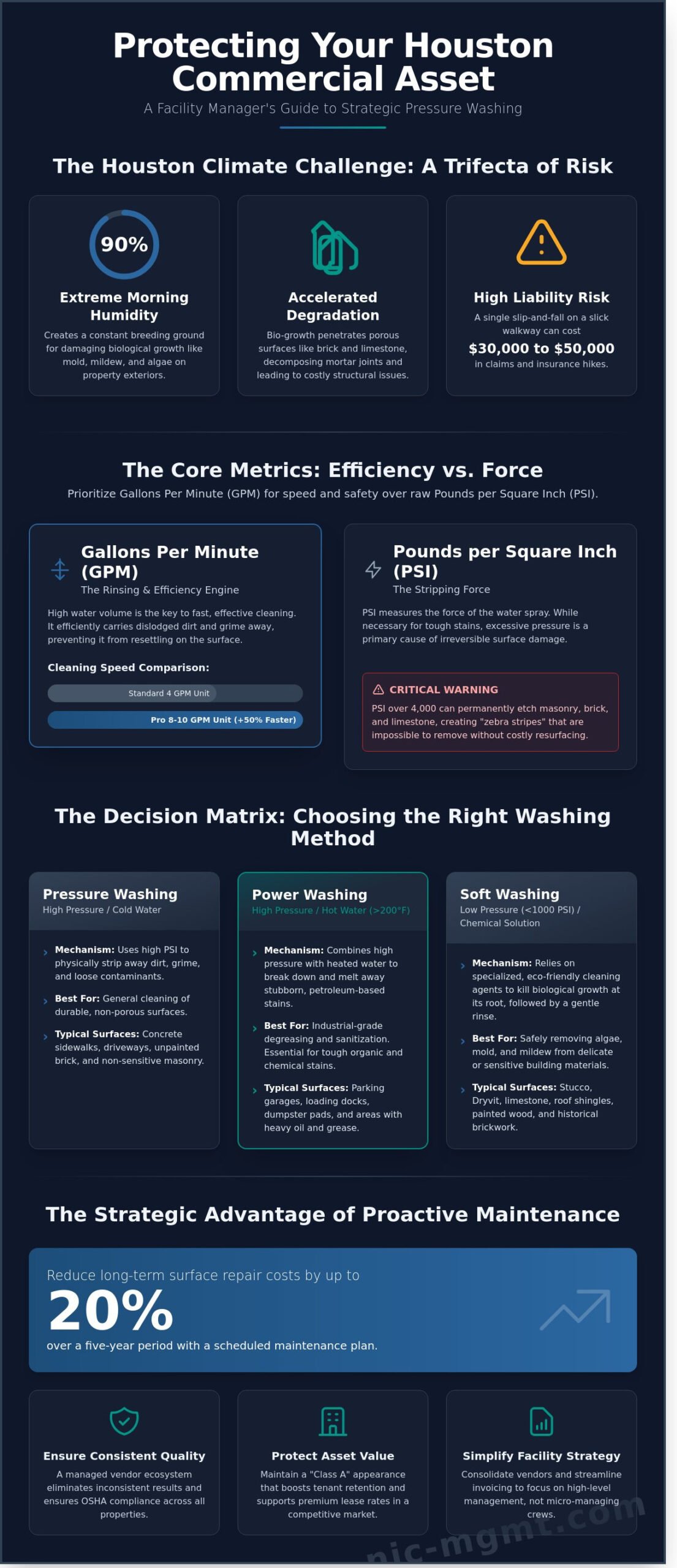
A single slip-and-fall incident on a moisture-slicked walkway can cost a commercial facility owner an average of $30,000 to $50,000 in liability claims. In a city like Houston, where the average morning humidity hits 90 percent, biological growth isn’t just an aesthetic nuisance; it’s a constant legal risk. You’ve likely noticed that local operators often provide temporary fixes that fail to address the root cause of mold and algae. This inconsistency leaves your property vulnerable and forces you into a cycle of reactive, inefficient spending. Professional Pressure Washing should be a strategic investment, not a recurring headache.
You deserve a maintenance partner that values your time as much as your property’s curb appeal. This guide outlines how to protect your Houston asset’s market value through managed, high-standard exterior care. We’ll explore how consolidating your vendor list and implementing scheduled maintenance cycles can reduce long-term surface repair costs by approximately 20 percent over a five-year period. Discover the framework for simplified invoicing and consistent quality that allows you to focus on high-level facility strategy rather than micro-managing cleaning crews.
Key Takeaways
- Identify how Houston’s unique humidity levels accelerate property degradation and why standard cleaning protocols often fail.
- Learn to prioritize Gallons Per Minute (GPM) over PSI to maximize cleaning speed without risking permanent damage to masonry and limestone.
- Navigate the decision matrix to select between Pressure Washing, power washing, and soft washing based on specific surface requirements.
- Establish a proactive exterior maintenance plan that synchronizes with local seasonal shifts and high-growth environmental factors.
- Discover the strategic advantage of a managed vendor ecosystem to ensure consistent quality, compliance, and long-term asset protection.
The Strategic Role of Pressure Washing for Houston Commercial Properties
For the modern facility manager, exterior maintenance isn’t a cosmetic choice; it’s a specialized protocol designed to protect high-value assets. In a market where first impressions dictate tenant retention, Pressure Washing serves as a foundational pillar of property management. It’s the strategic removal of surface contaminants that, if left unchecked, lead to irreversible structural degradation. By utilizing high-pressure water spray, Pressure washing or power washing effectively strips away layers of grime, biological growth, and industrial pollutants from masonry and concrete surfaces.
The 2026 commercial real estate market demands a higher standard of “Class A” maintenance. Property valuation is increasingly tied to the physical integrity of the building envelope. A clean exterior signals operational excellence to stakeholders and potential investors. It’s a proactive measure that prevents the “broken window theory” from devaluing commercial corridors in Houston’s competitive districts. Strategic facility managers view this process as a capital preservation tactic rather than a mere utility expense.
Combating Houston’s Humidity and Bio-Growth
Houston’s climate presents a unique challenge for facility managers. With average humidity levels exceeding 70%, the region acts as an incubator for biological growth. Black algae, mildew, and Gulf Coast salt spray don’t just sit on the surface; they penetrate porous materials like brick and limestone. Standard janitorial services focus on interior hygiene, yet they often overlook these deep exterior pores. When Houston’s triple-digit summer heat hits, it essentially bakes these stains into the substrate. This makes them permanent without professional Pressure Washing intervention. This bio-growth accelerates the decomposition of mortar joints and sealants, leading to costly water intrusion issues that compromise the building’s core.
Risk Mitigation and Safety Compliance
Safety is a non-negotiable metric for any strategic partner. Accumulated algae, moss, and oil on walkways create significant liability risks. Removing this organic buildup is essential to meet OSHA standards for slip-resistant walking surfaces. A single slip-and-fall incident can cost a firm thousands in legal fees and insurance premiums. Beyond safety, regular washing protects the building envelope from premature degradation. By maintaining these standards, managers ensure their properties remain competitive in the “Class A” office space market. Cleanliness is a benchmark for premium lease rates. Professional maintenance schedules ensure that every square foot of the property reflects the brand’s commitment to excellence, safety, and long-term value creation.
Understanding the Technical Specs: PSI, GPM, and Surface Integrity
Strategic facility maintenance requires a shift from viewing cleaning as a janitorial task to treating it as an engineering challenge. Most managers focus on Pounds per Square Inch (PSI), yet high pressure alone is rarely the solution for large-scale Houston properties. Efficiency in commercial Pressure Washing is driven by Gallons Per Minute (GPM). A machine delivering 8 to 10 GPM clears debris 50% faster than a standard 4 GPM unit, regardless of the pressure setting. High volume water flow carries away dislodged contaminants, preventing them from settling back into the substrate.
PSI vs. GPM: What Facility Managers Must Know
PSI functions as the stripping power and GPM serves as the rinsing speed for clarity. While concrete sidewalks can withstand 3,500 PSI, applying that same force to Houston limestone or aged brick is a liability. High pressure exceeding 4,000 PSI can permanently etch masonry, creating “zebra stripes” that are impossible to remove without resurfacing. For delicate materials like stucco or Dryvit, a professional operator will drop the pressure below 1,000 PSI and rely on chemical surfactants. This approach preserves the building envelope while achieving a uniform clean. Effective facility management strategies prioritize these technical nuances to extend asset lifespans.
The Role of Heat in Commercial Power Washing
Cold water is ineffective against the petroleum-based stains found in Houston loading docks and parking garages. Professional power washing utilizes 200°F+ water to achieve industrial-grade degreasing. The science relies on thermal expansion; heat agitates the molecular bond between the oil and the concrete, causing the stain to lift. This process reduces the need for aggressive mechanical force, which protects the surface integrity of the floor. Safety remains a priority in public spaces, requiring technicians to use insulated wands and establish clear perimeter zones to prevent steam-related injuries.
Nozzle physics further determine the outcome of the project. A 0-degree red tip acts like a laser and can cut through solid wood, while a 40-degree white tip provides a wide, safe fan for general rinsing. Beyond the equipment, environmental compliance is a non-negotiable standard. Every project must account for runoff management to stay aligned with Clean Water Act regulations. Professional teams use recovery systems to capture wash water, ensuring that oils and chemicals don’t enter the Houston storm drain system. This level of technical precision separates a standard vendor from a true strategic partner.
Pressure Washing vs. Power Washing vs. Soft Washing: The Decision Matrix
Facility managers in Houston must adopt a strategic mindset when selecting cleaning methodologies. Choosing the wrong technique doesn’t just result in a poor finish; it risks permanent asset damage. Pressure washing remains the baseline for hardscape maintenance. It utilizes cold water delivered at 3,000 to 4,000 PSI to strip surface contaminants from non-porous substrates. This is the standard choice for walkways and brick facades where organic growth is minimal.
Power washing adds a thermal component to the equation. By heating water to temperatures between 150 and 200 degrees Fahrenheit, technicians can emulsify grease, oils, and heavy industrial grime. This is a specialized requirement for loading docks and food service areas. Soft washing, conversely, prioritizes chemical efficacy over mechanical force. It uses low-pressure systems, typically under 500 PSI, to apply targeted cleaning agents. This method is the only safe way to treat delicate surfaces without risking water intrusion.
Environmental compliance is a critical pillar of any commercial cleaning strategy. The City of Houston enforces strict regulations under the MS4 permit program and Chapter 47 of the Code of Ordinances. Facility managers are responsible for ensuring that zero wash water enters the storm drain system. Professional contractors must utilize vacuum recovery systems or damming techniques to capture 100% of the runoff. Failure to comply can lead to municipal fines that start at $500 and can escalate to $2,000 per violation day according to local enforcement standards.
When to Opt for Soft Washing
Soft washing is the gold standard for Houston’s prevalent stucco and EIFS (Exterior Insulation and Finish Systems). These materials are highly susceptible to moisture trapment and physical scarring from high-pressure streams. By utilizing biodegradable surfactants, we kill 99.9% of mold and Gloeocapsa magma algae at the root. This biological approach ensures the surface stays clean up to three times longer than traditional pressure washing methods. It protects the manufacturer’s warranty on commercial roofing systems while maintaining the building’s aesthetic value.
Commercial Concrete and Parking Structure Care
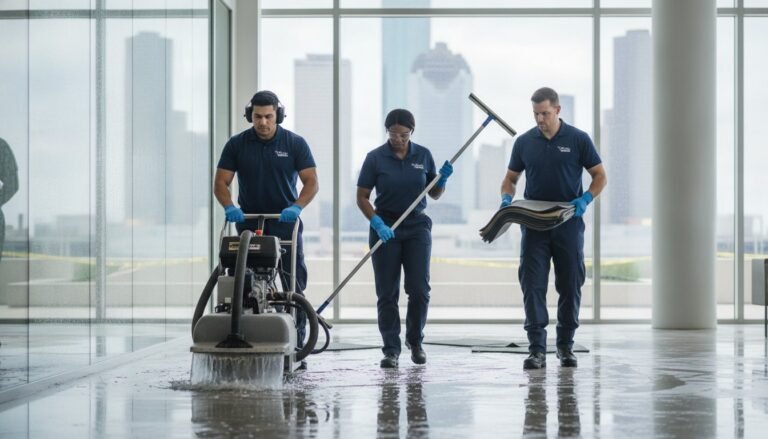
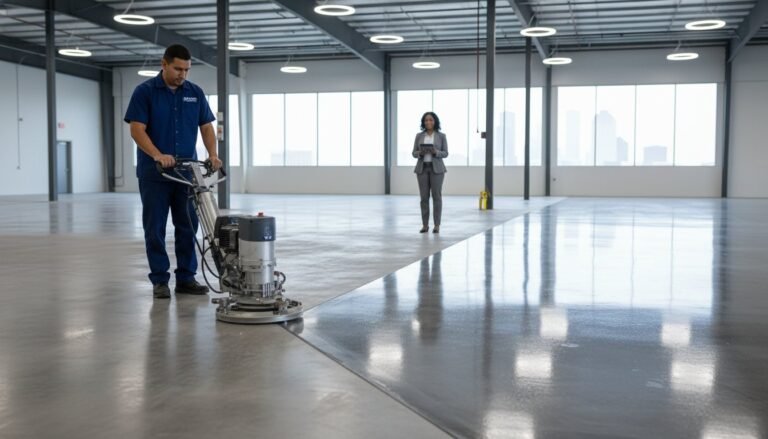
Multi-level parking garages require a high-performance cleaning cycle to manage the 24/7 accumulation of tire marks and petroleum leaks. Heavy-duty power washing is non-negotiable here. The heat is necessary to break the molecular bond between oil and the porous concrete. High-traffic retail zones often see a 40% increase in discarded gum and food stains during peak seasons. We recommend a post-wash application of a silane-based sealer. This creates a hydrophobic barrier that prevents deep staining for up to 24 months; it significantly reduces your long-term maintenance costs and preserves the structural integrity of the slab.
Creating a Proactive Exterior Maintenance Plan in the Houston Climate
Strategic facility management requires more than just fixing what’s broken. In the Houston metro area, the combination of 90% humidity levels and urban pollutants creates a relentless environment for commercial facades. A reactive approach doesn’t just look unprofessional; it’s a drain on your annual budget. Implementing a structured maintenance plan ensures your property remains an asset rather than a liability.
Follow this five-step framework to stabilize your exterior maintenance:
- Step 1: Perimeter Audit. Identify high-growth zones. Northern-facing walls and areas shaded by parking structures stay damp longer, making them breeding grounds for algae.
- Step 2: Seasonal Alignment. Time your services to coincide with Houston’s environmental cycles. This prevents buildup from becoming permanent.
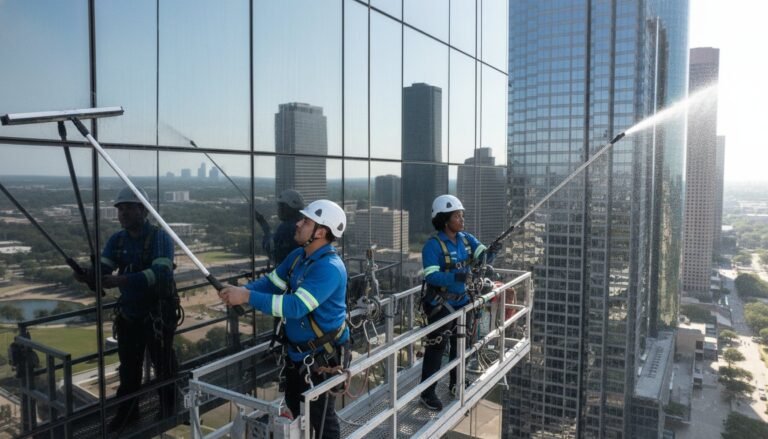
- Step 3: Service Integration. Coordination is vital for efficiency. Always schedule your Pressure Washing before your Commercial Window Cleaning. This sequence prevents overspray and mineral spotting on freshly cleaned glass.
- Step 4: Recurring Cadence. Move away from “as-needed” requests. Establishing a set schedule eliminates the 20% to 30% premium often charged for emergency or heavy-soiling projects.
- Step 5: Risk Documentation. Maintain a digital log of every service. This provides essential evidence for insurance providers and helps mitigate liability in slip-and-fall scenarios.
Seasonal Timing for Maximum ROI
In Houston, timing dictates the longevity of your clean. April and May are the most critical months. Post-pollen washing removes thick yellow residue before the intense Texas sun bakes it into the building’s sealant. For retail and hospitality sectors, an October or November service is mandatory to ensure the property looks pristine for peak holiday traffic. During hurricane season, focus shifts to functional cleaning; clearing drainage systems and removing debris buildup prevents costly water intrusion during flash floods.
Budgeting for Large-Scale Exterior Care
Smart budgeting shifts costs from unpredictable capital expenditures to manageable operating expenses. Moving from per-incident pricing to a managed, recurring contract provides price stability. Industry data suggests that regular Pressure Washing can extend the life of a commercial paint job by up to 5 years. This deferral of repainting costs saves facilities tens of thousands of dollars over a decade. Additionally, consolidated vendor management reduces the administrative overhead of processing multiple invoices and vetting new contractors every quarter.
Effective facility management isn’t about doing more work; it’s about working with better data and timing. Partner with NJC Management to develop a customized exterior maintenance strategy today.
Streamlining Exterior Care: The NJC Management Approach
NJC Management doesn’t just provide cleaning services. We orchestrate the entire exterior vendor ecosystem for Houston properties. Our model moves beyond the transactional nature of hiring a single crew. We act as your strategic partner. Every technician on site undergoes a rigorous vetting process. This includes verifying 2 million dollars in general liability insurance and ensuring 100 percent compliance with Houston’s Chapter 47 water discharge ordinances. We eliminate the liability risks that often follow unvetted contractors. Our 2023 internal performance data shows that this rigorous vetting reduces onsite compliance incidents by 85 percent compared to unmanaged vendors.
Quality assurance is the cornerstone of our operations. We don’t rely on the vendor’s word. Instead, our independent inspectors verify that every square foot meets the “Class A” expectations of your tenants and stakeholders. This proactive oversight ensures that your facility maintains its market value and aesthetic appeal without requiring your constant supervision.
Vendor Consolidation for Multi-Location Managers
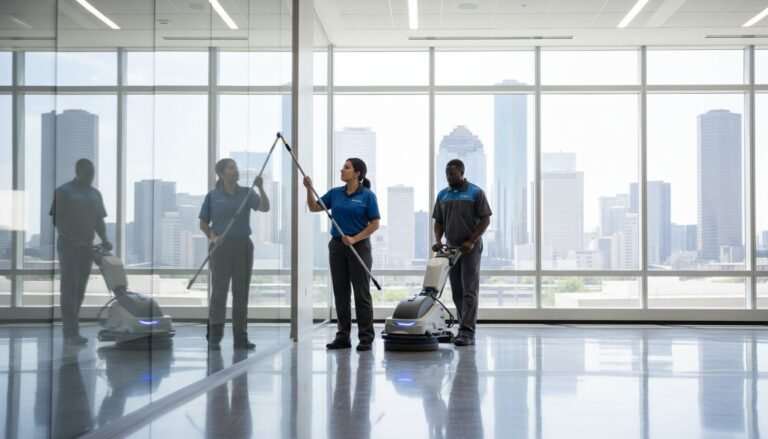
A 2023 study by the Building Owners and Managers Association (BOMA) found that facility managers spend 30 percent of their work week on vendor communication. NJC Management removes this burden. We standardize quality across your entire portfolio, whether you manage five medical offices in Sugar Land or twenty bank branches across Greater Houston. By leveraging Facility Vendor Management Solutions, we provide a uniform standard of excellence. You receive one consolidated invoice for Pressure Washing, commercial window washing near me, and janitorial services. This unified billing approach saved our multi-site clients an average of 12 hours of administrative work per month in the last fiscal year.
Your Single Point of Contact for Houston Facilities
Logistics shouldn’t be your headache. A dedicated NJC project manager handles every detail of the scheduling and execution. This professional oversight ensures that Pressure Washing projects are completed during optimal windows to minimize tenant disruption. Our team identifies and corrects issues before the final walkthrough. This strategic approach provides the peace of mind required to manage high-traffic Houston assets effectively. Our QA protocols are based on the 2024 APPA standards for facility maintenance, ensuring your property remains a premier destination. Request a customized exterior maintenance quote from NJC Management today.
Elevating Your Houston Property Standards
Maintaining a commercial asset in Houston requires technical precision and a proactive mindset. Selecting the correct PSI and GPM settings isn’t just about cleaning; it’s about preserving the structural integrity of your building’s envelope. A strategic exterior maintenance plan prevents the accelerated wear caused by local humidity and industrial pollutants. Professional Pressure Washing functions as a vital investment in your property’s long-term market valuation. High-performing facility managers prioritize these technical details to avoid the high costs of premature resurfacing.
NJC Management delivers the expertise needed to execute these complex maintenance cycles. Our team provides specialized compliance for medical and financial institutions, meeting the strictest industry safety protocols. You’ll work directly with Houston-based quality assurance experts who understand the unique challenges of the local climate. We simplify your operations through consolidated billing for 20+ facility services, allowing you to focus on high-level asset management. It’s time to experience the efficiency of a truly managed solution.
Streamline your Houston facility maintenance with NJC’s managed pressure washing solutions.
We’re here to ensure your facility remains a benchmark of professional excellence in the Houston market.
Frequently Asked Questions
What is the difference between pressure washing and power washing?
Power washing utilizes heated water to dissolve grease and organic matter, while pressure washing relies on high-pressure cold water for general debris. Power washing is the superior choice for 100% removal of oil stains on concrete loading docks and parking areas. Pressure washing serves as an efficient solution for standard facade maintenance. Understanding this technical distinction is vital for maintaining your property’s professional appearance.
How often should a commercial building in Houston be pressure washed?
Houston commercial buildings require professional cleaning at least twice per year to counteract the 75% average humidity that accelerates mold growth. Properties located near the Ship Channel or high-traffic corridors often benefit from quarterly intervals. Regular maintenance prevents the permanent etching of surfaces by urban pollutants and salt spray. This strategic schedule ensures your facility remains a premium asset in a competitive market.
Will pressure washing damage my building’s stucco or brick facade?
Pressure washing won’t damage delicate facades if technicians adjust the equipment to surface-specific PSI levels. Stucco requires a low-pressure setting below 1,500 PSI to prevent substrate cracking and water intrusion. Brick surfaces typically withstand 2,500 PSI, provided the mortar joints are fully intact. Skilled vendors use specialized nozzles to ensure the integrity of your building’s exterior remains protected during the cleaning process.
Does Houston have specific environmental regulations for pressure washing runoff?
The City of Houston Code of Ordinances Chapter 47 strictly prohibits discharging wash water into the municipal storm sewer system. All runoff must be captured or diverted to a sanitary sewer with proper filtration and permits. Violations of these environmental standards can result in fines exceeding $2,000 per day. Professional vendors use vacuum recovery systems to ensure 100% compliance with these local legal mandates.
Can pressure washing be done during business hours without disrupting tenants?
Technicians can perform exterior cleaning during business hours by utilizing low-noise equipment and cordoning off specific work zones. Strategic phasing allows tenants to enter and exit safely while work continues on alternative elevations. Many facility managers schedule high-traffic areas for 6:00 PM or weekend slots to eliminate foot traffic interference. This flexibility ensures your daily operations remain seamless and your tenants stay satisfied.
Is soft washing better than pressure washing for commercial roofs?
Soft washing is the industry standard for commercial roofs because it uses chemical solutions rather than mechanical force to remove contaminants. High-pressure water can strip granules from asphalt shingles or damage TPO membranes. The Asphalt Roofing Manufacturers Association (ARMA) specifically recommends low-pressure chemical cleaning for long-term durability. This method protects your roof warranty while achieving a 99% kill rate for algae and lichen.
How do I know if a pressure washing vendor is properly insured for Houston commercial work?
Verify a vendor’s status by requesting a Certificate of Insurance (COI) that lists at least $1,000,000 in General Liability and $500,000 in Workers’ Compensation. Ensure the policy includes “Care, Custody, and Control” coverage to protect the building’s physical structure during the project. You can check the Texas Department of Insurance database to confirm the provider’s license is active. Proper documentation is a non-negotiable step in professional risk management.
What is the average cost of commercial pressure washing per square foot in Houston?
Industry benchmarks from market reports indicate that commercial pressure washing in Houston typically costs between $0.10 and $0.30 per square foot. Total project value depends on the specific surface material and the total square footage of the property portfolio. Large-scale parking garages often command lower rates due to economies of scale. Accurate budgeting requires a site-specific assessment to align with your facility’s long-term financial goals.