Strategic Concrete Floor Polishing in Houston, TX: A Facility Manager’s Guide
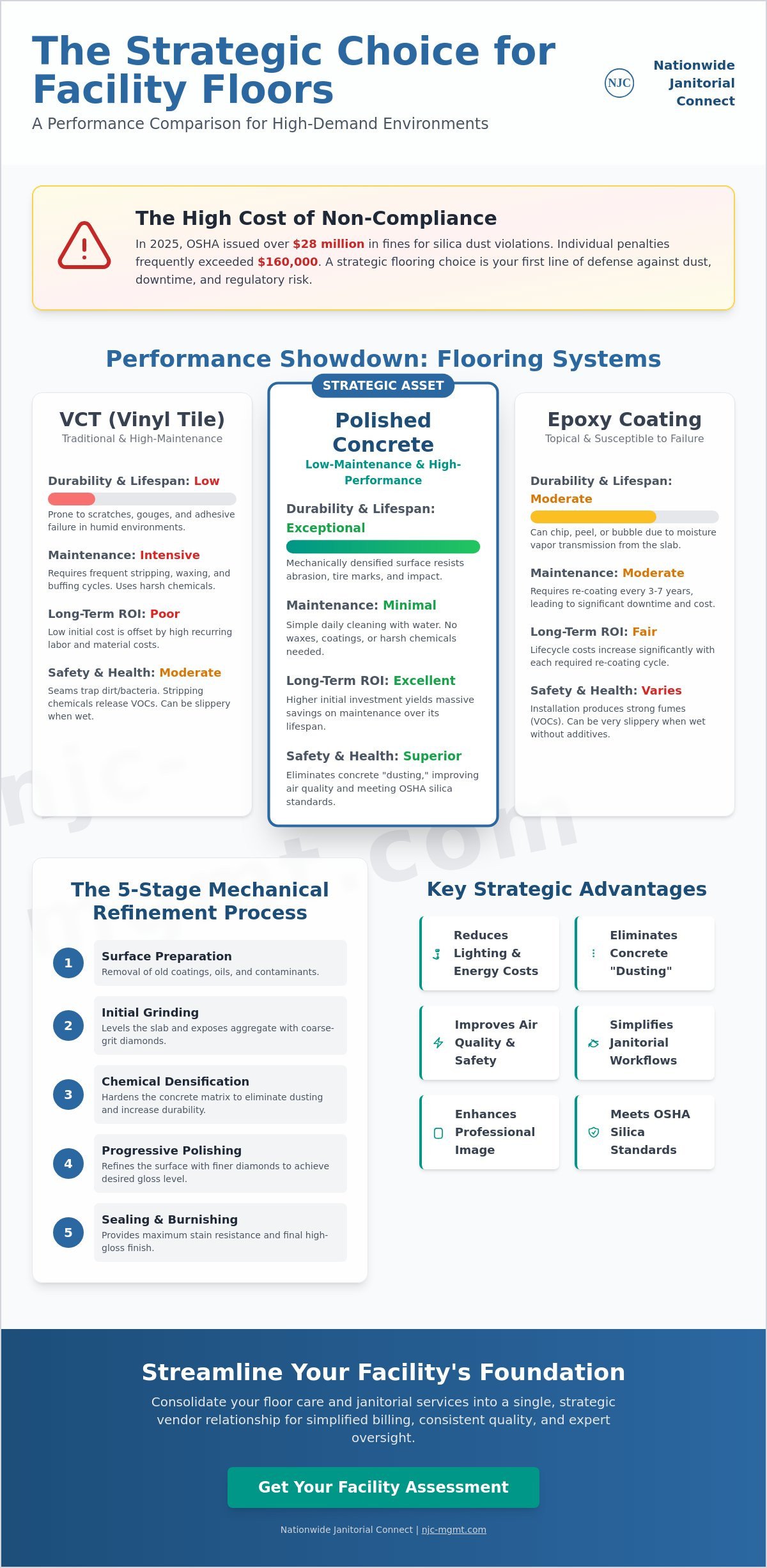
Did you know that in 2025, OSHA issued over $28 million in fines related to silica dust, with individual penalties often exceeding $160,000? For facility managers in Southeast Texas, maintaining a safe, high-performance environment shouldn’t feel like a constant battle against dust, downtime, and disjointed vendor lists. You want a floor that reflects your company’s professional standards without the logistical headache of managing multiple specialized contractors. It’s a common frustration to see inconsistent quality across different zones while trying to keep up with rigorous safety protocols and local environmental enforcement.
This guide demonstrates how professional concrete floor polishing houston tx transforms your facility into a low-maintenance, high-gloss asset through strategic vendor management. You’ll learn how to secure a durable finish that reduces lighting costs and simplifies your billing cycles. We’ll explore how to align your flooring restoration with the latest local building codes while ensuring your facility meets strict OSHA respirable crystalline silica standards. By treating your floors as a strategic asset, you can eliminate unexpected downtime and create a workspace that’s both efficient and compliant.
Key Takeaways
- Understand why high-performance concrete finishes are essential for the unique environmental demands of Houston’s industrial and commercial corridors.
- Learn the critical stages of mechanical refinement that separate a professional-grade surface from a temporary coating.
- Compare the long-term ROI and maintenance requirements of concrete floor polishing houston tx against traditional alternatives like VCT and epoxy.
- Identify the specific equipment and dust extraction standards required to maintain OSHA compliance and facility air quality during restoration.
- Discover how to consolidate your floor care and janitorial services into a single, strategic vendor relationship for simplified billing and oversight.
The Strategic Value of Concrete Floor Polishing for Houston Facilities
Professional facility management requires a shift from reactive maintenance to strategic asset preservation. Understanding what polished concrete is involves recognizing it as a multi-step mechanical process. It’s not a mere coating or a temporary topical fix. The process densifies and polishes the surface using industrial diamond abrasives to create a finish that’s structurally harder than the original slab. For those overseeing concrete floor polishing houston tx projects, this means investing in a surface that withstands the rigors of industrial use while maintaining a premium appearance.
In Houston’s Energy Corridor and the high-activity Port environments, dust control is a critical operational requirement. Airborne particulates can damage sensitive machinery and compromise air quality for your workforce. Polished concrete eliminates the “dusting” common in raw concrete slabs. By refining the surface at a microscopic level, facilities achieve a level of cleanliness that traditional methods cannot match. It’s a proactive approach to environmental safety and equipment longevity.
The impact on light reflectivity provides a direct boost to your bottom line. High-gloss finishes can increase ambient light levels, which significantly reduces energy consumption in large warehouses. Operationally, you eliminate the need for waxes, strippers, and harsh chemicals. This simplifies your janitorial workflows and removes the recurring costs of intensive floor restoration cycles. It’s a lean approach to facility maintenance that prioritizes long-term efficiency over short-term fixes.
Durability in Houston’s High-Traffic Industrial Zones
Heavy-duty logistics hubs face constant pressure from forklift traffic and heavy pallet movement. Polished concrete resists tire marks and abrasion far better than traditional coatings. While VCT often fails in Houston’s ambient humidity due to adhesive breakdown and moisture trapping, polished concrete remains breathable. It allows moisture vapor to pass through the slab without causing delamination or bubbling. This resilience leads to a superior long-term lifecycle cost analysis for commercial properties.
Aesthetic Versatility for Modern Commercial Spaces
The versatility of this finish extends from matte industrial textures to high-gloss showroom quality. Facility managers can integrate stained concrete or decorative saw cuts to align the environment with corporate branding. These aesthetic choices aren’t just for show. High-quality floor aesthetics play a measurable role in employee retention and professional client impressions. It signals a commitment to quality that resonates across every square foot of the facility, turning a standard floor into a strategic brand asset.
The Mechanical Refinement Process: Ensuring Quality and Longevity
Executing a high-performance floor requires a disciplined, five-stage technical progression. It’s not a superficial treatment but a deep structural transformation. The process begins with meticulous surface preparation. Technicians remove existing coatings, adhesives, or chemical contaminants that could interfere with the diamond abrasives. This ensures the raw slab is ready for the refinement steps that follow.
Once the surface is clear, the initial grinding phase levels the slab and exposes the desired amount of aggregate. This stage defines the floor’s character. After leveling, the team applies chemical densifiers to harden the concrete matrix. This is followed by progressively finer diamond polishing to achieve the specific gloss level your facility requires. Finally, the process concludes with sealing and burnishing to provide maximum stain resistance against oils and industrial fluids. If you’re looking to integrate these technical standards into your facility’s long-term plan, expert floor care management ensures the transition is seamless.
The Critical Role of Concrete Densifiers
Densification is a chemical reaction that fills concrete pores with calcium silicate hydrate. This step is vital for concrete floor polishing houston tx projects, especially when dealing with older industrial slabs. Without this chemical hardening, concrete remains porous and susceptible to “dusting,” which compromises both air quality and machinery health. Proper penetration depth is the primary technical factor that distinguishes a 10-year durable floor from a 2-year failure. It’s a strategic investment in the slab’s structural integrity.
Achieving the Correct Grit Sequence
Precision in the diamond grit sequence is non-negotiable for professional results. Technicians move through a specific progression, from 100-grit matte finishes to 3000-grit mirror-like surfaces. Skipping steps in this sequence creates microscopic scratches that trap dirt and cause the finish to dull prematurely. Following industry standards for concrete contractors ensures that each grit level fully refines the surface before the next stage begins. Professional teams don’t rely on visual cues alone; they verify refinement levels through gloss meter testing to ensure the result meets the facility’s exact performance specifications.
Performance Comparison: Polished Concrete vs. Epoxy and VCT
Selecting a flooring system is a long-term capital decision that dictates your facility’s operational rhythm for a decade or more. While epoxy coatings and Vinyl Composition Tile (VCT) are common, they often create a cycle of high-intensity maintenance that drains resources. Polished concrete breaks this cycle by offering a surface that requires only daily sweeping and occasional damp mopping. Unlike VCT, which demands periodic stripping and waxing, or epoxy, which eventually peels and requires full replacement, concrete floor polishing houston tx provides a permanent solution that hardens over time.
Breathability is another critical differentiator, particularly for Houston facilities built on slabs with high moisture vapor emission rates. Traditional coatings like epoxy trap moisture underneath the surface, leading to osmotic blistering or delamination. Polished concrete remains vapor-permeable, allowing the slab to “breathe” without compromising the finish. This structural advantage is one of the primary benefits of polished concrete, ensuring the floor doesn’t fail due to the region’s unique soil and humidity conditions. Additionally, the process supports LEED certification goals by utilizing the existing slab and eliminating high-VOC adhesives or coatings.
Total Cost of Ownership (TCO) Analysis
Initial installation costs are only one part of the financial equation. A true TCO analysis reveals that polished concrete often yields a higher ROI due to drastically lower maintenance budgets. When you shift to polished surfaces, your commercial floor cleaning in Houston strategy moves away from expensive chemical treatments and toward simple mechanical cleaning. You’ll see reduced labor costs and an end to the “shutdown periods” required for floor waxing or epoxy curing. Over a 10-year period, these savings frequently exceed the initial cost of the polishing project itself.
Slip Resistance and Safety Compliance
There’s a persistent myth that a high-gloss floor is inherently slippery. In reality, polished concrete can be engineered to meet or exceed ANSI/NFSI B101.1 standards for slip resistance. The key lies in Dynamic Coefficient of Friction (DCOF) testing, which measures the traction of a floor under wet conditions. By following these rigorous safety protocols, facility managers ensure their environment remains compliant with both OSHA and ADA guidelines. A professional finish provides a mirror-like shine that actually offers better traction than many waxed or coated alternatives, combining high-end aesthetics with uncompromising safety.
Critical Selection Criteria: Vetting Houston Flooring Vendors
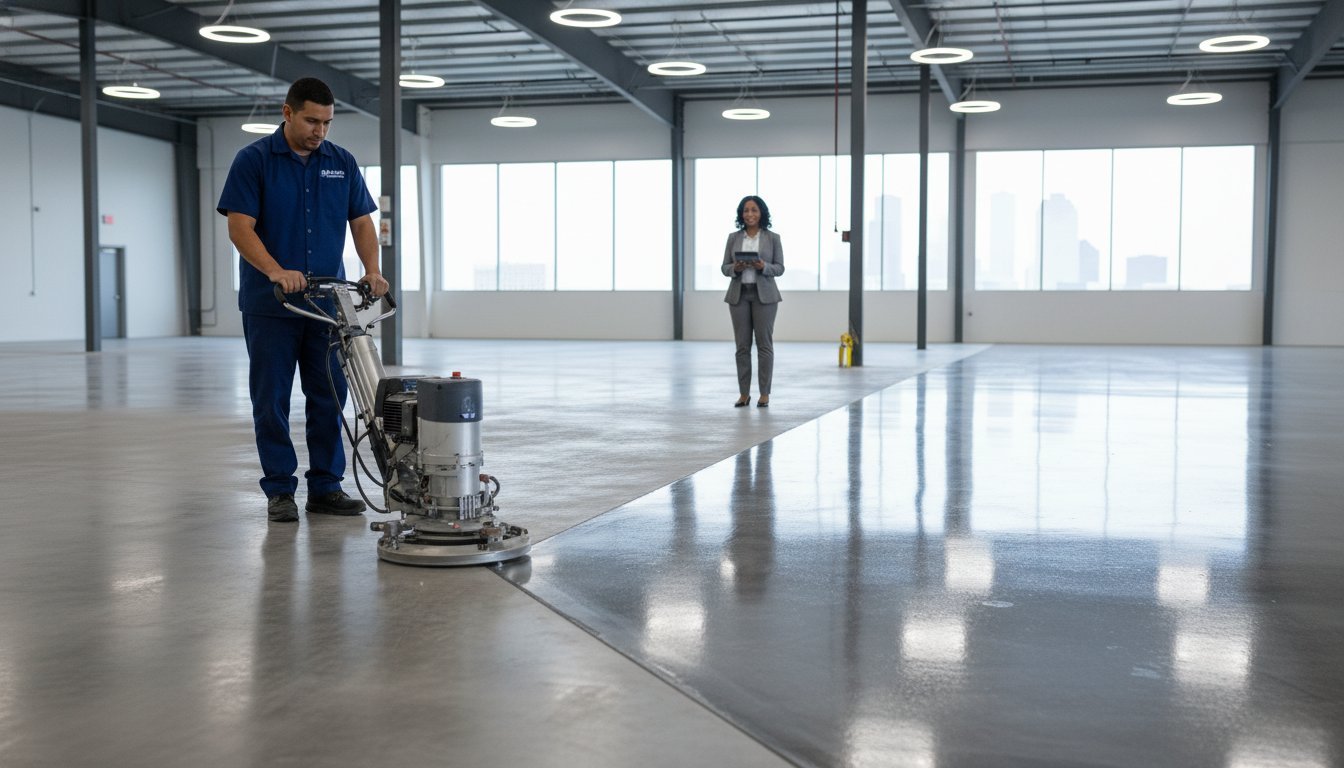
Vetting a partner for concrete floor polishing houston tx requires looking beyond the bottom line. You need a vendor that understands the technical demands of industrial-scale refinement. Professional contractors use heavy-duty planetary grinders. These machines provide the consistent downward pressure necessary to achieve a uniform finish across thousands of square feet. Unlike lightweight residential equipment, planetary grinders use multiple heads that rotate in opposing directions. This creates a flatter, more refined surface that resists wear over time. It’s the difference between a floor that looks good for a month and one that performs for a decade.
Dust management is equally critical for facility health. Given that 2025 saw over $28 million in OSHA fines related to silica, your vendor must utilize industrial-grade dust extraction. These systems must be equipped with HEPA filters to capture microscopic particles at the source. This protects your facility’s air quality and prevents the contamination of sensitive inventory or machinery. Always verify a vendor’s Experience Modification Rate (EMR) and safety record before signing a contract. A low EMR indicates a commitment to safety that reduces your liability as a facility manager. It’s a key indicator of how a vendor manages their on-site crews and risk protocols.
Verifying Technical Expertise and Certifications
Certifications from chemical manufacturers ensure that installers understand the specific properties of the densifiers and sealers they apply. Don’t rely solely on a digital portfolio. Request a physical mock-up on your actual slab before the full project begins. This reveals how your specific concrete responds to the diamond sequence and allows for adjustments to the refinement process. It’s the only way to guarantee the final result matches your expectations for gloss and durability. Reviewing past projects in similar industries, such as medical laboratories or high-traffic retail, provides proof of their ability to handle your specific environmental constraints.
Logistics and Scheduling for Multi-Phase Projects
Operational continuity is the priority for any facility manager. A strategic partner manages scheduling to minimize business disruption, often working overnight or during weekend shifts. This coordination is particularly vital during post construction cleaning phases where multiple trades occupy the same space. Clear communication channels between the site supervisor and your management team prevent delays and ensure a smooth handoff. Efficient project management means knowing exactly when the floor will be ready for foot traffic or heavy equipment. If you’re ready to simplify your facility’s oversight, partner with a vendor management expert who can handle the complexities of flooring restoration and maintenance on your behalf.
Streamlining Floor Care with NJC’s Managed Facility Solutions
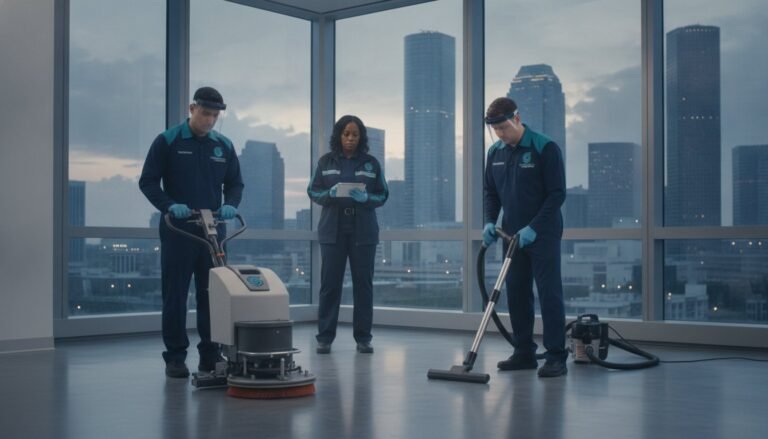
Managing a commercial environment requires balancing dozens of specialized needs simultaneously. The logistical burden of coordinating separate contractors for janitorial work, window cleaning, and concrete floor polishing houston tx often leads to fragmented results and administrative fatigue. NJC eliminates this friction by serving as your single point of contact. We provide a strategic bridge between your facility’s requirements and a vetted network of Houston’s top flooring specialists. This ensures that every phase of your floor restoration meets our rigorous quality standards without requiring your constant oversight.
Efficiency extends to your accounting department through our consolidated billing model. Instead of tracking multiple invoices from various specialized trades, your flooring projects merge seamlessly into your monthly janitorial company statement. This transparency simplifies budget tracking and vendor management. Our team handles the performance monitoring and quality assurance inspections, holding every specialist accountable to the project’s original specifications. It’s a disciplined approach that treats your flooring as a long-term asset rather than a series of isolated service calls.
Beyond Installation: Ongoing Maintenance Management
A high-gloss finish is only as durable as the maintenance protocol that follows it. NJC implements customized cleaning schedules designed specifically to preserve the mechanical refinement of your concrete. We coordinate periodic burnishing to maintain clarity in high-traffic zones, preventing the dulling that occurs from heavy foot traffic or equipment use. By integrating these tasks into your broader facility vendor management solutions, we ensure your floors remain compliant with safety standards year-round. This proactive care extends the life of the polish and protects your initial investment.
Your Strategic Partner for Houston Facility Excellence
Our role is to manage the complexities of facility care so you can focus on your core business operations. For property managers with multi-location portfolios across Southeast Texas, we offer scalable solutions that ensure consistency from the Energy Corridor to the Port. Whether you’re overseeing a single laboratory or a million-square-foot warehouse, our strategic sourcing provides access to the right equipment and expertise for concrete floor polishing houston tx. We begin with a comprehensive facility floor assessment to identify your slab’s specific needs and performance goals. Contact NJC today to align your facility’s vision with our professional management expertise.
Strategic Facility Management for the Modern Houston Landscape
Transforming your floors into a high-performance asset requires more than just mechanical grinding. It demands a disciplined approach to maintenance and a partner who understands the nuances of high-compliance industrial environments. By prioritizing the technical refinement process and consolidating your vendor list, you eliminate the fragmentation that often plagues facility operations. This strategic shift ensures your facility meets safety standards while reducing long-term lifecycle costs. Investing in professional concrete floor polishing houston tx isn’t just a renovation; it’s a commitment to operational excellence.
NJC provides single-source management for over 20 specialized facility solutions. We bring specialized experience in high-compliance environments and offer consolidated billing for property portfolios across Southeast Texas. This model allows you to focus on your core business objectives while we ensure your facility maintains its premium standards. Ready to optimize your operations? Request a Strategic Floor Care Consultation today to begin a comprehensive assessment of your facility’s needs. Your workspace deserves a foundation that supports its growth and reflects its professional stature.
Common Questions About Houston Facility Floor Polishing
Is polished concrete slippery when wet?
Polished concrete is generally no more slippery than other hard flooring surfaces and can be engineered to meet high traction standards. When processed correctly, these floors meet or exceed ANSI/NFSI B101.1 standards for slip resistance. It’s the mechanical refinement, not a topical wax, that creates the shine, meaning the floor maintains its grip even under wet conditions. For facilities with specific safety requirements, professional installers can perform Dynamic Coefficient of Friction testing to verify traction levels.
How much does concrete floor polishing cost in Houston?
Project costs depend on the current condition of the slab, the desired gloss level, and the total square footage involved. Factors such as the amount of surface preparation needed and the complexity of the facility layout will influence the final budget. Larger industrial projects often benefit from economies of scale. Facility managers should request a site-specific assessment to account for the unique variables of their property rather than relying on generic industry averages.
Can any concrete floor be polished, regardless of age?
Most structurally sound concrete slabs can be polished, whether they were poured last month or several decades ago. Older floors often require more intensive preparation to repair cracks or spalling before the polishing begins. The use of chemical densifiers is particularly effective on older, porous slabs. These chemicals react with the concrete to harden the matrix, ensuring the finished surface is as durable as a newer pour.
How long does the polishing process take for a commercial facility?
Timeline depends on the project’s scale and the number of mechanical refinement steps required to reach the target finish. A professional crew can typically process between 1,000 and 2,000 square feet per day, though this varies based on equipment and slab hardness. Strategic scheduling, such as working during overnight shifts or holiday weekends, helps minimize the impact on your daily business operations. Clear communication with your vendor ensures that downtime remains within your facility’s operational constraints.
What is the difference between polished concrete and a grind-and-seal finish?
Polished concrete is a permanent mechanical refinement of the slab itself, while a grind-and-seal finish relies on a topical protective coating. While grind-and-seal options might have a lower initial setup time, they eventually peel or wear away and require re-application. True concrete floor polishing houston tx creates a densified surface that is part of the stone. It won’t flake or delaminate, making it a superior choice for high-traffic industrial and commercial environments.
How do I maintain the shine on my polished concrete floors?
Maintaining the high-gloss finish requires daily dust mopping and regular wet mopping with a pH-neutral cleaner. You should avoid acidic or alkaline cleaning agents, as these chemicals can etch the surface and dull the shine over time. For high-traffic areas that begin to show wear, periodic high-speed burnishing with specialized pads can restore the original clarity. This simple maintenance routine eliminates the need for the expensive stripping and waxing cycles associated with VCT.
Does polished concrete help with LEED certification?
Polished concrete contributes to several LEED credit categories by utilizing the existing building slab and reducing the need for new flooring materials. It improves indoor environmental quality by eliminating the VOC emissions found in many adhesives and topical coatings. Additionally, the high light reflectivity of a polished surface can reduce the energy required for interior lighting. This makes it a strategic choice for businesses focused on sustainability and long-term energy efficiency.
Can I polish concrete that has been previously covered in carpet or tile?
Yes, you can polish concrete after removing existing floor coverings and their associated adhesives. The process involves an initial aggressive grinding stage to remove “ghosting” patterns or glue residue left behind by the previous materials. Once the slab is clean and leveled, the standard polishing sequence begins. This restoration process turns a previously hidden slab into a durable, high-performance architectural feature that enhances the facility’s overall aesthetic.