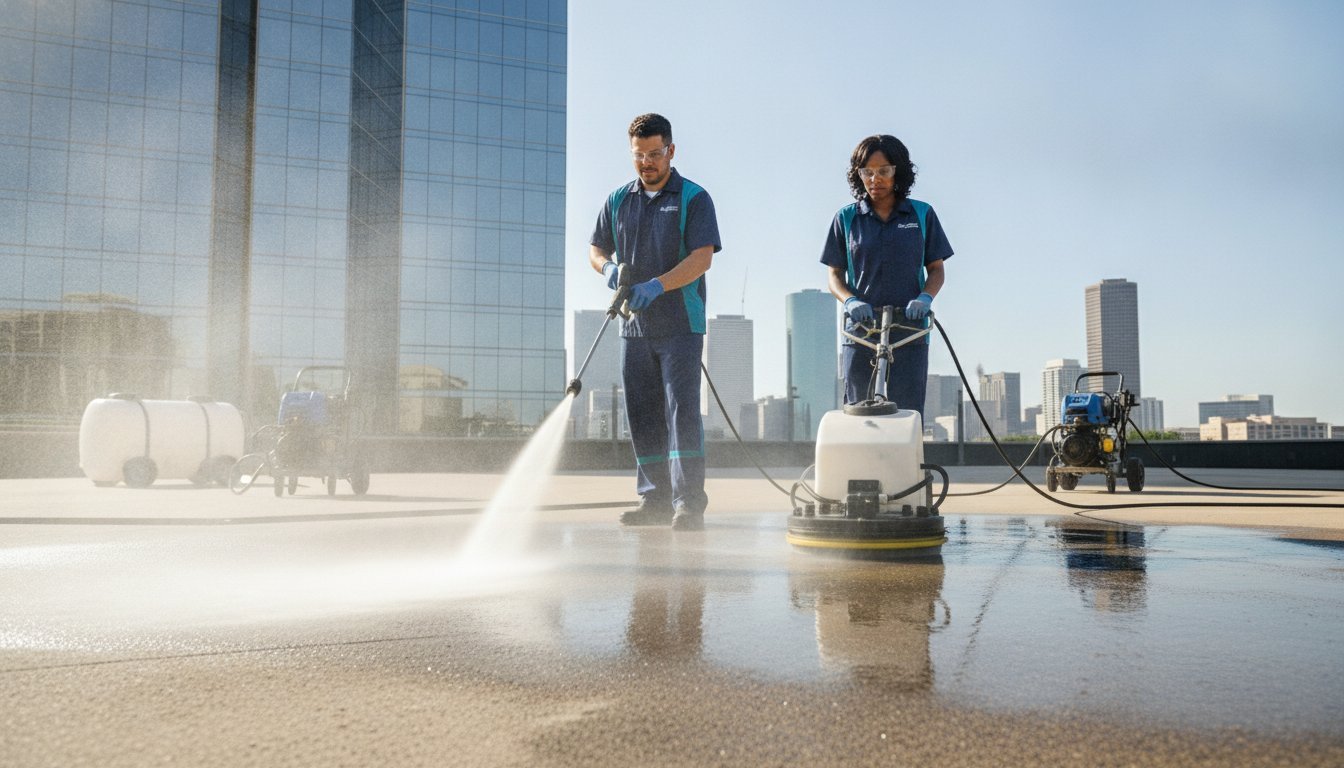
Commercial Pressure Washing Prices Houston: 2026 Facility Manager’s Cost Guide
In 2026, a Houston facility manager’s greatest liability isn’t a dirty storefront; it’s a vendor who ignores the city’s mandatory water reclamation permits. Understanding the current market for commercial pressure washing prices houston requires looking beyond basic square footage and into the complex world of compliance and consolidated facility management. You’ve likely dealt with the frustration of unreliable vendors who leave you with hidden chemical fees or, worse, a city citation for improper wastewater discharge.
It’s vital to have a partner who understands that a clean exterior is a matter of both brand reputation and strict regulatory adherence. We’ve seen how managing multiple invoices and disparate services can drain your time and resources. This guide provides the transparency you need to master your 2026 exterior maintenance budget while ensuring your property remains fully compliant with the latest Houston Health Department requirements. We’ll examine the factors influencing current market rates, the impact of new permitting fees, and how strategic vendor management can simplify your entire facility portfolio.
Key Takeaways
- Understand how Houston’s specific humidity and Gulf Coast climate dictate professional cleaning frequencies to protect your building’s exterior integrity.
- Analyze the 2026 market shift between square foot and hourly rate structures to ensure you receive competitive commercial pressure washing prices houston.
- Identify the specialized compliance and security protocols required for cleaning sensitive environments like medical laboratories and financial institutions.
- Mitigate property risk by verifying vendor insurance and operational standards to avoid the hidden costs of low-bid contractor damage.
- Discover the strategic advantages of consolidating exterior maintenance with professional floor care to streamline your billing and vendor management.
Understanding the Houston Commercial Pressure Washing Market in 2026
Professional property management requires a clear distinction between basic cleaning and technical maintenance. While Pressure washing is often viewed as a simple task, the commercial-grade execution required for Houston facility portfolios in 2026 involves significantly higher stakes than residential power washing. Industrial equipment operates at higher volumes and pressures; it utilizes specialized heat and chemical applications to remove deep-seated pollutants without compromising structural integrity. For a facility manager, the goal isn’t just a clean surface. It’s the preservation of a multi-million dollar asset.
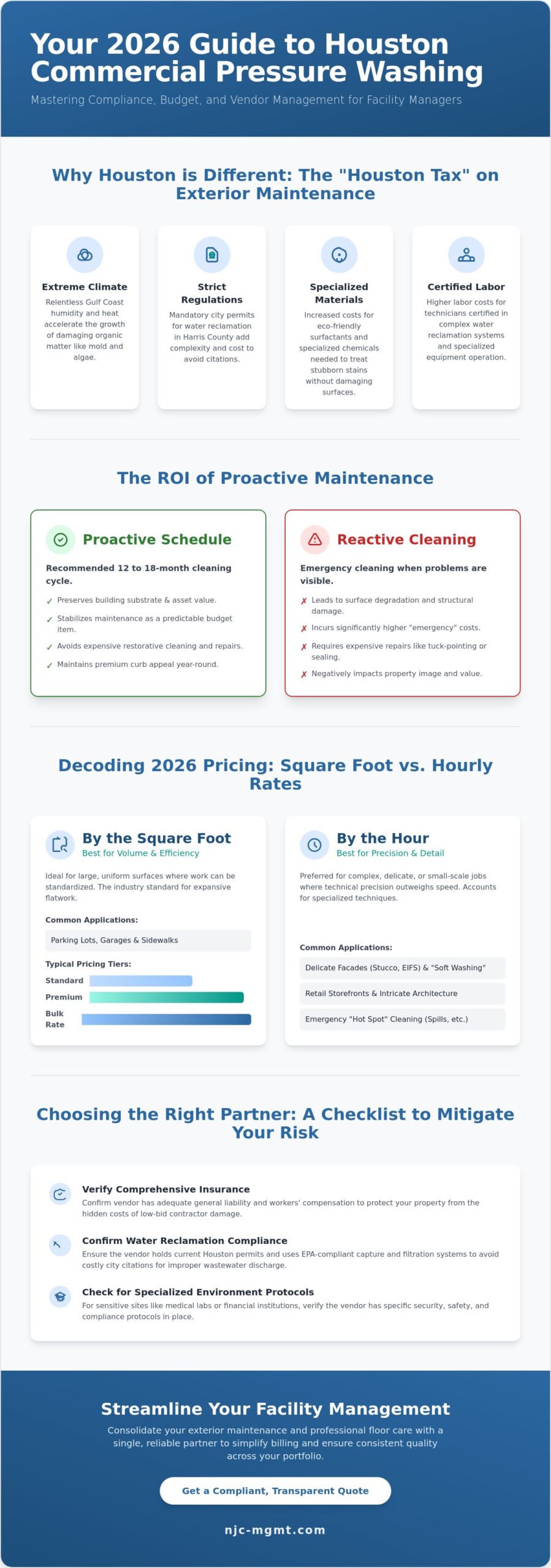
Budgeting for commercial pressure washing prices houston involves accounting for what local experts call the “Houston Tax.” Our unique Gulf Coast climate creates a relentless cycle of humidity and heat, accelerating the growth of organic matter. In 2026, market pricing also reflects the increased cost of specialized, eco-friendly surfactants and the rising labor costs for technicians certified in complex water reclamation systems. A strategic approach to these costs moves exterior cleaning from an emergency expense to a stabilized line item within a broader facility management plan.
Key Factors Influencing Houston Pricing
Houston’s architectural diversity means a single pricing model rarely applies to every property. Stucco and EIFS systems require low-pressure “soft washing” to prevent water intrusion, while expansive concrete parking structures demand high-volume surface cleaners. Accessibility is another primary cost driver. Mid-rise buildings in areas like the Energy Corridor or Downtown often require specialized lifts or rigging. Additionally, strict water reclamation requirements for EPA compliance in Harris County mean vendors must include the cost of capture and filtration systems in their professional estimates.
The Impact of Houston’s Climate on ROI
Reactive cleaning is almost always more expensive than a preventative schedule. In Houston, algae and mold growth cycles are nearly year-round. Allowing these biological films to sit on masonry leads to surface degradation and expensive tuck-pointing or sealing repairs. By maintaining a 12 to 18-month cleaning cycle, facility managers preserve the building’s substrate and curb appeal. This proactive investment ensures the property remains a premium asset. It helps you avoid the heavy costs associated with deep restorative cleaning or permanent structural damage caused by neglected organic growth.
2026 Cost Breakdown: Square Foot vs. Hourly Rates
In 2026, the structure of commercial pressure washing prices houston follows two distinct paths: volume-based efficiency or detail-oriented precision. Facility managers must determine which model aligns with their specific asset requirements. For expansive flatwork like parking lots, square footage remains the industry standard. Conversely, intricate architectural features often necessitate an hourly approach to account for the technical complexity involved. Choosing the wrong billing model can lead to budget overruns or, worse, a compromised finish that requires expensive remediation.
Square Foot Pricing Tiers
Market benchmarks for large-scale concrete surfaces typically reflect the volume and condition of the substrate. Basic sidewalks and storefronts fall into a standard tier. However, intensive areas requiring grease or graffiti removal command a premium due to the specialized chemicals and extended dwell times needed. Multi-level parking structures often benefit from bulk pricing models. In these scenarios, the scale of the job allows for a more efficient deployment of crews and equipment; this usually results in a lower per-unit cost compared to isolated service calls.
When Hourly Rates Make Sense
Hourly billing is the preferred method for retail storefronts or delicate facades where technical precision is paramount. This is particularly true for “soft washing” applications. This technique uses low pressure to protect surfaces like stucco or metal siding. It requires more time and expertise than standard high-pressure applications. Emergency “hot spot” cleaning in high-traffic zones also utilizes hourly structures to address localized spills or debris. Professional standards, such as those established by the Power Washers of North America (PWNA), emphasize that technical precision should never be sacrificed for speed, regardless of the billing structure.
Portfolio managers with multi-location accounts often find success with flat-rate project pricing. This creates consistency across various assets and simplifies the internal accounting process. It’s essential to identify potential hidden surcharges that can inflate a quote before signing a contract. Water hauling fees are common in areas with limited hydrant access, especially in newer industrial developments. After-hours surcharges are another factor. Many properties require service during overnight windows to avoid disrupting tenant operations or customer traffic. Streamlining these variables is easier when you partner with a strategic facility management expert who can consolidate these costs into a single, transparent plan.
Specialized Environment Pricing: Labs, Banks, and Industrial Sites
Environment-specific requirements often cause significant variances in commercial pressure washing prices houston. While a standard retail strip might focus on curb appeal, a laboratory or a high-security financial hub demands a level of operational discipline that standard vendors cannot provide. These facilities require specialized chemicals, vetted personnel, and rigorous safety protocols. High-stakes cleaning isn’t just a maintenance task; it’s a risk management strategy. For a facility manager, paying for expertise in these sectors is an investment in asset security and regulatory compliance.
Industrial sites in Houston, particularly those serving the energy and logistics sectors, face unique challenges with heavy grease and chemical runoff. Removing industrial-grade contaminants requires specific degreasers and high-temperature water systems that standard equipment can’t handle. These jobs also demand strict adherence to OSHA safety standards to protect workers and the environment. Facility managers must account for the cost of high-limit insurance and bonding when budgeting for these high-risk operations. A vendor’s inability to meet these safety requirements can lead to massive liability for the property owner.
Healthcare & Laboratory Standards
Exterior maintenance for medical facilities involves more than just removing dirt. It requires a deep understanding of bio-hazard mitigation and the impact of cleaning agents on sensitive environments. In many cases, the surfactants used must align with the same standards required for clean room janitorial services houston. Scheduling is equally critical. Work must often be performed in precise windows to avoid disrupting patient care or sensitive laboratory equipment. This logistical complexity naturally influences the overall project cost. Specialized teams ensure that runoff is captured and that no contaminants enter the facility’s air intake systems.
Financial & High-Security Logistics
Banks and financial institutions present a different set of challenges. Security protocols often dictate that cleaning crews undergo extensive background checks before they even step onto the property. Many institutions also require a permanent supervisor on-site or specific check-in procedures that extend the project timeline. These security premiums are unavoidable for organizations that prioritize asset protection. To streamline these costs, many facility managers integrate exterior washing into their broader janitorial company contracts. This consolidation allows for better oversight, consolidated billing, and more predictable annual budgeting.
How to Vet Houston Vendors and Avoid “Solar Cowboys”
Procurement for exterior maintenance involves more than just verifying a price point. It requires a rigorous audit of a vendor’s operational legitimacy. While earlier sections discussed the technical variables of commercial pressure washing prices houston, the vetting process focuses on risk insulation. A “Solar Cowboy” or low-bid contractor often lacks the necessary General Liability or Workers Compensation coverage. In Texas, where Workers Comp is optional for employers, an injury on your property could lead to direct litigation against your organization. Professional rates reflect the cost of these safety nets; a lower bid is often just a transfer of risk to your balance sheet.
Amateur operators frequently rely on high-pressure methods that can compromise building envelopes. On surfaces like EIFS or aged masonry, improper technique leads to water intrusion and structural rot. Verifying a vendor’s credentials, including their 2026 Houston Health Department permit, is a non-negotiable step in your procurement process. This due diligence ensures you aren’t just buying a service, but protecting a multi-million dollar asset from the long-term costs of amateur errors.
Compliance and Environmental Risk
Houston’s regulatory landscape for wastewater is exceptionally strict. The City of Houston mandates that all commercial pressure washing wastewater be reclaimed and disposed of at approved sites. Discharging untreated wash water into the storm sewer system violates the EPA Clean Water Act. Vendors offering rock-bottom pricing usually skip the expensive vacuum and filtration systems required to capture this runoff. The true cost of a cheap quote isn’t just the invoice; it’s the potential for massive municipal fines and the legal exposure that follows a compliance failure in a commercial zone.
Quality Assurance Frameworks
Maintaining consistency across a Houston portfolio requires a standardized framework for verification. Strategic facility managers utilize Quality Assurance Inspections to validate that every surface meets the established standard. This process eliminates the hidden costs of re-cleans and ensures your brand’s physical presence remains immaculate. Having a single point of contact for these inspections simplifies your workflow and provides a clear audit trail. Don’t leave your property’s reputation to chance; partner with a managed solution that prioritizes transparency and professional accountability.
Consolidating Your Houston Facility Management
Managing a portfolio of twenty or more vendors creates a fragmented operational environment. Each contract requires individual vetting, scheduling, and invoice processing; this administrative burden silently erodes your profit margins. When evaluating commercial pressure washing prices houston, facility managers often overlook the soft costs associated with managing a standalone exterior cleaning vendor. Consolidating these requirements into a unified management framework through Nationwide Janitorial Connect isn’t just about convenience. It’s a strategic move to recapture lost time and ensure a consistent standard of care across all physical assets.
Bundling exterior maintenance with commercial floor cleaning creates a seamless transition between your property’s public-facing exterior and its interior environment. This holistic approach ensures that debris from parking lots isn’t tracked into your facility, preserving the lifespan of both your concrete and your internal flooring. By viewing these services as a single, integrated maintenance cycle, you reduce the logistical friction that usually accompanies site visits and service windows.
Strategic Vendor Consolidation
Implementing facility vendor management solutions allows for a significant reduction in per-service costs through increased operational efficiency. You move from managing dozens of contacts to a single point of accountability. This model provides one invoice and one dedicated contact who understands your entire portfolio’s history. Whether you’re coordinating post construction cleaning or routine exterior maintenance, a consolidated approach ensures that every technician on-site meets your specific security and quality standards without requiring your constant oversight.
The Nationwide Janitorial Connect Advantage
Nationwide Janitorial Connect functions as a strategic partner rather than a mere service provider. We combine nationwide reach with deep Houston local expertise to manage complex commercial environments with precision. Our focus remains on long-term value creation and portfolio stability. We handle the complexities of vendor sourcing, quality assurance, and regulatory compliance so you can focus on high-level asset strategy. To see how our integrated approach can stabilize your maintenance budget, request a custom quote for Managed Facility Solutions for Houston today. This is the final step in moving your facility management from a reactive cost center to a streamlined, professional operation.
Optimizing Your 2026 Exterior Maintenance Portfolio
Navigating the landscape of commercial pressure washing prices houston requires a shift from transactional procurement to strategic asset management. As established, the 2026 market demands more than just a clean facade; it requires a documented commitment to environmental compliance and specialized security protocols. By moving away from fragmented vendor lists and embracing a consolidated model, you protect your building’s substrate and your organization’s legal standing simultaneously. The transition from reactive cleaning to a managed maintenance cycle is the key to stabilizing your long-term facility expenditures.
Nationwide Janitorial Connect provides the stability and expertise necessary to manage these variables across your entire portfolio. Streamline your Houston facility maintenance with Nationwide Janitorial Connect to access a single-source solution for over 20 facility requirements. From specialized compliance for medical and financial institutions to consolidated billing and dedicated quality assurance, we ensure your maintenance strategy is as sophisticated as the assets you manage. Your property’s exterior is the first impression of your brand. Ensure it reflects your professional standards with a partner that prioritizes excellence and strategic growth.
Frequently Asked Questions
What is the average price per square foot for commercial pressure washing in Houston?
Commercial pressure washing prices houston typically range from $0.08 to $0.35 per square foot for standard surfaces like sidewalks and storefronts. Specialized areas requiring intensive grease or graffiti removal can see rates climb toward $1.00 per square foot. These figures reflect the technical expertise and equipment volume required for commercial-grade results. Pricing varies based on the total area, the level of organic growth, and the specific material being cleaned.
Do Houston commercial pressure washing prices include water costs?
Most professional quotes assume the vendor will use on-site water sources provided by the facility. If your property lacks accessible hydrants or has strict water usage limits, vendors will apply a surcharge for water hauling. This fee covers the logistics of transporting heavy volumes of water to your site. It’s vital to clarify water access during the initial site assessment to ensure your budget remains predictable and transparent.
How often should a Houston commercial building be pressure washed?
Professional cleaning is recommended every 12 to 24 months to manage the effects of Houston’s high humidity. The Gulf Coast climate creates an ideal environment for mold and algae to thrive on building exteriors. Neglecting this cycle leads to surface degradation and a decline in curb appeal. Regular maintenance protects your masonry and ensures your property remains compliant with local aesthetic standards and building codes.
What is the difference between power washing and pressure washing for commercial sites?
The technical distinction lies in the temperature of the water used during the cleaning process. Power washing utilizes heated water to break down stubborn contaminants like grease, oil, and gum, making it ideal for parking structures. Standard pressure washing uses cold water at high PSI for general dirt and organic growth removal. Choosing the correct method is essential for protecting your building’s substrate while achieving a deep, professional clean.
Are there specific environmental regulations for pressure washing in Houston?
Yes, Houston enforces strict wastewater reclamation mandates through the city’s Health Department. All commercial operators must hold a valid 2026 permit and reclaim all wash water to prevent it from entering the storm sewer system. Discharging untreated water is a violation of the Clean Water Act and can result in heavy municipal fines. Professional vendors include the cost of these reclamation systems to ensure your facility stays fully compliant.
Can pressure washing be bundled with other janitorial services for a discount?
Strategic consolidation often results in reduced administrative overhead and improved operational efficiency for facility managers. Bundling exterior maintenance with floor care or janitorial services allows for streamlined scheduling and a single point of accountability. While the physical labor costs remain consistent, the reduction in vendor management hours provides a clear financial benefit. Partnering with a comprehensive provider simplifies your billing and ensures a higher standard of quality across your portfolio.
What should be included in a commercial pressure washing quote?
A professional quote should provide an itemized scope of work, total square footage, and a detailed water reclamation plan. It must also list the specific chemicals and surfactants intended for use on your building’s surfaces. Ensure the estimate accounts for any after-hours surcharges or specialized equipment rentals, such as aerial lifts. This level of detail prevents hidden costs and allows you to compare vendor proposals with total accuracy.
How do I know if a Houston vendor is properly insured for commercial work?
Request a Certificate of Insurance (COI) directly from the vendor’s insurance agent before any work begins. This document must verify General Liability, Umbrella, and Workers Compensation coverage specific to the state of Texas. Don’t accept verbal assurances or expired documents as proof of coverage. Verifying these credentials protects your property from liability in the event of an on-site injury or accidental damage during the cleaning process.