High-Traffic Commercial Carpet Cleaning: A 2026 Strategic Management Guide
Your facility’s flooring is a depreciating asset, but premature replacement is a choice, not an inevitability. You’ve likely experienced the frustration of entryways looking worn just months after a deep clean or the logistical headache of managing multiple vendors across various locations. Managing high traffic commercial carpet cleaning shouldn’t be a source of operational friction. It’s a strategic necessity that requires a disciplined, results-oriented approach to preserve your capital and maintain your brand’s professional elegance.
We understand that inconsistent service quality and long drying times disrupt your business flow and damage your professional image. This guide provides a clear roadmap to extend your carpet’s lifespan through advanced maintenance protocols and strategic vendor consolidation. You’ll learn how to unify your billing, implement rigorous quality assurance inspections, and ensure your facility maintains a consistent, high-standard appearance for every client and employee who walks through your doors. By shifting from reactive cleaning to a managed lifecycle strategy, you’ll secure a better return on your facility investment while reclaiming your time.
Key Takeaways
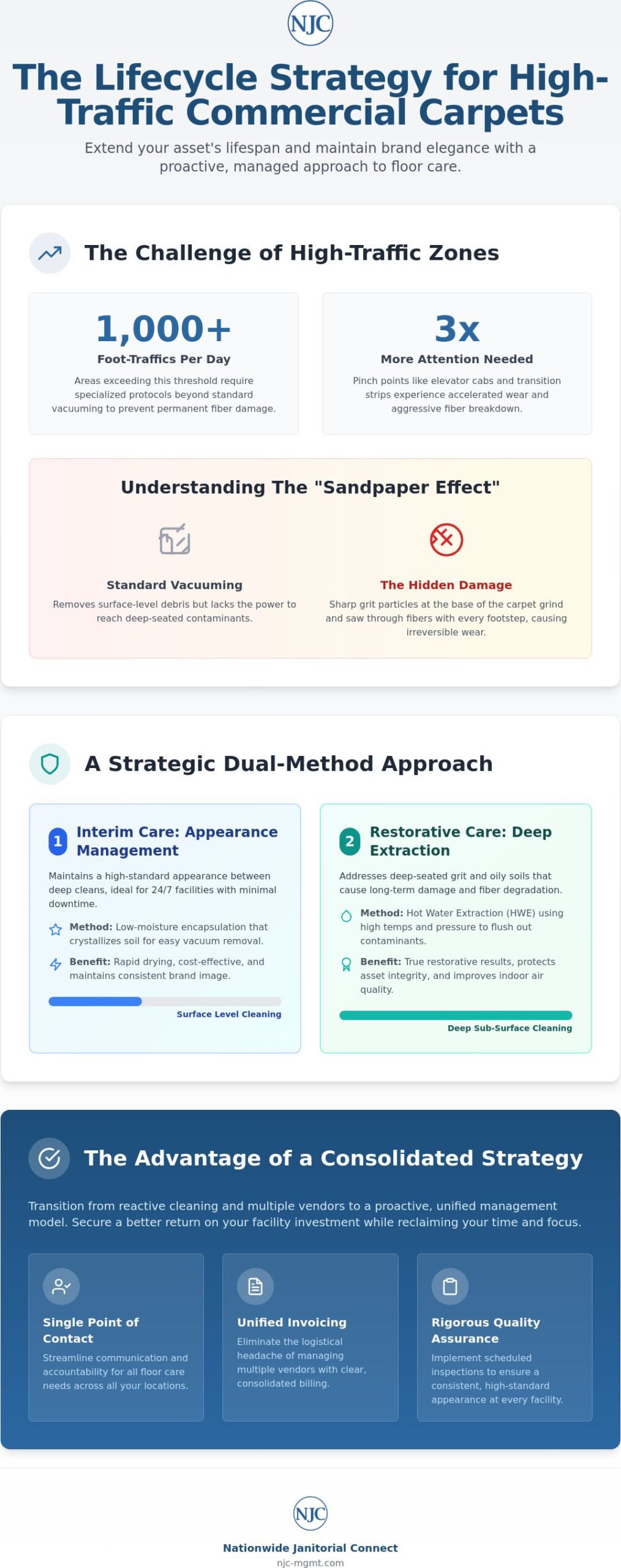
- Learn why areas exceeding 1,000 foot-traffics per day require specialized protocols beyond standard vacuuming to prevent permanent fiber degradation.
- Discover how to balance low-moisture interim encapsulation for daily appearance with deep restorative extraction to eliminate sub-surface contaminants.
- Implement high traffic commercial carpet cleaning strategies that align with specific industry needs, from green-certified safety in schools to security compliance in banks.
- Identify proactive measures to combat Houston’s high humidity, ensuring rapid drying times and preventing mold growth in entryways.
- Streamline your operations by transitioning to a consolidated management model that offers a single point of contact and unified invoicing for all floor care needs.
The Challenge of High-Traffic Commercial Carpet Maintenance
High-traffic carpet cleaning is a specialized technical discipline. It applies to any facility area that experiences more than 1,000 foot-traffics per day. In these high-pressure environments, the carpet acts as a massive filter for the entire building, trapping airborne pollutants and tracked-in debris. Standard vacuuming serves a purpose for daily surface maintenance, but it lacks the suction power to reach the sub-surface contaminants that threaten the structural integrity of your flooring investment.
The most significant danger to your carpet’s lifespan is the “sandpaper effect.” When dry soil and grit penetrate the pile, they settle at the base of the fibers. Every footstep applies downward pressure, causing these sharp particles to grind against the yarn. This mechanical action literally saws through the fibers, leading to permanent wear patterns. Facility managers must understand that different carpet cleaning methods are required to address this deep-seated grit before it compromises the backing. Beyond the physical damage, your entryway’s appearance is a leading indicator of brand trust. A neglected lobby sends a message of operational stagnation. Professional high traffic commercial carpet cleaning ensures your first impression aligns with your brand’s commitment to excellence and professional elegance. A clean environment signals to both employees and clients that the organization values its infrastructure and the people within it.
Identifying High-Wear Zones in Your Facility
Strategic maintenance requires a precise map of your building’s “path of least resistance.” Primary lobbies carry the load, but pinch points like elevator cabs and transition strips require three times more attention. These zones are where aggressive fiber breakdown occurs. A sophisticated strategy incorporates high-performance walk-off mats. These must span at least 15 feet to strip moisture and soil from footwear before it reaches your internal carpets, especially given the intense humidity of the Houston environment.
Hidden Costs of Poor Carpet Management
The financial impact of poor maintenance extends beyond aesthetics. Neglecting high traffic commercial carpet cleaning protocols leads to premature replacement, which is a massive capital expenditure that disrupts operations. A proactive maintenance cycle preserves the asset and defers these costs. Additionally, carpet hygiene is a critical factor in Indoor Air Quality. Trapped particulates can lead to poor IAQ, impacting employee productivity. There are also liability concerns; soiled carpets can hide uneven flooring, creating unnecessary trip hazards.
Strategic Cleaning Methods: Restorative vs. Interim Care
Managing high traffic commercial carpet cleaning requires a shift from reactive spot-cleaning to a dual-method lifecycle strategy. Interim care focuses on maintaining a high-standard appearance between deep cleans, ensuring your brand image remains untarnished. Restorative care, conversely, addresses the deep-seated soil accumulation and grit that standard maintenance cannot reach. Encapsulation cleaning is a cost-effective interim solution for 24/7 facilities that crystallizes soil for easy removal during routine vacuuming. By integrating these two distinct approaches, facility managers can maintain a pristine environment while significantly extending the interval between expensive restorative sessions.
A hybrid approach maximizes your budget by alternating these methods based on foot-traffic data and seasonal soil loads. It prevents the build-up of oily residues while minimizing the wear caused by excessive moisture. Following ISSA’s carpet care tips, a scheduled rotation ensures that the carpet fibers remain resilient and vibrant. This disciplined rhythm of care transforms carpet maintenance from an unpredictable expense into a predictable, managed asset lifecycle.
Hot Water Extraction (HWE) Protocols
For high-compliance environments like financial institutions or laboratories, restorative cleaning is non-negotiable. Deep hot water extraction uses high temperatures and optimized PSI to break the chemical bond between oily soils and the carpet pile. It is the only method capable of true restorative results by flushing out the microscopic grit that causes the sandpaper effect. Scheduling these deep cleans during off-peak hours or holiday breaks ensures your facility meets the highest standards of hygiene without disrupting daily operations. This process also eliminates trapped bio-pollutants, which is essential for maintaining indoor air quality in densely populated office spaces.
Low-Moisture and Encapsulation Advantages
Integrating low-moisture cycles into your high traffic commercial carpet cleaning schedule ensures a consistent appearance without the logistical burden of long drying times. Encapsulation prevents “wicking,” a common issue where deep-seated stains reappear as the carpet dries. With dry times often under 30 minutes, your lobby or retail space remains operational and safe, eliminating the risk of slip-and-fall accidents. This method also uses significantly less water and fewer chemicals, directly supporting your corporate sustainability initiatives. Implementing a managed floor care program that utilizes these advanced polymers allows your facility to remain “guest-ready” at all times with minimal environmental impact.
Industry-Specific Requirements for Carpet Care
Every commercial sector presents a unique set of operational challenges that dictate maintenance frequency and chemical selection. Effective high traffic commercial carpet cleaning isn’t a one-size-fits-all service; it’s a technical response to specific environmental stressors. To ensure both warranty compliance and fiber longevity, all protocols must align with the Carpet and Rug Institute (CRI) cleaning standards. Whether you manage a sterile laboratory or a high-volume elementary school, your strategy must account for the specific type of soil, the occupancy patterns, and the regulatory requirements of your industry.
Security and Compliance in Financial Sector Cleaning
Financial institutions require a balance between pristine aesthetics and rigorous security. For banks with multiple Houston branches, maintaining a consistent appearance is essential for brand integrity. This requires a management partner who can vet vendors for high-security access and coordinate after-hours services that don’t compromise sensitive areas. When Choosing the Right Janitorial Company in Houston, facility managers should prioritize partners who understand the liability and compliance nuances of the banking sector. NJC acts as the strategic management layer, ensuring third-party vendors meet these high-traffic standards while adhering to strict security protocols.
Health-First Cleaning for Educational Facilities
In daycares and schools, the priority shifts toward child safety and indoor air quality. High-density foot traffic and frequent food spills in common areas create a breeding ground for bacteria if not managed correctly. We prioritize green-certified, non-toxic chemicals to ensure a safe environment for students and staff. A critical component of this strategy is the use of high-performance HEPA-filtration vacuuming. This technology is vital for reducing classroom allergens and capturing microscopic particulates that standard equipment misses. NJC’s approach to vendor sourcing ensures that your educational facility benefits from specialized cleaners who are trained in these health-first protocols.
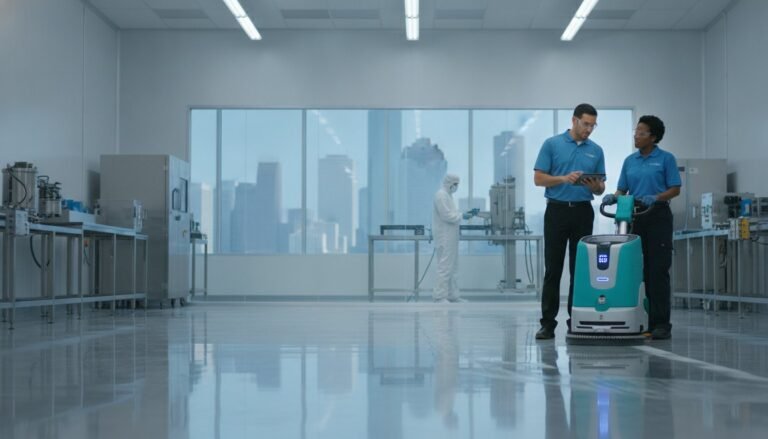
Laboratories and clean rooms present perhaps the most technical challenge. These environments often utilize specialized textiles with anti-static properties to protect sensitive electronic equipment. Managing these surfaces requires precise chemical selections that meet ISO standards without leaving residues that could compromise research integrity. Similarly, corporate offices must manage high traffic commercial carpet cleaning around peak occupancy. We focus on scheduling restorative extractions during low-usage windows to minimize business disruption while maintaining a premium office environment that supports employee productivity and respiratory health.
Managing the Houston Environment: Humidity and Soil Factors
Houston’s subtropical climate introduces environmental variables that generic maintenance guides often ignore. High humidity isn’t just a comfort issue; it’s a technical obstacle for high traffic commercial carpet cleaning. When moisture levels are high, evaporation slows down significantly. This creates a window for mold and mildew growth, particularly in high-traffic entryways during the intense moisture of hurricane season. To maintain structural integrity and hygiene, we recommend high-velocity air movers for Houston facilities to ensure dry-times remain under four hours.
Beyond moisture, the local geological profile contributes to accelerated wear. Houston’s heavy clay and silt soils are finer and more abrasive than standard sand. These particles track into lobbies and bond to carpet fibers when wet, requiring specialized extraction techniques to prevent permanent staining. A strategic approach accounts for these local variables, ensuring that your flooring remains a pristine asset rather than an operational liability. Proper soil management at the entryway is the first line of defense in a high-pressure environment.
Climate-Controlled Cleaning Schedules
Effective maintenance in Southeast Texas requires adjusting your cleaning frequency during the rainy months. Increased moisture levels necessitate a more aggressive interim cleaning schedule to manage the surge in tracked-in soil. During restorative extraction, active dehumidification is essential to pull moisture from the air and the carpet pile simultaneously. For a deeper dive into managing these local variables, see our guide on Commercial Floor Cleaning in Houston. This proactive scheduling prevents the musty odors often associated with poorly managed commercial textiles in humid environments.
Vendor Vetting for Local Expertise
Houston facility managers need partners who understand local building codes and the specific challenges of the Gulf Coast climate. Rapid-response capabilities are vital for addressing localized flooding or spills during storm events. NJC manages these complexities by acting as your strategic oversight layer. We conduct rigorous Quality Assurance Inspections to ensure that every vendor adheres to our high-traffic standards. This level of management ensures that your facility remains guest-ready, regardless of the weather outside. To secure your facility’s future, consult with our Houston management team to audit your current floor care protocols.
The NJC Advantage: Consolidating Your Carpet Care Strategy
Managing high traffic commercial carpet cleaning across a portfolio of properties is a logistical burden that often pulls facility managers away from their core strategic goals. The traditional model of juggling multiple cleaning vendors leads to inconsistent quality, administrative friction, and fragmented accountability. Nationwide Janitorial Connect (NJC) offers a paradigm shift. We move beyond the role of a standard cleaning vendor to become your dedicated facility management partner. By providing a single point of contact for carpet care, window cleaning, and janitorial services, we eliminate the operational noise that disrupts your business flow.
Efficiency is built into our management model. For multi-location operations, the administrative overhead of processing dozens of invoices is a hidden drain on resources. We resolve this through consolidated billing, providing one monthly invoice for all your floor care and janitorial needs. This clarity allows for more accurate budgeting and financial oversight. Our presence acts as a management layer that ensures every third-party vendor adheres to the rigorous standards your brand requires. This isn’t just about aesthetics; it’s about the long-term value creation and preservation of your physical assets.
Streamlining Facility Operations
Eliminating the “vendor chase” is the first step toward operational excellence. Instead of vetting dozens of local contractors, you leverage our pre-qualified network of specialists. Every technician we deploy is managed through our comprehensive Facility Vendor Management Solution. We don’t just schedule the work; we verify its execution. Our Quality Assurance Inspections are a standard component of our management process. These inspections guarantee that high-traffic protocols are followed and that restorative results meet our strict internal benchmarks. You receive transparent reporting and performance tracking, giving you total visibility without the need for micro-management.
Next Steps for Your Houston Property
The road to a more efficient facility starts with an objective assessment. We recommend conducting a comprehensive floor care audit to identify your specific high-traffic pain points and fiber wear patterns. This data allows us to customize a maintenance schedule that fits your 2026 budget while maximizing the ROI on your flooring. Whether you manage a high-security bank branch or a sterile laboratory environment, your maintenance strategy should be as sophisticated as your business. Don’t leave your facility’s first impression to chance. Contact NJC Management for a consolidated janitorial quote today and experience the difference of a managed, strategic approach to facility care.
Securing Your Facility’s Future Through Strategic Floor Care
Mastering high traffic commercial carpet cleaning is no longer just a janitorial task; it’s a critical component of professional asset management. By integrating interim encapsulation with deep restorative extraction, you protect your flooring from the abrasive sandpaper effect while maintaining a pristine brand image. Whether you’re managing the high-security requirements of a financial institution or the anti-static needs of a laboratory, a disciplined approach ensures your facility remains a premium asset rather than a liability. Neutralizing local variables like Houston’s humidity requires more than standard equipment; it requires a strategic partner who understands the science of textiles.
Centralizing your maintenance through a single point of contact simplifies your operations and provides specialized expertise for complex environments. Nationwide Janitorial Connect provides single-source management for 20+ facility solutions, including consolidated monthly invoicing to reduce your administrative burden. Our specialized bank and lab cleaning expertise ensures your facility meets the highest standards of hygiene and compliance. It’s time to reclaim your time and secure your property’s value. Request a Strategic Facility Management Quote to align your maintenance with your long-term business goals. We look forward to building a sustainable professional partnership with you.
Frequently Asked Questions
How often should high-traffic commercial carpets be professionally cleaned?
Areas experiencing over 1,000 foot-traffics per day require a monthly interim maintenance schedule to prevent permanent fiber damage. Restorative deep cleaning should occur at least once every quarter for these high-wear zones. Your specific industry and local environmental factors, such as Houston’s humidity, may necessitate more frequent interventions. A managed approach ensures the cleaning frequency aligns with actual soil load rather than a generic calendar.
What is the fastest drying method for commercial carpet cleaning?
Low-moisture encapsulation is the fastest drying method, with typical dry times ranging from 20 to 30 minutes. This process uses specialized polymers to trap soil, allowing for immediate foot traffic after the procedure. It’s an ideal choice for 24/7 facilities or high-traffic lobbies that cannot afford the 6 to 12 hour downtime required by traditional extraction. Using high-velocity air movers can further accelerate this process in humid regions.
Is hot water extraction better than encapsulation for office buildings?
Neither method is universally superior; they serve different strategic purposes in a professional maintenance cycle. Encapsulation is excellent for interim maintenance and preventing reappearing stains in office buildings. However, hot water extraction remains the only method for true restorative cleaning that flushes out sub-surface grit. A successful strategy for high traffic commercial carpet cleaning utilizes both methods in a scheduled rotation to maximize carpet lifespan.
Can professional carpet cleaning improve indoor air quality in my facility?
Professional cleaning significantly improves indoor air quality by removing trapped bio-pollutants and microscopic allergens from the building. Carpets act as a massive air filter for your facility, capturing dust and particulates that would otherwise remain airborne. Regular deep extraction using HEPA-filtered equipment ensures these contaminants are permanently removed from the environment. This proactive maintenance supports employee respiratory health and contributes to higher productivity levels in corporate offices. To further enhance your facility’s environment, you can read more about how professional HVAC maintenance helps regulate indoor air quality and humidity.
How much does high-traffic commercial carpet cleaning cost per square foot?
Industry rates for commercial carpet cleaning generally range from $0.08 to $0.40 per square foot, depending on the level of soiling and the method used. Deep restorative extraction typically sits at the higher end of this scale due to the specialized labor and equipment involved. While we don’t provide specific pricing for our managed services here, facility managers should evaluate costs based on the total lifecycle value and the reduction in replacement frequency.
What is the difference between interim and restorative carpet maintenance?
Interim maintenance focuses on surface appearance and is designed to keep carpets looking pristine between deep restorative sessions. It usually involves low-moisture techniques that allow for a rapid return to service. Restorative maintenance is a more intensive process, such as hot water extraction, aimed at removing deep-seated soil that damages the carpet’s structural integrity. Balancing these two approaches is essential for a comprehensive and cost-effective facility management strategy. For those seeking specialized expertise in textile care, you can discover Darcy Bespoke Cleaning and their professional approach to carpet and upholstery maintenance.
How do I manage carpet cleaning for multiple locations with one invoice?
You can consolidate your carpet care across multiple locations by partnering with a managed facility solutions provider like NJC. We act as your single point of contact, sourcing and vetting local vendors while managing all performance standards. This model replaces fragmented paperwork with a single, consolidated monthly invoice for all your locations. It reduces administrative overhead and ensures a consistent, high-standard appearance across your entire property portfolio.
Will professional cleaning remove old stains and ‘traffic lanes’?
Professional cleaning can remove most organic and petroleum-based stains, but “traffic lanes” often represent physical fiber damage rather than just soil accumulation. While restorative extraction pulls out the grit causing a gray appearance, it cannot repair fibers that have been physically abraded by the sandpaper effect. Implementing regular high traffic commercial carpet cleaning before these wear patterns become permanent is the only way to maintain a uniform look.